



In the Showa era, many hit songs were released by singers known as “idols.” At the time, music genres weren’t categorized as finely as they are today.
From quintessential “Showa kayō” numbers to rock-influenced tracks and techno-tinged sounds, the scene was a bit of a genre melting pot—but that eclecticism is part of what makes Showa pop music so appealing to listen to.
Many artists who are now respected, full-fledged singers also came from this scene.
We hope you’ll enjoy the unique atmosphere of the Showa period through footage and vocals from their youthful, fresh days.
It can also be fun to pay attention to their fashion and hairstyles as seen in the videos!
- Thrilling to Cool Showa-Era Tunes! Classic Songs from Female Singers and Artists of the Showa Period
- [Revisited] A roundup of popular and classic Showa-era songs that are trending now [2026]
- Popular Showa-era pop. Timeless hit songs.
- Revival hits driven by social media! Classic Showa-era songs popular with Gen Z
- Classic and hit songs by nostalgic Japanese idols from the 1970s
- Classic and hit Japanese pop songs from the nostalgic 80s
- A collection of nostalgic hit songs and classics from the 70s
- Showa-era love songs: A roundup of timeless love songs cherished across generations
- Popular 80s hits for karaoke. Sing kayōkyoku and pop songs!
- A Showa-era song that had a revival hit on YouTube Shorts
- Cool songs from the Showa era. Masterpieces from Showa that shine with sensuality, passion, and rugged charm.
- Songs of Summer from the Showa Era: A comprehensive introduction, from nostalgic Japanese hits to timeless favorites still popular today
- A collection of iconic, cool Showa-era kayōkyoku classics sung by male vocalists
Women (1–10)
My Blue BirdSakurada Junko
This is the third single by Junko Sakurada, who rose to fame at her debut alongside her contemporaries Momoe Yamaguchi and Masako Mori as the “Hana no Chuusan Trio,” released in August 1973.
A phrase in the lyrics that seems to imitate the chirping of a bluebird caught listeners’ ears at the time, and the song went on to sweep the newcomer categories at that year’s music awards, including two of the biggest titles back then: the Best New Artist Award at the 15th Japan Record Awards and the Broadcast Music Newcomer Award at the 4th Japan Kayō Awards.
As befits such a major hit, exaggerated versions of the song were later featured on various variety shows by popular comedians, and Morning Musume even released a cover in 2008, so many younger listeners have likely heard that signature phrase at least once.
It’s a classic Showa-era tune that makes you feel happy just by listening to it!

Playback Part 2Yamaguchi Momoe

This is the 22nd single by Momoe Yamaguchi, the iconic idol of the Showa era, released in May 1978 (Showa 53).
When it comes to Momoe Yamaguchi, I’ve always thought of her not so much as a sparkling, bubbly idol, but rather as a singer with a slightly dark, mature allure—and this song fits that image perfectly.
It’s fair to say it’s one of the tracks where her charm is showcased to the fullest.
As I revisited her vocals to write this piece, I was struck by how solid her projection and singing technique are, and once again amazed by the high caliber of Showa-era idols—singers in the true sense of the word.
The lyrics even drop the names of supercars that were all the rage at the time, which gives the song a distinctly period feel—and that, too, is part of what makes listening to it now, in the Reiwa era, so appealing.
Dream GuideYamaguchi Momoe

Momoe Yamaguchi, the legendary idol who left behind many timeless hits.
If you’re in your 60s, regardless of gender, you’ve probably heard her voice.
Among her songs, one I especially recommend for being both exciting and easy to sing is Yumesaki Annainin (Dream Guide).
It’s a bright, quintessentially Showa-era tune, yet the vocal line is very simple, with no phrases that require complex pitch movements.
If you want to liven things up with a song brimming with classic Showa charm, definitely add this one to your repertoire.

RomanceIwasaki Hiromi
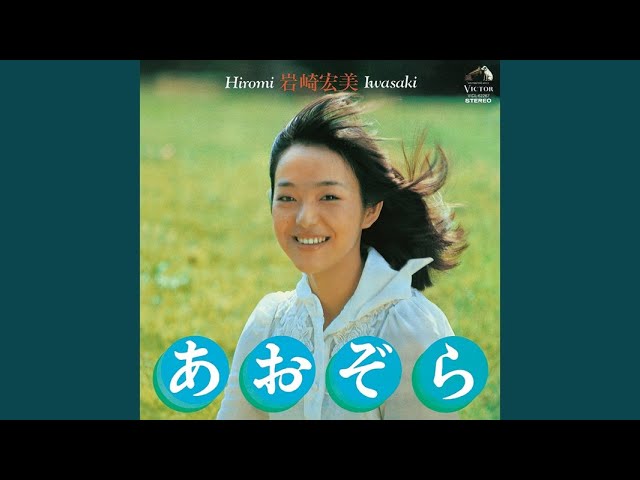
This was Hiromi Iwasaki’s second single, released in July 1975.
It became a major hit, reaching No.
1 on the Oricon chart for the first half of September that year, and sold over 900,000 copies in total.
Thanks to its strong sales, the song won multiple newcomer awards on various music programs, including the New Artist Award at the Japan Record Awards.
She also made her first appearance at the 26th NHK Kōhaku Uta Gassen that same year, performing this song as the opening act for the Red Team.
Considering that Hiromi Iwasaki was only 17 or 18 at the time, her mature musical style and sophisticated vocal performance are truly astonishing.
In that sense, this is a song that really showcases the high level of talent among Shōwa-era idols.
You’re not alone.tenchi mari

This was Mari Amachi’s third single, released in May 1972, following her rise to national idol status thanks to her charmingly innocent smile.
Total sales are said to be either 1.1 million or 1.26 million copies, marking a major hit.
Incidentally, Amachi made her first appearance on the 23rd NHK Kōhaku Uta Gassen broadcast at the end of that year, serving as the opening performer for the Red Team.
The song has a gently buoyant rhythm and a very warm feel, and it seems that Amachi’s bright singing voice and personality are a perfect match for this musical direction.
The counter-lines played by the bright brass, as well as the call-and-response backing vocals that come in during the chorus, make it a very fun track.
UFOpinku redii

Pink Lady was a huge idol duo of the Showa era, featuring Mie—who now performs under the name Mewi Mie—and Kei Masuda, who performs under her given name.
Their biggest hit is UFO, which we’re introducing here, and it reportedly sold 1.95 million copies.
When this song was released, I was in about the fifth grade, and I distinctly remember how all the girls in my class were obsessed with it.
During short breaks between lessons and at lunchtime, they would line up shoulder to shoulder and sing and dance to the song, having the time of their lives.
That’s how overwhelming the appeal of the two members of Pink Lady was back then—their influence was immeasurable.
Their vocal skill, costumes, choreography, and the synthesizer sound—which was just beginning to be incorporated into mainstream pop at the time—make this a classic that still overflows with charm even in the Reiwa era.
younger boykyandīzu

Candies was a Showa-era female idol trio consisting of Ran Ito, Yoshiko Tanaka, and Miki Fujimura.
Thanks to promotion and production that maximized each member’s distinct personality, they quickly climbed the ladder to stardom and became one of the biggest idols of the era.
The song we’re introducing today, “Toshishita no Otokonoko” (“Younger Boy”), was their fifth single, released in February 1975.
It sold over 500,000 copies, earned Candies their first appearance on the Kohaku Uta Gassen year-end music show, and gave them their first Top 10 entry on the Oricon charts.
By the way, Ran, who stood in the center position, served as the lead vocalist on this track.
While the song is quintessentially a classic Showa idol number, their vocal quality is remarkably high and truly impressive.
As a representative idol group of the Showa era, Candies invites you to fully enjoy one of their biggest hits.