


Have you ever found yourself struggling to choose what to sing at karaoke? You might want to sing nostalgic songs, but the key doesn’t suit your range, or the scoring feature won’t give you the points you expect—it doesn’t always go the way you want, does it? For women who feel that way, we’ve picked out songs that are easier to score high on at karaoke! Focusing on familiar tracks, we carefully selected songs that balance ease of singing with high scores.
Find your favorites and enjoy karaoke to the fullest!
- Recommended for women in their 60s! Easy-to-sing Japanese karaoke songs
- Karaoke songs that are easy to sing even for tone-deaf beginners, recommended for women in their 60s
- A Must-See for Men in Their 60s: Easy-to-Sing Karaoke Classics That Score High
- Recommended for women in their 60s! Songs that get the crowd going at karaoke
- [For Women in Their 50s] Songs That Score Well in Karaoke
- [Men in their 60s] Even if you're not good at singing, it's okay! Easy-to-sing songs for karaoke
- Japanese karaoke songs that are easy for men in their 60s to sing
- [For People in Their 60s] A Special Feature on Easy-to-Sing Nostalgic Songs and Showa-Era Classics That Liven Up Karaoke
- Karaoke songs that make it easy for women to score high
- Recommended Japanese karaoke songs for men in their 60s
- [60s] Karaoke Popularity Rankings by Generation [2026]
- Easy-to-sing songs recommended for women in their 80s: a reference for choosing karaoke tracks!
- Easy-to-sing songs recommended for women in their 70s: A collection of classic hits perfect for karaoke
For women in their 60s: Karaoke songs that score well | Classic nostalgic hits (1–10)
Roppongi HeartbreakAn Ruisu

Ann Lewis’s signature song “Roppongi Shinju.” A rock number that symbolizes the bubble era, it became a nationwide hit, helped by its strikingly mismatched title pairing Roppongi with “double suicide.” Notably, the song has a very narrow vocal range, with the lowest note at mid2 D and the highest at hi A.
While the nature of the rock style calls for a slightly raspy, shouted delivery, the narrow range and mid-tempo BPM make it an excellent choice for aiming at high karaoke scores.
Be sure to add it to your repertoire.

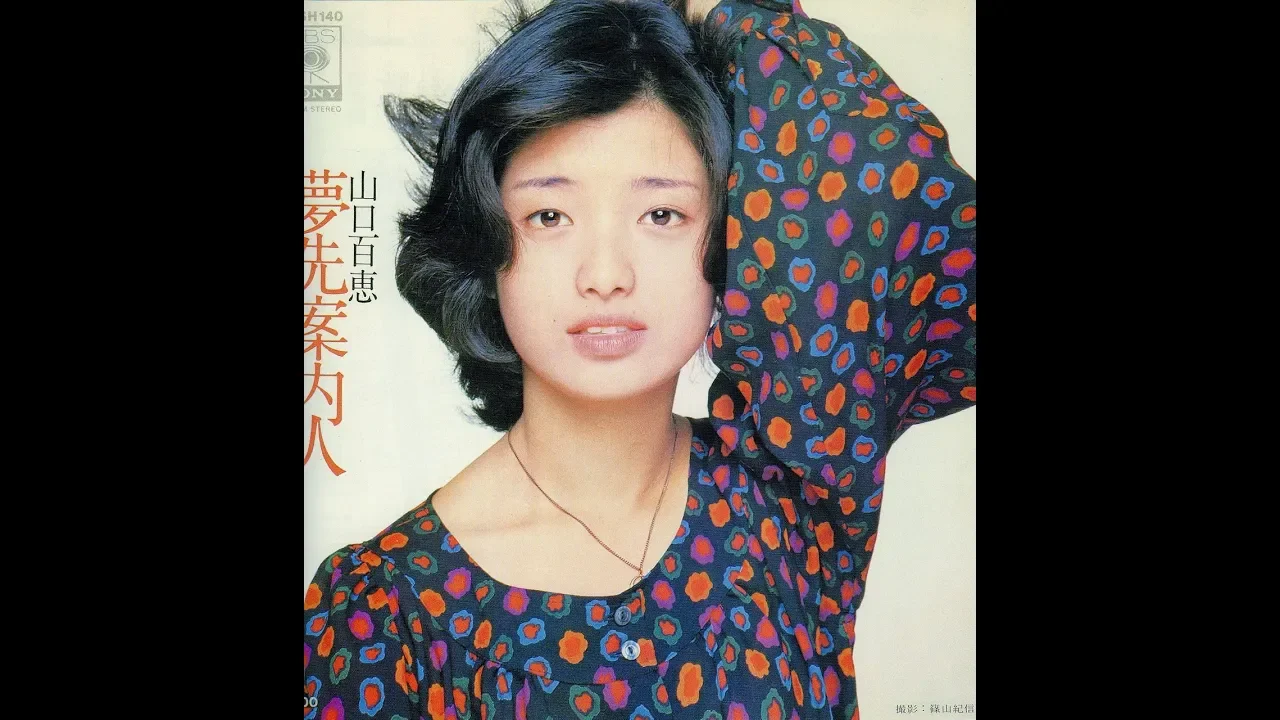
Dream GuideYamaguchi Momoe

Momoe Yamaguchi has left us with many classic songs, but when it comes to the track that most embodies the Showa era, many people probably picture Yumesaki Annainin.
Wrapped in a nostalgic Showa-kayo melody, this piece—characteristic of its time—uses a relatively narrow vocal range of mid1 E to hi A#.
Because this range is also common in male-vocal songs, even women in their 60s, whose voices may be harder to project with age, should be able to sing it without issue.
The lyrics flow smoothly, the tempo is relaxed, and the pitch movement is gentle, making it an ideal choice for aiming for a high score at karaoke.
Don’t give up on your dreamsOkamura Takako

After flourishing as a member of Amin and later achieving great success as a solo singer, Takako Okamura is widely recognized for her signature song “Yume wo Akiramenai de” (“Don’t Give Up on Your Dreams”).
Many may perceive this piece as high in pitch, especially given Okamura’s vocal timbre; however, it actually spans a relatively narrow range of mid1 G# to hi C#.
Since it’s neither particularly low nor high, it offers considerable flexibility for key adjustments, and its relaxed tempo makes it easier to maintain rhythm.
The way homeIwasaki Hiromi

Hiromi Iwasaki’s classic “Ieji” (The Way Home).
Her voice has had a pleasantly mature timbre since her youth, and it particularly shines in lyrical songs like this.
The song’s range spans mid1 E to hi C#, which is fairly common for female vocals.
The tail end of the chorus requires a bit of lung capacity, so be sure to take a deep breath at the preceding break point before singing through it.
This section has a similar vibe to Shizuka Kudo’s “Koi Hitoyo,” so intentionally singing with a lighter touch can also work well.
younger boykyandīzu

Candies’ hit song “Toshishita no Otoko no Ko” (“A Younger Boy”).
Its bright, quintessential Showa-era idol melody is really striking, isn’t it? For women in their 60s, it’s likely a real crowd-pleaser.
That said, the section just before the chorus in the B-melody can be a bit tricky—the pitch jumps up all at once, so if you find that part hard to sing, try adjusting the key up or down with a focus on that section.
Overall, it’s a mid-tempo piece that’s easy to sing, so add it to your repertoire and use it to liven up your next karaoke session.
Mr. Summertimesaakasu

Circus’s signature song “Mr.
Summertime,” a Japanese cover of Michel Fugain & Le Big Bazar’s classic “Une Belle Histoire.” Although it’s often categorized as city pop, the original belongs to variety music with strong classical elements, giving the entire piece a moody atmosphere.
Surprisingly, the vocal range spans from mid1B to hiD.
For a typical song, that range would be considered quite challenging, but this piece remains very singable thanks to its sparse lyrics and relaxed tempo.
While mid1B is relatively low, women in their 60s would still have room to lower the key, so it’s recommended to set the key with the high notes as the main reference.
Marilyn in 1986Honda Minako

Minako Honda, who gained popularity with a singing ability you wouldn’t expect from an idol, is still highly regarded by some fans for her vocal performances even after her passing.
Her signature song “Marilyn in 1986” is actually one of the least difficult pieces among her works.
As evidence, it sits within a relatively narrow range of mid1 G# to high C#.
The most frequent notes are in the low-to-mid register, so singers of virtually any voice type should be able to handle it without issue.
The vocal line is very gentle, and the mid-tempo pace makes it easy to sing, so consider adding it to your repertoire.