

Recommended winter songs for people in their 60s. Timeless masterpieces of winter songs.

Among the four seasons, there have long been many songs that take winter as their theme.
What’s more, the cold of winter can stir a certain wistfulness, and that’s part of the appeal—so many winter songs slip gently into the heart when you listen.
In this article, we’ll introduce, all at once, a selection of winter tunes that we especially hope people in their 60s will enjoy.
We’ve chosen not only the songs you still often hear when winter comes around, but also nostalgic tracks that may bring back memories of your youth.
They’re all timeless masterpieces that haven’t lost their luster, so please take this opportunity to give them another listen.
- Recommended Christmas songs for people in their 70s: A collection of classic winter hits from the Showa era
- [Winter Songs] Classic Showa-era masterpieces. Popular songs you’ll want to listen to in winter.
- [2026] Autumn Songs for People in Their 60s: Classic Tracks Perfect for the Deepening Fall
- Recommended for people in their 70s! A curated selection of Japanese songs to listen to and sing during the cold winter
- A collection of timeless classics! Exquisite winter songs recommended for people in their 50s
- [For Seniors] Winter songs you'll want to hum along to. A collection of classic tunes recommended for BGM and recreational activities
- A poignant winter classic. A winter song that seeps into the heart on cold days.
- Recommended winter songs for people in their 60s. Timeless masterpieces of winter songs.
- [Winter Songs] Recommended for Instagram Reels! Classic winter hits
- Spring songs for people in their 60s: A collection of classic tracks about cherry blossoms and farewells
- [Winter Songs] The Best Classic and Popular Winter Tunes to Listen to in Winter
- Popular Winter Songs Ranking [2026]
- [Winter Songs] Songs that evoke the feeling of winter for Instagram Stories
Recommended winter songs for people in their 60s: Timeless winter classics (11–20)
Tsugaru Strait – Winter SceneIshikawa Sayuri

It is a masterpiece that richly depicts a cold winter landscape with deep emotion.
The feelings of people traveling from Aomori to Hokkaido are woven into the beautiful melody.
Sayuri Ishikawa’s clear, translucent voice vividly brings to life the snowy scenery and the nearly freezing seagulls.
Released in April 1977, the song drew a huge response, including a performance at that year’s NHK Kōhaku Uta Gassen.
Its lyrics evoke the atmosphere of the era when the Seikan ferry was still in service, resonating with those who long for nostalgia.
It’s also a recommended song for lovers huddling together against the winter chill.
wintering swallowMori Masako

This is a song that weaves a bittersweet love story against a winter backdrop.
The lyrics, which liken a woman burning with the pain of a forbidden love to a swallow taking flight out of season, strike straight to the heart.
Masako Mori’s delicate vocals brilliantly convey the protagonist’s complex emotions.
First released in August 1983 and re-released in January 2018, this masterpiece captured the hearts of many, including winning the Best Vocal Performance at the 25th Japan Record Awards.
Why not listen quietly while thinking of someone dear to you?
Midwinter Datetenchi mari
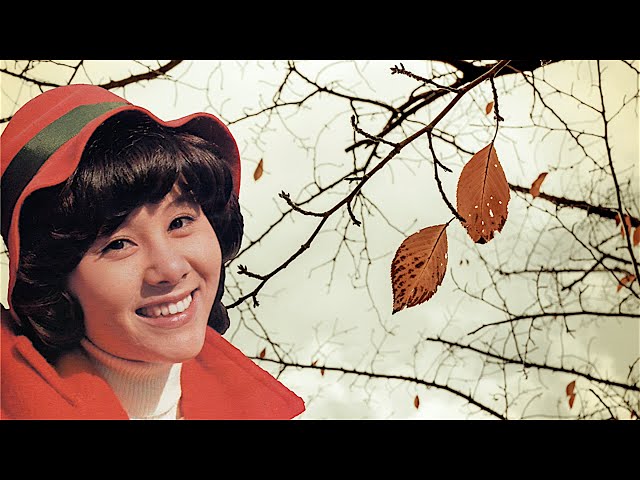
Mari Amachi, who was a national idol in the early 1970s.
This song, included as the B-side of the single “Futari no Nichiyoubi,” released in December 1972, warmly depicts lovers intertwining their fingers and snuggling close as a wintry, leafless avenue is swept by a cold wind.
The lyrics are by Michio Yamagami, the music by Masayuki Hirao, and the arrangement by Shunichi Makaino.
The words, which sing of love nurtured in the cold season, combine with Amachi’s clear, transparent voice to evoke a sense of hope amid the poignancy.
Featured on a single that sold about 440,000 copies at the time, the track was also included on the album “Ashita e no Melody” and has continued to be loved by fans.
Give it a listen while imagining a moment spent with someone special on a chilly day.
White Winterfuki no tō

This is a lyrical piece that poignantly sings of the transition from autumn to winter.
Carried by the gentle tones of an acoustic guitar, it overlays the sorrow of a bygone love and shifting emotions onto the changing of the seasons.
The transparent harmonies of Fukinotou weave a delicate world that resonates deeply in the heart.
Released as a debut single in September 1974, the song gradually gained popularity after being featured on Takuro Yoshida’s All Night Nippon, eventually reaching No.
14 on the Oricon charts.
As the duo’s signature song, it has since been covered by numerous artists.
It is a track that gently accompanies the resolve to quietly accept the end of a romance—one to listen to when you wish to heal the wounds of heartbreak or to put your feelings in order.
Ishikari ElegyKitahara Mirei

A classic song set in Ishikari, Hokkaido, portraying a man devoted to the herring fishery and the bittersweet feelings of the woman who stays by his side.
Released in June 1975 as Mirei Kitahara’s eighth single, it won both the Lyricist Award and the Arrangement Award at the Tokyo Music Festival.
Rei Nakanishi’s lyrically rich words, Keisuke Hama’s wistful melody, and Shunichi Makaino’s emotionally charged arrangement come together as one to dramatically express the sorrow and resignation of people who live by the northern sea.
Brimming with deep lyricism that conjures images of mending nets on a snow-swept winter shore, this piece is perfect for moments when you want to quietly reflect on the scenes of the Showa era.
The pavement in a cold wintry windtenchi mari

Released in December 1974, Mari Amachi’s 12th single is a winter ballad set on a street corner swept by a cold, wintry wind, expressing a poignant longing for a youth that has passed.
With lyrics by Michio Yamagami, music by Koichi Morita, and arrangement by Yusuke Hoguchi, the song overlays the protagonist’s nostalgia for past love and connections onto the chill of a winter landscape.
It reached No.
14 on the Oricon chart and sold approximately 125,000 copies, marking a work in which Mari Amachi—who had captivated the nation with her bright, refreshing image—took on a new mode of expression.
When you wish to immerse yourself in the nostalgia of lost time, why not listen quietly at dusk in the cold season?
Recommended winter songs for people in their 60s. Timeless winter song classics (21–30)
snow-cappedMatsuyama Chiharu

A beloved winter song by Chiharu Matsuyama, a singer-songwriter from Hokkaido, first released to the world on his 1978 album “Arukitsuzukeru Toki” (When You Keep Walking).
It opens with the quiet image of white snow falling steadily, and gently sings of the feelings that well up while alone in a cold room.
There’s nothing in particular to be sad about, yet the restrained, powerful lyrics leave an impression as they convey the earnest wish to simply hold someone dear.
In 1997, it was remade as the B-side to the single “Christmas,” and was also used in a commercial for Corona heating appliances.
It’s a piece that stays close to you on a silent winter night, when the falling snow mirrors your thoughts, offering quiet companionship as you think of someone special in a warm room.