

[Piano] Piano Pieces to Enjoy in the Hot Summer: A Selection of Refreshing Classical Works


In Japan’s sweltering summer, the oppressive heat wears down both body and mind.
Indoors is muggy, outdoors is scorching, and all motivation seems to vanish.
That’s why we recommend enjoying refreshing piano music for the summer! Here, we’ve carefully selected piano masterpieces from cool, calming classical works that will make you forget the heat.
We can’t control the temperature, but listening to beautiful music can lift your spirits.
Using the pieces we introduce as a guide, pick a few favorites and create a “Beat-the-Heat Summer Playlist” before the hot season arrives!
- [Classical Music] All pieces under 3 minutes! A collection of short and cool piano pieces
- [Intermediate Level] A curated selection of piano masterpieces featuring strikingly brilliant melodies!
- A collection of summer-like songs: tracks that go perfectly with summer, like the sea and the sky.
- [For Elementary School Students] Brilliant, Showy Masterpieces That Sound Impressive at Piano Recitals
- [For Advanced Players] A Curated Selection of Classical Masterpieces to Tackle at Piano Recitals
- [For Piano Recitals] Simple yet Cool Classical Pieces
- Classical Music for Summer: A Selection of Cool and Refreshing Masterpieces
- [Japanese-style Piano Pieces] A selection of recommended works with a pleasantly Japanese flavor
- Masterpieces of classical piano that are too beautiful for words. A gathering of delicate tones that cleanse the soul.
- A must-see for piano beginners! Carefully selected classic pieces you should play at least once
- [Intermediate Level] Cool Piano Pieces You Can Play [Great for Recitals Too]
- Songs to Listen to in June: Carefully Selected Rain Songs and Father’s Day Classics [2026]
- [Classical Piano Masterpieces] A carefully selected collection of moving pieces that will bring you to tears
[Piano] Piano pieces to enjoy in the hot summer! A curated selection of refreshing classical works (21–30)
Noble and Sentimental Waltzes: No. 1, Modéré (Moderato), G majorMaurice Ravel
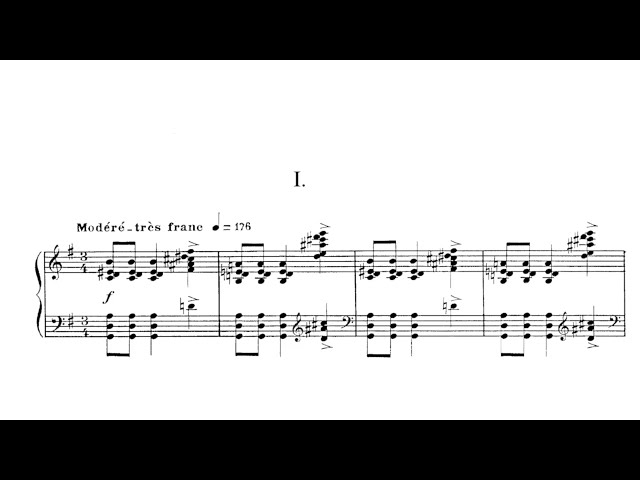
The suite Valses nobles et sentimentales fuses traditional waltz forms with Maurice Ravel’s characteristically modern sonorities.
Its opening piece is graceful yet tinged with melancholy, evoking a curious, elusive mood.
At its premiere in May 1911, the composer’s name was withheld, and the work astonished audiences with its originality.
One can almost picture a glittering ballroom where, amid the dancing, a secret, fleeting thought crosses the heart.
The work is also known in its ballet incarnation as Adélaïde, ou le langage des fleurs.
It’s perfect for those who want to experience the intriguing rhythms and harmonies that overturn conventional images of the waltz.
Aim for a rounded, gentle tone to convey the wistfulness that lies beneath the brilliance.
Piano Suite: No. 2 TanabataIfukube Akira

Akira Ifukube is a great figure whom Japan proudly presents to the world: a master composer whose achievements span classical music, countless masterpieces that illuminate the history of Japanese cinema, and film scores including the famous Godzilla series—far too extensive to encapsulate in a short paragraph.
The piece featured here, Tanabata, is one movement from the Piano Suite, a solo piano work Ifukube composed at the young age of 19.
Its main melody—evocative of traditional Japanese scenery and reminiscent in some ways of a children’s song—returns in varied forms throughout, instilling a curious sense of nostalgia as you listen.
If your image of Ifukube is limited to weighty film music, you may be surprised to discover a work like this.
Savor the crystalline beauty and cool clarity of this Tanabata, and revel in the essence of a Japanese summer.

Pastoral of a Summer Night, Op. 16Merikanto Oskar

Born in Finland, this piece has a simple, gentle melody that even evokes a sense of nostalgia, making it a wonderful classic that resonates with Japanese listeners as well.
“Summer Evening Pastorale” is a work by Finnish composer Oskar Merikanto.
While he may not be internationally renowned, he is said to be deeply loved by the Finnish people as one of the nation’s representative composers.
The nostalgic melody spun in a relaxed waltz rhythm, as mentioned at the beginning, strikes a chord with Japanese sensibilities.
It might be nice to listen to this piece while reminiscing about the rural landscapes of your hometown you haven’t visited in a while.
The Seasons, 12 Characteristic Pieces, Op. 37bis: July – Song of the ReaperPyotr Tchaikovsky

There are many classical pieces themed around the four seasons, but this “The Seasons” is a set of piano works by the great Russian composer Pyotr Tchaikovsky, depicting scenes from Russian life from January through December.
In keeping with the theme of this article, we are focusing on July’s piece, “Song of the Reapers.” The most famous of the twelve is June’s “Barcarolle,” but “Song of the Reapers” stands out in the set for its lively, bright character, vividly portraying the energetic figures of people mowing the fields.
Rather than cooling you down, it’s recommended for those who want to start their day energetically under the hot sun!
Midsummer NocturneAaron Copland

Aaron Copland is one of the composers who represent 20th-century America.
Born in 1900, he studied under the renowned composer Rubin Goldmark by the age of 16.
One of Copland’s classical pieces themed around summer is Midsummer Nocturne.
Known in Japanese as “Manatsu no Yasōkyoku,” it is a gently expressive piano work that evokes the atmosphere of a summer night.
A must-hear for those who love dreamy melodies—be sure to check it out.

Gaspard of the Night, No. 1: OndineMaurice Ravel

If you’re well-versed in French literature, the title Gaspard de la nuit might remind you of the poetry collection by Louis Bertrand, born in 19th-century France.
The work discussed here, however, is Maurice Ravel’s suite for solo piano of the same name, which was indeed inspired by three poems included in Bertrand’s collection.
Of the three pieces, let’s introduce the first, Ondine, as it suits the theme of music to hear in the hot summer.
“Ondine” is the name of the water spirit among the four classical elemental spirits, and in Japan the name “Undine” may be more familiar.
When it comes to Ravel’s water-themed piano works, one might think of Jeux d’eau, but this Ondine is a piece you should definitely know.
It depicts the story of Ondine, who falls in love with a human, and—through Ravel’s characteristic, highly sophisticated technique—delicately yet dramatically expresses both the emotions of the spirit whose love is unfulfilled and the image of pouring, torrential rain.
Video, Episode 1: Reflections of WaterClaude Debussy

The shimmering glints of light reflected on a beautifully rippling water surface… What a lovely piece that evokes cinematic and painterly imagery.
As a classical piano work themed on water, let me introduce Claude Debussy’s Reflections in the Water, known alongside Maurice Ravel’s Jeux d’eau and Franz Liszt’s The Fountains of Villa d’Este, from which it draws direct influence.
Published in the piano collection Images, Book I, this piece presents a sound world born through the composer’s delicate sensibility, offering a perspective different from Jeux d’eau, which focuses on the movement of water itself, and it even seems to soften the force of the hot sun.
Since it’s a Debussy piece, known for its free compositional approach that departs from classical conventions, even those who find strictly traditional classical music a bit daunting should definitely give it a listen!