

[Evil Beauty of Melody] A roundup of recommended symphonic black metal bands

Among the subgenres of heavy metal, black metal is an underground style that tends to be for a select audience.
We’ll skip its origins and bloodstained history here, but in recent years many people may have learned about it through films like 2018’s Lords of Chaos.
Even within black metal there are further subgenres, and the style that incorporates orchestration and strings with a classical influence is called symphonic black metal.
In this article, we introduce symphonic black metal bands ranging from the well-known to the obscure.
If you’ve recently become interested in this genre, please take a look!
- [Overwhelming Kusamero] A collection of classic Kusametal songs
- Masterpieces of death metal. Recommended popular songs.
- [For Beginners] The Epic World of Symphonic Metal: A Collection of Popular and Classic Songs
- What kind of music is black metal?
- A spine-chilling scary song: masterful tracks that evoke fear and eerie recommended songs
- The Profound World of Western Gothic Metal: Best and Popular Songs [2026]
- [Classical] Recommended classical music perfect for Halloween
- [Classical] Introducing Recommended Moving/Touching Pieces
- [Resonates with the Soul] A Roundup of Sambomaster’s Most Popular Songs and Hidden Gems
- Classic Japanese metal songs. Recommended popular tracks.
- [Orchestra] Introducing famous and popular pieces
- [Addictive] Dark but Cool Song
- Classic hardcore punk tracks. Recommended popular songs.
[Evil Beautiful Melodies] Recommended Symphonic Black Metal Bands (1–10)
To Dethrone the Witch-Queen of Mytos K’unn (The Legend of the Battle of Blackhelm Vale)Bal-Sagoth

Although the band is often discussed within the realm of symphonic black metal, like their fellow Britons Cradle of Filth they encompass a variety of genres, and Bal-Sagoth is a group popular for its distinctive, original sound.
The frontman known by the moniker “Lord Byron,” Byron Roberts, is highly acclaimed as an exceptional storyteller and poet; the band’s core lies in a musical identity built around the worldviews he creates in his lyrics.
On the sonic side, the Morley brothers—drummer/keyboardist Chris Maudling and guitarist Jonny Maudling—take the initiative, fusing symphonic black metal extremity with epic elements; over that, a vocal style that could be described as a mix of death growls and narration rides atop.
Bal-Sagoth’s music bursts with intentionally “cheesy” melodic phrases in places, yet remains dramatic and lyrical, while the vocals themselves function more as one component within the overall sound.
By reading Byron’s stories—shaped by influences ranging from ancient mythology to science fiction novels and film—you can grasp the band’s essential appeal for the first time.
To begin, pick an album that has a domestic Japanese edition and experience their music with the bilingual lyrics and liner notes at hand.

An ode from a haunted woodsHecate Enthroned

Hecate Enthroned, named after the goddess Hecate from Greek mythology, is a symphonic black metal to melodic black metal band with a long-running career in the UK, alongside Cradle of Filth.
The track introduced in this article, “An Ode from a Haunted Woods,” is one of their early songs released in 1995.
With its low-budget music video and sound production, and its raw blast of chilling, malevolent true black metal, it might make the uninitiated recoil.
While they debuted with a clearly primitive “black metal” approach, their first album, The Slaughter of Innocence, a Requiem for the Mighty, released in 1997, shows clear growth both technically and in band ensemble.
It fully delivers the essential appeal of true, ferocious symphonic black metal: symphonic keyboards, piercing high-pitched shrieks, slashing guitar riffs, and relentless blast beats.
Once you find yourself appreciating even the rough sound quality as part of the charm, you might well call yourself a bona fide symphonic black metal fan.
From the 2000s onward, they shifted toward a more melodic, death-metal-leaning sound with some black metal elements, which drew mixed reactions, but despite a sparse release schedule, they’ve continued to put out quality albums.
Mother AnorexiaAnorexia Nervosa

Anorexia Nervosa is a rare symphonic black metal band from France.
Formed in 1991, they can be considered quite old within the symphonic black metal scene, but after releasing four albums they disbanded in 2007, making them something of a cult act.
Since the 2000s, France has produced uniquely original black metal bands like Deathspell Omega that enjoy high recognition among devoted fans, but Anorexia Nervosa also possesses a fierce individuality.
It almost makes one speculate that precisely because France isn’t known as a particularly metal-heavy country, bands with such singular presence emerge from there.
Their true prowess came to the fore with their second album, Drudenhaus, released in 2000: death vocals that erupt into frenzied screams, majestically grand synth tones, blast beats like a wall of sound, song structures that are extravagantly dramatic to the point of excess, and a worldview steeped in gothic decadence.
The aggressiveness of their sound—almost as if saying “only those who love this should listen”—left an impact strong enough to create fervent devotees.
Their third album in 2001, New Obscurantis Order, pushed their evolution even further, and many fans regard it as their masterpiece.
On their final album, Redemption Process, they presented a more refined sound that suggests a newly acquired sense of dynamics; moreover, the Japanese edition includes a must-hear bonus track: a cover of X Japan’s early classic I’ll Kill You.
[Evil Beautiful Melodies] Recommended Symphonic Black Metal Bands (11–20)
Beneath the Burial SurfaceLimbonic Art

Limbonic Art is a Norway-born band famed for a quintessential symphonic black metal sound: keyboards weaving flowing yet somehow tragic melodies, guitars carving out razor-sharp riffs, and the mechanical pulse of a drum machine.
While their duo lineup may evoke Satyricon, Limbonic Art’s music leans fully into the straight-ahead appeal of symphonic black metal.
Their 1996 debut album, Moon in the Scorpio, comprises seven tracks, with all but the brief instrumental being long-form compositions; even the opening number, Beneath the Burial Surface, runs over 13 minutes, making it clear the band favors grand-scale works.
The music is melodic, but it foregrounds black metal’s malignancy, and coupled with production that can hardly be called pristine, it may be a challenging listen for newcomers.
That said, if you’re looking to delve deeper into symphonic black metal, this is a band you should absolutely hear sooner or later.
Incidentally, the group’s central figure, Daemon, contributed vocals to the debut album by Zyklon—a band formed by Samoth and Trym of Emperor.
Rider on the BonezDiabolical Masquerade
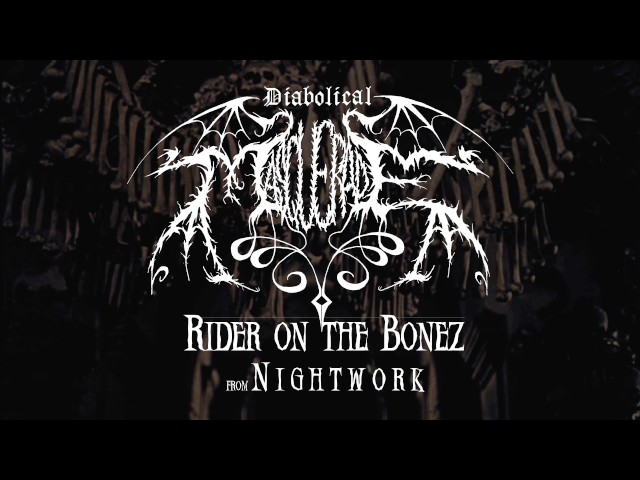
If the band name Diabolical Masquerade intrigues you—one that evokes a certain decadent, lyrical darkness rather than purely black-metal evil—you’ll almost certainly love the music too! Diabolical Masquerade isn’t a band, but a solo project by Anders Nyström, guitarist and original member of Katatonia, the legendary Swedish death/doom outfit.
He released music in parallel with Katatonia, but sadly ceased activity after unveiling the fourth album, Death’s Design, in 2001.
Still, the sound—transmuting Katatonia’s haunting, brooding darkness into the more aggressive realms of black and thrash metal—is unique to this project.
Amid the black-metal-derived, noisy guitars, boldly heroic melodies are woven throughout, showcasing Nyström’s extraordinary talent.
Particularly noteworthy is that Dan Swanö—also from Sweden, renowned for his work with Edge of Sanity and in high demand as a producer and sound engineer—appears on every release.
In Diabolical Masquerade, beyond producing and mixing, he also took part as a drummer in the recordings, making these works a remarkable result of collaboration between two of Sweden’s singular talents.
WitchcraftObtained Enslavement

From the album jacket and title alone, you can practically smell the thick stench of evil—true sanctified Norwegian black metal! They’re a band known mostly to diehard fans, but in fact members of Norway’s black metal titans Gorgoroth have taken part, making them a cult act that makes aficionados drool.
Formed back in 1989, they recorded demo tapes in 1992 and 1993, then released their debut album, “Centuries of Sorrow,” in 1994.
The sound is quintessentially primitive black metal: vocals that echo from the depths of hell, relentless blast beats on the drums, and mournful guitars—pure, orthodox black metal.
Even so, from their next releases onward they grew musically, dropping the highly acclaimed second album “Witchcraft” in 1997.
They boldly shifted to a style incorporating symphonic black metal elements, and the moment that grand, soundtrack-like orchestral opening bursts in, anyone who loves this stuff can’t help but grin.
The frostbitten black-metal riffs, utterly evil vocals, and terrifying blast beats remain intact, but now they’re fused with a fantastical, Norse-myth-inspired symphony that explodes into an epic sound—transcendence guaranteed! Considering Emperor’s masterpiece “Anthems to the Welkin at Dusk” also came out that same year, there’s no doubt this is a band you must check when discussing ’90s symphonic black metal.
In Defiance Of ExistenceOld Man’s Child

It may be a facet that tends to be overlooked by anyone but devoted fans, hidden behind the impact of the genre called black metal, but even within the confines of black metal there are many musicians with outstanding taste and technique.
Galder, the central figure of Old Man’s Child featured in this article, is one such talented musician—a versatile artist who has also been active as the lead guitarist of Dimmu Borgir, a flagship band of symphonic black metal.
Old Man’s Child, which can now effectively be considered Galder’s solo project, was formed in 1993 and, despite frequent lineup changes, has released seven albums as of 2022.
On their landmark debut album, 1996’s Born of the Flickering, they presented a melodic sound that, while rooted in black metal, featured heroic riffs and phrases reminiscent of traditional heavy metal.
Their shift toward a sound that can be called symphonic black metal came around the 2000 release Revelation 666 – The Curse of Damnation.
If you want to hear them as symphonic black rather than melodic black, I recommend starting with that album or the following one, In Defiance of Existence!