



Aimi Tanaka made her debut in 2021 as an enka singer while still a university student.
Even after graduating, she continues to thrive, gaining popularity with a modern take on enka that incorporates a wide range of expressive styles to expand the genre’s boundaries.
One of her biggest draws is her exceptionally strong vocal ability—highly praised by her mentor, Takashi Hosokawa.
Among female enka singers, her foundational vocal technique is top-tier, and as a result, her songs are on a completely different level of difficulty.
Many people may find it hard to add her songs to their repertoire.
So this time, we’ve selected some of Aimi Tanaka’s tracks that are especially easy to sing.
- [Treasure of Powerful Enka] Takashi Hosokawa’s Easy-to-Sing Songs
- [Enka] Songs that are easy to sing even for those who are tone-deaf [Female singers edition]
- The Most Idol-Like Star in the Enka World: Easy-to-Sing Songs by Kiyoshi Hikawa
- [For Women] Masterpiece Enka Songs with a High Degree of Difficulty
- [For Beginners] Recommended Enka Classics for Karaoke — Women Singers Edition
- [Enka] Songs That Are Easy to Sing Even for the Tone-Deaf [Male Singer Edition]
- Queen of Enka: A roundup of Aki Yashiro’s easy-to-sing songs
- Enka songs that are easy for men to sing: a roundup of tracks to try at karaoke
- [For Women] A roundup of enka songs that can score high in karaoke
- [The Pinnacle of Modern Enka] Shimazu Aya’s Easy-to-Sing Songs
- [Queen of Enka] A Collection of Easy-to-Sing Songs by Sayuri Ishikawa [2026]
- Songs by Yoshimi Tendo, the songstress born in Osaka, that are easy to sing
- [Japan’s Best Vocalist] Fukuda Kohei’s Easy-to-Sing Karaoke Songs
Takashi Hosokawa’s Beloved Disciple: Aimi Tanaka’s Easy-to-Sing Songs (1–10)
It’s not a confession of love, but…Tanaka Aimi

The song “Ai no Zange Janai keredo” is memorable for its melancholy melody.
As one of Aimi Tanaka’s tracks, this piece leans heavily into enka elements, with enka-style phrasing heard throughout the performance.
Surprisingly, the vocals are relatively straightforward; while there are a few simple kobushi (ornamental turns), the overall feel is more akin to kayōkyoku.
Although the vocal line itself is simple, the range is somewhat wide, which may cause issues like voice flips in the high phrases.
Doing a vocal training exercise such as tonguing before singing can help address these areas to some extent, so consider giving it a try.

TATSUYATanaka Aimi

The song “TATSUYA” is not an exaggeration to say it catapulted Aimi Tanaka’s career.
It became a nationwide hit, so anyone well-versed in enka or kayōkyoku has likely heard it at least once.
Despite its powerful melody, the vocal line itself is arranged quite simply.
The phrases aren’t difficult, but if you want to capture Aimi Tanaka’s vibe, the challenge lies in the vocal production.
If you want to get closer to the original, try aiming for a higher chest voice while keeping your larynx lowered—a technique known as low larynx positioning.
a pittanceTanaka Aimi

Speaking of Aimi Tanaka, she’s known as having one of the richest, most full-bodied voices among female enka singers.
Her song “Suzume no Namida” embodies the depth of her voice.
From the A verse to the B verse, the melody sits in the low range, and the chorus brings in mid-high to high notes.
The sections leading up to the chorus are sung with a resonant, overtone-rich timbre.
The high notes in the chorus lean toward mix voice, so you need to be careful not to flip.
Overall, it’s an easy, classic kayōkyoku-style piece without kobushi or other ornamentation, so as long as you’re not worried about your vocal range, you should be able to sing it without issue.
From Kyoto to HakataTanaka Aimi

Kyoto kara Hakata made is a memorable piece with a full-fledged enka style suffused with melancholy.
Among Aimi Tanaka’s songs, this one especially emphasizes the low register, with the A melody sustaining low tones that make use of overtones.
The overall range isn’t very wide, so it’s by no means a difficult song; however, if you want to bring out its charm to the fullest, align the key around the A melody rather than the chorus.
Mixing in as much breath as if your lungs were being squeezed makes it easier to acquire overtones, so why not practice that technique while working on this song?
Don’t scold me.Tanaka Aimi
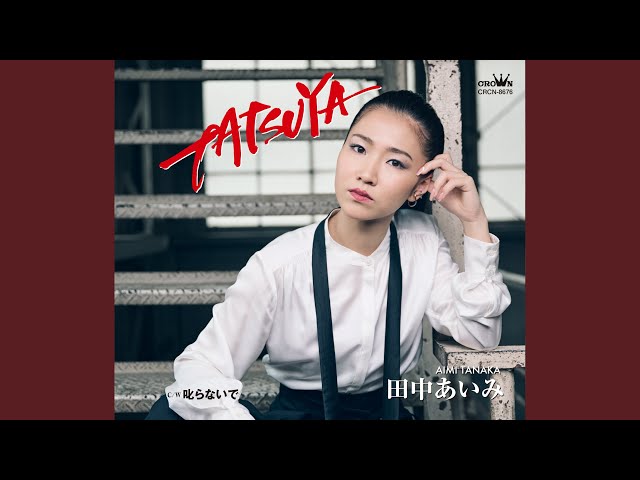
A rare work for Aimi Tanaka that’s arranged in a classic enka style, “Shikara-naide.” The melody feels like orthodox enka from the ’60s–’70s, but in fact the song contains no difficult kobushi (melismatic ornamentation) at all.
The basics stick to a single note, with at most a two-note change, and even those changes don’t move at the brisk speed typical of folk songs.
As an enka number, it’s undoubtedly among the easiest to sing.
The vocal range is fairly narrow as well, but since high notes appear several times on the “i” vowel, be careful not to let your tone become too thin.
GossipTanaka Aimi

While Aimi Tanaka has strong vocal skills, she tends to sing songs with a kayōkyoku flavor.
“Uwasabanashi” is one such piece, characterized by a sound that sits right between enka and kayōkyoku.
The vocal range is about average, but there’s a sustained note in the upper mid-register at the end of the chorus.
It’s not a phrase that’s particularly challenging in terms of vocal production, but it can sound a bit thin, so be sure to lower your larynx and aim for a fuller, thicker tone.
Osaka LonelinessTanaka Aimi

Aimi Tanaka’s classic “Osaka Loneliness,” which was also used as the ending theme for the Osaka local TV show “Yasutomo no Itatte Shinken Desu,” is a kayōkyoku (Japanese pop) song rather than enka.
Its appeal lies in the brassy sound often heard in songs by Takajin Yashiki and Emiko Uenuma.
The vocal line is simple with a fair amount of rests, but there’s a spot near the end of the chorus where you sustain a long tone on the “n” sound.
Since the song is meant to be sung with strong volume throughout, instead of humming a pure “n,” it’s recommended to pronounce it closer to “u” while keeping the “n” quality.