

![[Timeless Masterpiece] Popular songs from The Sound of Music. Recommended tracks.](https://i.ytimg.com/vi/opXl99Xksgk/sddefault.jpg)


Even if you don’t actually know the story, you’ve probably heard the name The Sound of Music at least once.
It’s a masterful 1965 musical film that has gone down in cinema history, directed by Robert Wise—who created classics over many decades, including before the war—and starring Julie Andrews, the British-born actress who rose to become a Hollywood star.
As a musical, the film features many iconic songs, all of which continue to be loved by people around the world.
In this article, we’ve compiled and introduced a selection of those beloved numbers!
In the first half, we cover the songs used in the film, and in the second half we highlight numbers that appear only in the stage version.
It’s a must-read for anyone who wants to dive deeper into the work!
- [Timeless Masterpiece] Popular songs from The Sound of Music. Recommended tracks.
- [Film Music] Theme songs from Western movies: those unforgettable classics and popular tunes
- [2026] Relive those iconic moments… Recommended theme songs and insert songs from Western films
- [Western Films] Moving Movie Theme Songs: A Compilation of Tear-Jerking Theme Tracks
- A compilation of film music played on the piano / that I want to play on the piano
- [A Soundtrack Full of Masterpieces] Theme Song and Insert Songs from the Film “Titanic”
- Theme and insert songs from Japanese films. Masterpieces and popular tracks of Japanese movie music.
- Most popular songs from the Pirates of the Caribbean series
- Masterpieces of film music: from Hollywood classics to Japanese cinema
- All masterpieces! Western pop ballads that were hits in the ’90s
- Disney Classics to Enjoy on the Piano | A Selection of Recommended Pieces
- Masterpieces that sing about marriage. Recommended popular songs.
- Songs from Spirited Away: theme song and insert songs
[Timeless Masterpiece] Popular songs from The Sound of Music. Recommended tracks (1–10)
My Favorite Things (My Favorites)MARIA
The von Trapp children were strictly disciplined by Captain von Trapp.
Maria, who became their governess, gently stayed by their side.
One day, when the children were frightened by thunder, she sang them this song.
It’s a song about recalling your favorite things to lift your spirits when you’re feeling down.
It was used for a long time in JR Central’s TV commercials, “Yes, let’s go to Kyoto,” so it’s a well-known song in Japan.
In jazz, John Coltrane’s soprano saxophone rendition of this piece is also popular.

The Sound of Music (The Sound of Music)MARIA

The Sound of Music has long been loved by people as both a musical and a film.
This title tune is used in the scene at the beginning of the story where Maria sings against the backdrop of the Salzburg mountains.
The beauty of the mountain scenery overlaps with Maria’s natural beauty, and the majestic landscape matches the song perfectly, leaving a deep impression.
Throughout the piece, the singing employs rubato—a free style without a steady tempo—which makes it sound like a breeze blowing through nature.
Climb Every MountainMother Abbess

This is the song the Mother Abbess sings when Maria, having realized she is drawn to Captain von Trapp, slips out of the villa and returns to the abbey.
The Mother Abbess gently urges Maria to go back, and she sings this song.
“Climb every mountain” is a metaphor, but it also subtly foreshadows their eventual escape over the mountains, which I find brilliantly done—the musical really impresses me.
The melody and atmosphere seem to carry echoes of the musical’s opening number, “The Sound of Music.”
Sixteen Going on Seventeen (Almost Seventeen)Rolfe and Liesl
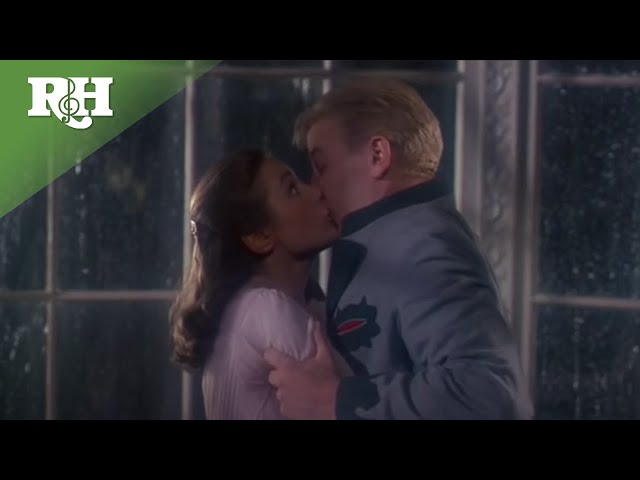
Liesl, the eldest daughter of the von Trapp family, is sixteen and will soon be seventeen.
She is secretly seeing Rolf, a telegram delivery boy who is a year older.
This is the song they sing when they meet together in the garden.
The lyrics—where Rolf, claiming to be far more experienced despite being only a year older, says he’ll look after the still inexperienced sixteen-year-old Liesl—are both endearing and charming.
Speaking of being seventeen, it’s often portrayed in songs as the age at the boundary between childhood and adulthood, not just in this one.
So Long, Farewell (Goodbye, Farewell)The Children

This is the performance sung and danced by the children when a party is held at the Von Trapp home with many guests invited.
As they sing, they head back to their rooms one by one, and both the lyrics and the dancing reflect each child’s personality, which is delightful.
This song is also performed as the final number at the music festival where the Trapp family was secretly planning their escape.
It’s brilliantly crafted as a prelude to their real farewell.
After singing this song, they flee to Switzerland.
EdelweissThe Captain and Liesl
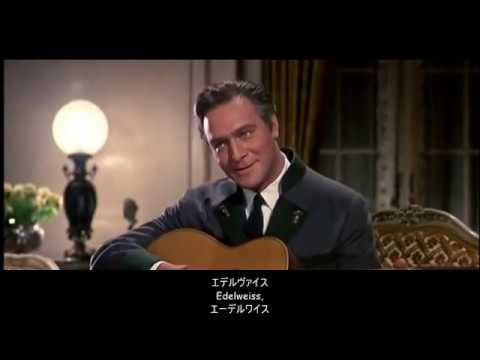
This song is filled with feelings for the motherland, Austria, and it was the last piece created for this musical.
Since it’s also included in music textbooks, some people may have sung it without knowing it’s from this musical.
All the songs were composed by Richard Rodgers with lyrics by Oscar Hammerstein II, but because Oscar was ill, these became the last lyrics he ever wrote.
The song is used in the scene before the family’s escape, where Captain von Trapp accompanies himself and sings at the music festival.
Do-Re-Mi (The Do-Re-Mi Song)Maria and the Children

Here is one of the most well-known songs in Japan—familiar even to children.
On the picnic outing, Maria plays the guitar and sings this song to teach music to the von Trapp children.
The lyrics differ from the Japanese version commonly known in Japan, so it could be fun to try singing it in English.
Incidentally, the seventh note, called “shi” in Japan, is called “ti” in English-speaking countries, and in the song it’s explained as referring to tea.
It’s also interesting that the number of von Trapp children—seven—matches the number of notes in the scale.