

Recommended popular anime from the 2000s

When you think of 2000s anime, what titles come to mind?
Back then, many series were called “kuuki-kei” (atmospheric) or “nichijou-kei” (slice-of-life), with lots of realistic, relatable stories close to everyday student life.
In this article, we’ll introduce some popular anime from the 2000s!
We’ve picked a variety—from classic atmospheric and slice-of-life works to titles featuring big, out-of-the-ordinary events or even magic.
You might find a series you were once obsessed with!
Whether you were into these back in the day or are watching for the first time, be sure to check them out!
- Anisongs that were hits in the 2000s: a nostalgic collection of legendary tracks
- Calling all 20-somethings! A roundup of nostalgic anime from the 2000s to the 2010s
- Masterpiece anime that Heisei-born people feel nostalgic about
- [Nostalgic & Latest] A Special Feature on Anime Songs Recommended for People in Their 20s
- [Nostalgic] Classic and Popular Anime Songs Recommended for People in Their 30s
- [From 2010 onward] A roundup of anime that teenagers feel nostalgic about
- [2000–2009] A roundup of theme songs from popular dramas!
- Anime songs that were hits in the 1990s. Recommended masterpieces and popular tracks.
- Calling all thirty-somethings! Nostalgic anime (based on the 1990s)
- [Heisei Songs] Classic hits from the Heisei era that are popular on Instagram Reels
- Popular Heisei-era songs you can use on Instagram Stories
- [2026] Recommended Anisongs for Middle Schoolers: Theme Songs and Insert Songs from Popular Anime
- [Collection of Epic Songs] A compilation of cool anime songs chosen by anime fans
Recommended popular anime from the 2000s (1–10)
Tengen Toppa Gurren Lagann

Even at the time it began airing in 2007, it stood out as unconventional: a robot anime starring a hot-blooded protagonist that felt straight out of the Showa era.
Considering the context—a year earlier, in 2006, The Melancholy of Haruhi Suzumiya had premiered, and post-Eva cool, stylish works were on the rise—it was a highly distinctive series.
However, it seems there were many people who loved classic, old-school mecha anime, and its famous lines are still quoted to this day.
Director Hiroyuki Imaishi and writer Kazuki Nakashima went on to deliver further hits in the hot-blooded anime vein with Kill la Kill and Promare.

Magical Girl Lyrical Nanoha

When it comes to popular anime genres across any era, magical girl anime always comes to mind.
If you’re an anime fan, you can probably think of at least one magical girl series that defined your generation.
And if you ask which magical girl anime represents the 2000s, many people would immediately name Magical Girl Lyrical Nanoha.
Originally positioned as a spin-off from a romance adventure game, the work was restructured as a TV anime.
Written by Maki Tsuzuki, who also handled the game’s scenario, Magical Girl Lyrical Nanoha aired in 2004 as the first entry in a series that would continue thereafter.
Though it began as a late-night anime and the first half followed the conventions of the magical girl genre, the story took a more serious turn in the latter half.
The intense battles between the protagonist Nanoha Takamachi, played by Yukari Tamura, and her rival Fate Testarossa, played by Nana Mizuki, delivered action so fierce it upended the usual expectations for magical girl shows.
With a cast full of compelling characters, the final episode, “Call My Name,” concluded in a way so powerful it brought many viewers to tears.
The opening theme Innocent Starter by Nana Mizuki and the ending theme Little Wish ~lyrical step~ by Yukari Tamura are also standout anison tracks from the 2000s, beloved by fans of each artist.
As mentioned, the series went on to expand further, so if you’re interested, we recommend watching it in order!

CLANNAD

If you were an anime fan who came of age in the 2000s, there’s a good chance that when asked which Kyoto Animation work you like most, you’d answer “CLANNAD.” Even if you don’t know the series itself, some younger readers may have seen the internet copypasta, “CLANNAD is life.” Based on a 2004 romance adventure game, the first season of the TV anime adaptation by Kyoto Animation aired in 2007, followed by the second season, “CLANNAD ~AFTER STORY~,” in 2008.
There was also a film adaptation in 2007, but this article focuses only on the TV anime version of CLANNAD.
Because the series features many charming heroines and a popular voice cast, some people might have preconceived notions like, “That’s not really my thing.” But beyond Kyoto Animation’s stunningly beautiful art, what sets it apart is that it isn’t just another pretty-girls-in-a-school-setting show; it distinctively and carefully portrays the story of growing up into adulthood after graduation.
The narrative, which centers on family love—a theme that also runs through the original game—addresses complex home environments and life’s hardships, moving many viewers to tears.
The passionate performances by the voice actors and the music by Jun Maeda have also been highly praised.
If you’ve avoided it up to now based on an impression, why not take this opportunity to give it a watch?
Recommended Popular Anime of the 2000s (11–20)
Inuyasha

This anime is based on a manga by Rumiko Takahashi, whose works unfailingly become hits in any era.
Many people probably discovered Inuyasha after first encountering its sequel, Yashahime: Princess Half-Demon, which began airing in 2020.
While it’s a time-travel story, it seamlessly weaves in elements of action, comedy, romance, and mystery, making it a highly polished work.
It also features many popular voice actors who are now at the top of the industry, so be sure to check who appears where!
Gintama
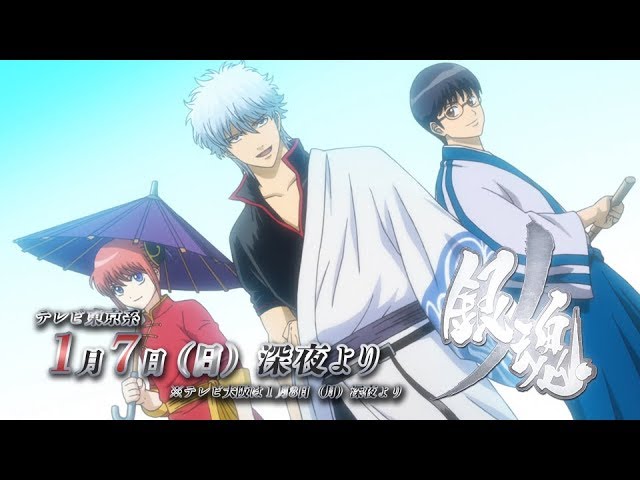
Gintama is an anime series based on the manga serialized in Weekly Shonen Jump.
It’s a sci-fi, heartwarming, pseudo–period drama comedy about Gintoki, who runs an odd-jobs business called Yorozuya, and his companions.
The series is known for the striking contrast between its gag scenes and tear-jerking episodes.
At times, its jokes and parodies have gone so far that the show faced multiple crises of being banned or nearly canceled, leaving many viewers anxiously wondering, “Is it really okay to air this?” When it originally aired.
Except for the longer arcs, episodes are mostly self-contained, so you can jump in from almost any episode and still enjoy it.

Bakemonogatari

Bakemonogatari is a long-running series that began in 2009.
Set in a rural Japanese town in the early 21st century, the main story follows Koyomi Araragi as he meets girls involved with the supernatural and helps resolve their cases.
What’s astonishing is how extensive the series is: including side stories, there are over 20 entries, and some installments even feature the girls as the protagonists instead of Araragi.
Despite the sheer number of titles, each work has an excellent pace, making it easy to breeze through a single cour.
Fullmetal Alchemist

The anime Fullmetal Alchemist, based on the manga by Hiromu Arakawa, is an extremely popular work whose theme songs became major hits alongside the show.
Many viewers no doubt felt their hearts race at the adventures of the alchemist brothers, Ed and Al, as they set out to reclaim their bodies.
And that hand-clapping pose—didn’t you want to try it yourself? As TV series, there are two: Fullmetal Alchemist, which aired from 2003 and diverged into an original storyline in the latter half, and Fullmetal Alchemist: Brotherhood, which began airing in 2009 and faithfully adapted the original manga.
Several films have also been released, so take this opportunity to check them out!
