

[For First Graders] A Collection of Science Project Ideas Using Everyday Materials

Many first graders struggle with their summer vacation projects and crafts.
It’s completely understandable to feel unsure—“It seems hard,” “What should we make?” In this article, we introduce experiment and craft ideas that kids can enjoy.
From a fascinating experiment with floating vegetables, to postcards made from milk cartons, to colorful aroma stones—there are plenty of fun projects using familiar materials.
Enjoy them together as a parent and child, and make great summer memories!
- [Summer Vacation Crafts for Lower Grades] Make It with Everyday Materials! Simple Yet Awesome Craft Ideas
- For summer vacation homework! Simple and amazing crafts for elementary school students that you’ll want to make after seeing them
- Paper cup crafts that elementary school kids will love! A collection of fun project ideas
- Recommended for lower elementary school students! A collection of plastic bottle craft ideas made with everyday materials.
- Fun crafts using straws
- DIY science projects that elementary school boys will love: ideas you can make with everyday materials
- Craft ideas using plastic bottle caps [for boys]
- Recommended for elementary school students! Science fair topics & craft ideas
- Elementary School Students: Simple One-Day Science Project and Craft Ideas
- [Summer Vacation Crafts] Stylish Ideas for Girls
- [For Kids] Today’s Handmade Craft Ideas
- Simple yet amazing crafts: craft ideas that elementary school students will want to make
- [Easy & Fun] Craft Ideas Using Pipe Cleaners
[For 1st Graders] A Collection of Science Project Ideas Using Everyday Materials (91–100)
Handmade chenille keychain
https://www.tiktok.com/@n.annlee321/video/7365437076654886160Let’s make a cute bee keychain.
First, stick double-sided tape all over a chenille stem and shape it into a rectangle.
Wrap a yellow chenille stem around it, then wrap a brown one to create the stripes.
Make wings from a clear file sheet, attach them to the body with the brown chenille stem, and add eyes.
Finally, attach the keychain hardware and you’re done! With a bit of creativity, you can make all kinds of insects and animals, so try making your own original keychains.

Handmade Happy Noodles
https://www.tiktok.com/@n.annlee321/video/7317570138859900162Looks just like the real thing! Let’s handcraft some happy noodles.
Flatten a cotton ball made from yellow embroidery thread to form a lump of noodles.
Also, wrap another embroidery thread around chopsticks and soak it in water mixed with liquid starch.
Once it dries and you remove it, it will turn into curly noodles, so make some of those too.
Use a small paper cup as the container and attach a package label you designed with a design app.
Put in the noodles and a packet of toppings, then stick on the lid to finish! You might even be able to use it as a keychain if you add some parts.
Puru-Koro Soap
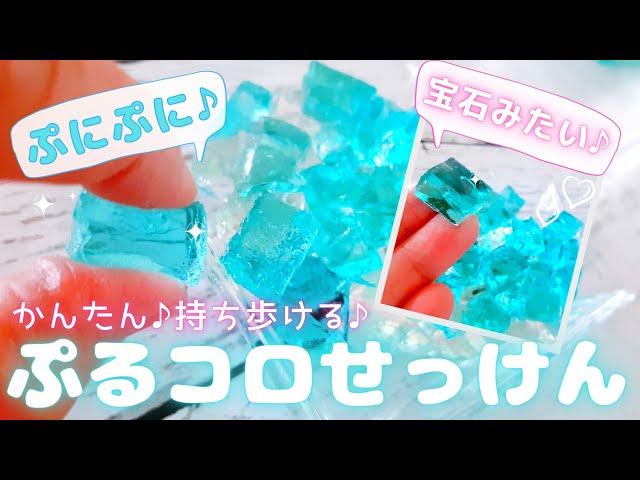
It’s like a jewel! Let me show you how to make cute, jiggly soap.
You’ll need liquid hand soap, gelatin, hot water, and food coloring.
Dissolve the gelatin in hot water, then mix in the liquid hand soap.
The trick is to stir slowly so it doesn’t foam.
Add food coloring, pour into a flat container, and chill in the refrigerator for 1–2 hours.
Then just cut it into your favorite shapes and you’re done! It looks adorable and might make handwashing more fun.
Just be careful to prevent small children from accidentally swallowing it.
Sparkling Kaleidoscope

If you’re unsure what to make for your summer vacation craft project, why not try a sparkling kaleidoscope? You can make this kaleidoscope with recycled materials and items from the 100-yen shop.
Cut a hard plastic case and form it into a triangular prism, then place beads in the bottom and secure them.
On the opposite end, attach a piece of black construction paper with a peephole.
Glue a milk carton—lined on the inside with black construction paper—around the triangular prism, and decorate it as you like to finish.
While kaleidoscopes typically use mirrors, in this idea the hard plastic case serves that role.
Sparkling hourglass

Let’s make a cute, sparkly hourglass that doubles as interior decor.
Prepare two small bottles, glitter to use as sand, a clear plastic file sheet, and decorative parts.
Cut the clear file slightly larger than the bottle opening and make a hole in the center for the glitter to pass through.
Attach tape and half-cover the hole, then glue it to the bottle.
Add the glitter and glue on the other bottle.
Finish it off cutely with decorative parts.
After adding the glitter, be careful not to turn it over until the adhesive has dried.
lampshade

Here’s a lampshade idea that also works as room decor.
Brush glue mixed with water onto an inflated balloon, then stick on small torn pieces of washi paper.
For sturdiness, layer the washi several times until the balloon’s color isn’t very visible.
Be sure to leave an opening where the light will go.
Since washi is white, use tissue paper if you want to add color.
Once it’s completely dry, pop the balloon and remove it, then secure a wire along the inside edge of the opening for the light to finish it off.
How to make a watermelon bar squishy

Looks just like a real ice pop!? Juicy to the eye and satisfyingly squishy to the touch, the “Watermelon Bar Squishy” is an adorable handmade craft perfect for summer.
It’s an easy yet highly polished project, especially recommended for upper-grade girls.
Start with a sponge from the 100-yen shop and cut it into the shape of a watermelon ice bar.
Carefully paint a red–green–white gradient with acrylic paints.
Recreate the seeds realistically using black paint or clay.
A wooden stick works perfectly for the ice pop handle.
People are sure to say, “That looks delicious!” It’s cute to look at and fun to touch—give this delightful summer science/craft project a try!
