

![[Winter Haiku] A collection of poems written by elementary school students. Excellent works that skillfully use seasonal words.](https://media.ragnet.co.jp/img/1200__png__https://www.studiorag.com/files/2026/01/b7c19ab68bb1abd23457bbff6f8dc7dc.webp)
[Winter Haiku] A collection of poems written by elementary school students. Excellent works that skillfully use seasonal words.

Haiku that express winter scenes in the rhythm of 5-7-5.
For elementary school students, using familiar winter motifs such as snow, the kotatsu, and New Year’s traditions provides a learning opportunity to feel the joy of words and the beauty of the seasons.
This time, we explain ideas, easy-to-use seasonal words (kigo), and tips that will help elementary schoolers compose winter haiku.
Haiku writing for homework or class is great, and creating verses as a parent-child activity to capture winter memories is wonderful too.
By all means, let’s craft a verse unique to this winter!
[Winter Haiku] A collection of works composed by elementary school students. Outstanding pieces that skillfully use seasonal words (1–10)
Orion’s belt—we searched with friends—on the way home

This is a verse that captures a moment on the way home, framed together with memory.
The seasonal word “Orion” fixes both the season and the time of day, letting us imagine even the gaze turned upward.
What stands out is the phrase “searched with a friend,” which places more weight on the companion with whom the act was shared than on the stars themselves.
An ordinary walk home is shown becoming a special time through the search for stars, and we can almost hear the conversation and laughter.
By avoiding explanation and leaving only the core of the memory, the poem’s structure makes it easy for readers to overlay their own experiences.
The seasonal word functions as the backdrop to the memory, leaving a resonant afterglow with warmth.

New Year—everyone laughs together, inviting good fortune.
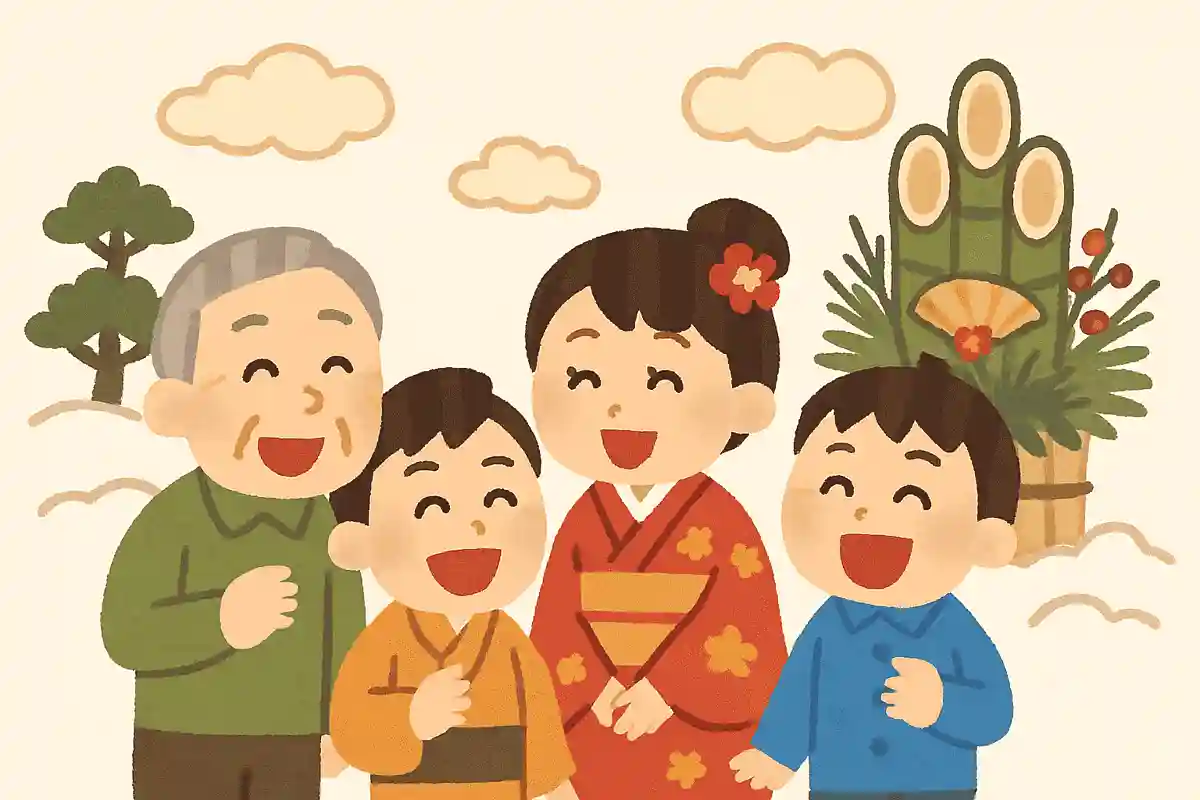
This verse brightly captures the air of the New Year.
The seasonal word “New Year” clearly marks this special beginning of the year, and the phrase “we all laugh” shifts the focus from an individual event to the scene of a gathering.
By linking the act of laughing to “inviting good fortune,” it connects action and result in an easily understandable way.
Without using difficult language, the seasonal word serves as a solid foundation for the poem, and its positive feeling comes through directly.
It’s a warm haiku befitting the start of the New Year.
First snowfall— the school route feels politely distant
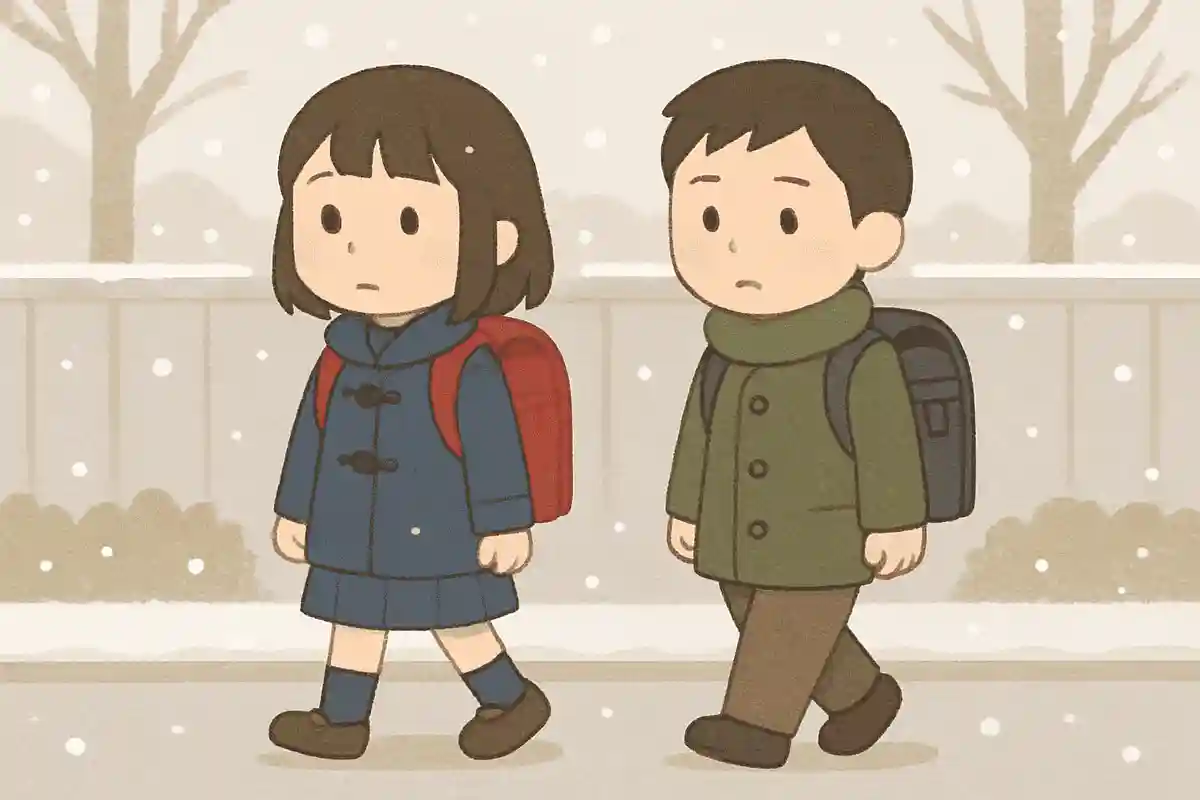
This is a verse that captures a change along a well-trodden path.
With the seasonal word “first snow,” it conveys that the morning is special only for that day.
It feels fresh that the school route walked every day seems to take a slight step back because of the snow.
The choice of the word “formal, like to a stranger” is skillful, expressing not only the scenery itself but also the walker’s confusion and sense of aloofness.
By not depicting any major event and focusing on a shift in sensation, it makes it easier for readers to recall the same feeling.
It’s a haiku that sums up the temporary sense of discomfort brought by the first snow in concise language, leaving a lingering aftertaste.
The north wind is the weather forecast announcing a cold wave.

This is a haiku that links everyday information with lived sensation.
Through the seasonal word “north wind,” it overlays the cold felt on the skin with the weather forecast received via screen or audio.
Starting from the invisible wind, the perspective naturally expands to the larger event of a “cold wave,” making the situation easy to imagine.
It is also notable that the poem focuses on the act of “informing” rather than minutely describing the north wind itself.
By connecting the experience of feeling the wind with the words heard in a weather report, it conveys the severity of winter indirectly.
The seasonal word does not float alone; it functions as the axis of the content, which is another commendable aspect of this verse.
The first sunrise of the year, with everyone wishing for happiness
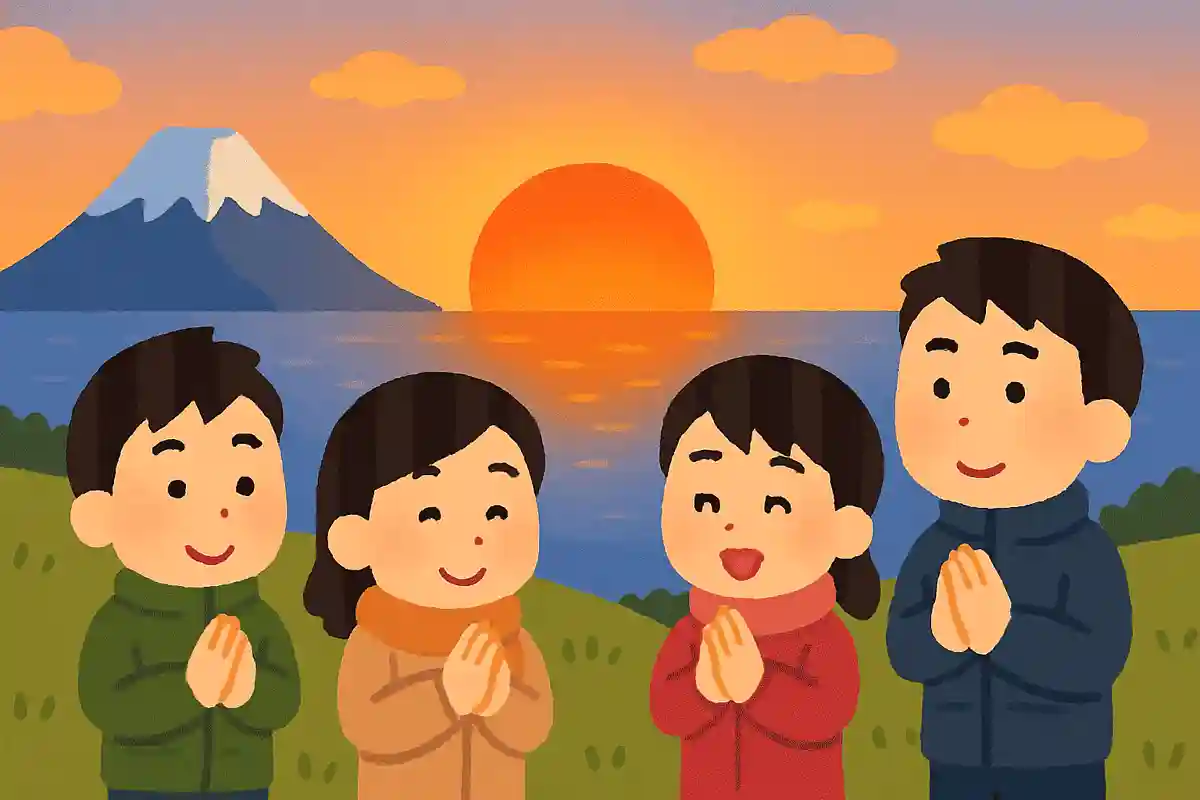
This is a verse that straightforwardly expresses feelings toward the start of the New Year.
The seasonal word “hatsuhinode” (the first sunrise of the year) lends a special quality that clearly conveys a turning of time and a fresh state of mind.
The choice to say “together,” rather than voicing a single person’s wish, is striking; it gathers a sense of shared feeling and a widening of the scene within the poem.
By focusing less on the first sunrise itself and more on the act of “wishing for happiness,” it makes it easy for readers to overlay the poem with their own New Year memories.
Its structure foregrounds memories over scenery, leaving readers with a simple, genuine afterglow.
It is a haiku with a warm tone, fitting for the beginning of a new year.
A lucky bag—open it and be shocked: leftover stock.

The seasonal word “lucky bag” evokes the unique exhilaration of the New Year, but the poem swiftly pivots to the punchline in the following development.
By including the straightforward reaction of “opening it and being surprised,” it makes it easy for the reader to relive the same feeling.
The final word, “leftovers,” is somewhat sharp-tongued yet carries a certain humorous ring.
By summing up the disappointment in a single word rather than dwelling on it, the poem avoids feeling heavy.
By deliberately betraying the image of the lucky bag as a symbol of good fortune, a small everyday incident is made to work as a haiku.
Snow falls—when I look around, the world is silver.
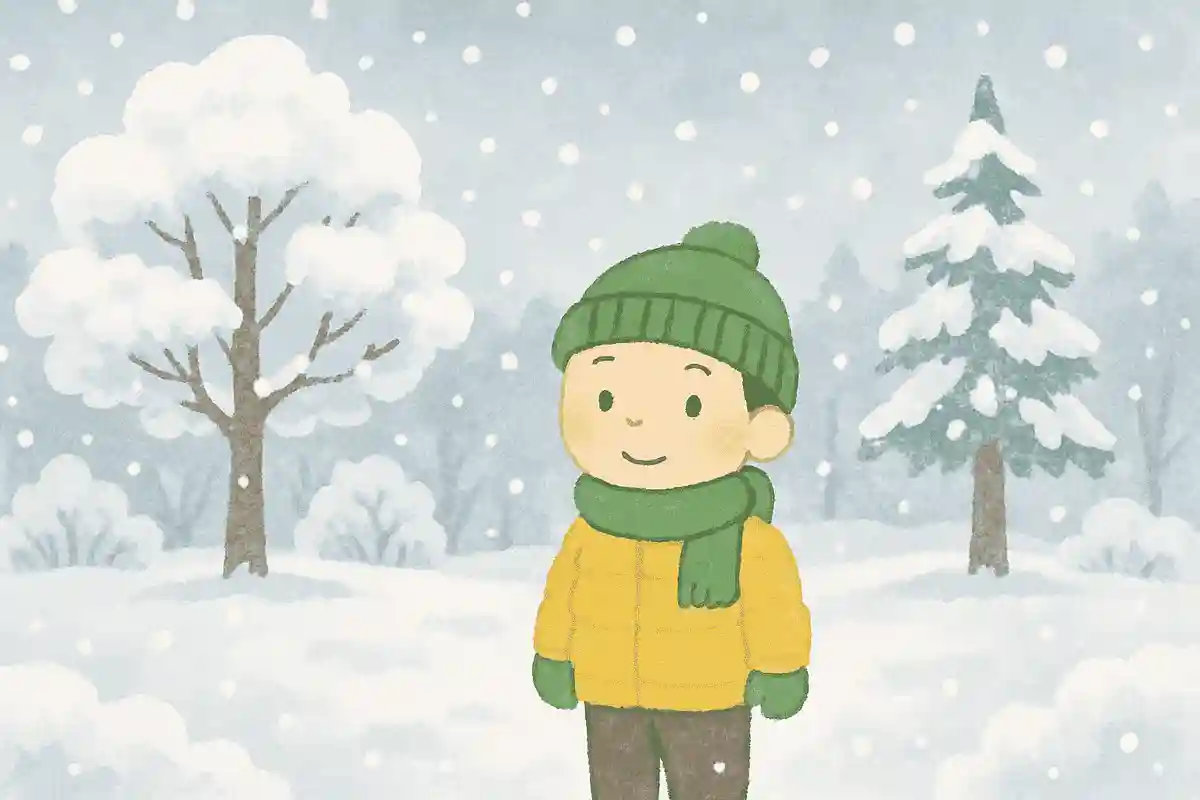
This is a verse that captures a winter scene in an instant.
By placing the seasonal word “snow” at the very beginning, it conveys both the sense of the season and the chill in the air.
Rather than depicting the falling snow directly, the structure shifts the gaze with “when I look around,” bringing the moment of the author’s realization into focus.
The following phrase, “a silver world,” conveys the surprise of a transformed landscape without elaborate description.
By refraining from stating emotions outright and showing only what is seen, the poem lets readers expand the scene by layering it with their own memories and experiences.
Though composed in plain language, the seasonal word functions as the poem’s core, and the extraordinary expanse brought by the snow is clearly felt.