

For Elementary School Students: Four-Character Idioms You Can Use for New Year’s Resolutions — How to Set Cool Goals!

When welcoming the New Year, why not express your goals with four-character idioms? In this article, we’ve gathered yojijukugo that are easy for elementary school students to use as New Year’s resolutions.
From isshoukenmei (giving your all) to shoshi-kantetsu (sticking to your original intention), these are words that are easy for kids to remember and have cool meanings.
They’re perfect for kakizome calligraphy or class presentations! Each idiom’s meaning is explained in a simple way, so while talking with your child about “What kind of year do you want this to be?”, try choosing a favorite phrase together.
[For Elementary Schoolers] Four-character idioms you can use for New Year’s resolutions: How to set cool goals! (1–10)
One day, one lifetime

Ichinichi isshō (One day, one lifetime) means treating each day with such care and intention that it becomes as meaningful as a whole life.
It encourages valuing your daily school life, playtime, studying, and lessons.
By keeping this in mind when you wake up in the morning or take on something new, you cultivate the drive to work positively toward your goals.
Including it in your New Year’s resolutions helps you adopt a mindset that makes each day fulfilling rather than wasted—an actionable and cool four-character idiom.

Once-in-a-lifetime encounter

“Ichigo ichie” means cherishing each encounter as if it happens only once in a lifetime, and it conveys the attitude of valuing relationships with friends, teachers, and family.
It’s easy for elementary school students to remember, and if set as a goal, it can be put into practice in daily school life and play.
It also leads to valuing one’s own time and opportunities, making it perfect for setting goals in learning and sports.
By keeping this four-character idiom in mind and making resolutions at the start of the new year, you can cultivate a mindset of treasuring each day.
Simple yet cool, it’s a highly recommended phrase that works as a practical goal.
Say what you mean, do what you say.

“Yuugen Jikkou” is a four-character idiom meaning to firmly carry out what you say you will do, and it encourages turning spoken goals into concrete actions.
If you decide “I’ll work hard on kanji this year” or “I’ll exercise every day,” it’s important not just to say it but to actually follow through.
Even when things get difficult along the way, the mindset of seeing it through because you said you would fuels your ability to keep making an effort.
The small steps you take each day build confidence and earn the trust of those around you.
If you choose it as your New Year’s resolution, it will be a year in which you link words with actions and truly feel your own growth.
telepathy; tacit understanding (literally: ‘heart-to-heart communication’)

“Ishin-denshin” is a four-character idiom meaning to communicate feelings heart-to-heart without putting them into words.
Incorporating it into your New Year’s resolutions can make you more mindful of how you interact with friends and family.
By acting with consideration for others’ feelings even without being told, and by understanding from expressions and gestures, you can naturally build trust.
In team activities or group study as well, respecting each other’s feelings leads to smoother cooperation.
By keeping this phrase in mind, you can value compassion and spend the year growing together with those around you.
friendly rivalry; mutual improvement through competition

Sessatakuma is a four-character idiom meaning to grow by honing one’s skills and knowledge together with peers while encouraging each other.
It’s a perfect word for when you work toward goals with friends at school or in club activities.
For example, by giving each other advice and engaging in friendly competition in sports days, studying, or lessons, you can experience growth you couldn’t achieve alone.
When you make a habit of working hard while helping your friends, you also come to appreciate the importance of cooperation and the joy of developing your own abilities.
Incorporating this word into your New Year’s resolutions fosters a daily mindset of taking on challenges and deepens your bonds with your peers.
A fresh start

“Shinki itten” is a four-character idiom that means resetting your mindset or circumstances and taking positive action.
Keeping it in mind at the start of a new year helps you clear your head and build the resolve to take on challenges.
For example, even if your studies or sports haven’t gone well, remembering this phrase can help you switch gears and try again.
It can also prompt you to reconsider your relationships with friends and family, enriching your daily life.
Adopted as a New Year’s resolution, it’s a phrase that encourages steady growth while maintaining a positive outlook.
sincerity
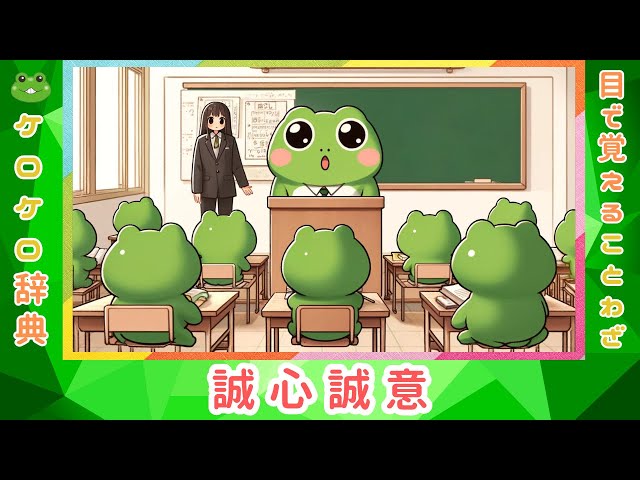
Seishin-seii is a four-character idiom that means acting sincerely and wholeheartedly.
If you include it in your New Year’s resolutions, you can be more mindful and considerate in how you interact with friends, family, and teachers.
By greeting people properly, keeping promises, and helping those in need, the spirit of “seishin-seii” shows up in your daily actions.
When you put your heart into efforts like studying and lessons, it becomes easier to feel your own growth.
Valuing small actions each day builds trust with those around you and leads to a pleasant, fulfilling life.