

Popular even among elementary school students! Stylish and easy-to-remember four-character idioms

There are plenty of chic, beautifully sounding four-character idioms.
If children get familiar with these stylish kanji phrases from elementary school, they’ll naturally start using them in daily study and life.
So here, we’ll introduce fashionable four-character idioms that are easy to use.
We’ll also answer questions like “In what situations can I use them?” and include ideas to make learning fun! It’s also a great idea to add heartfelt words in stylish characters to a handmade card.
Find words that speak to your heart and try using them in your everyday life.
Popular with elementary schoolers! Stylish and easy-to-remember four-character idioms (1–10)
Queen of the Night
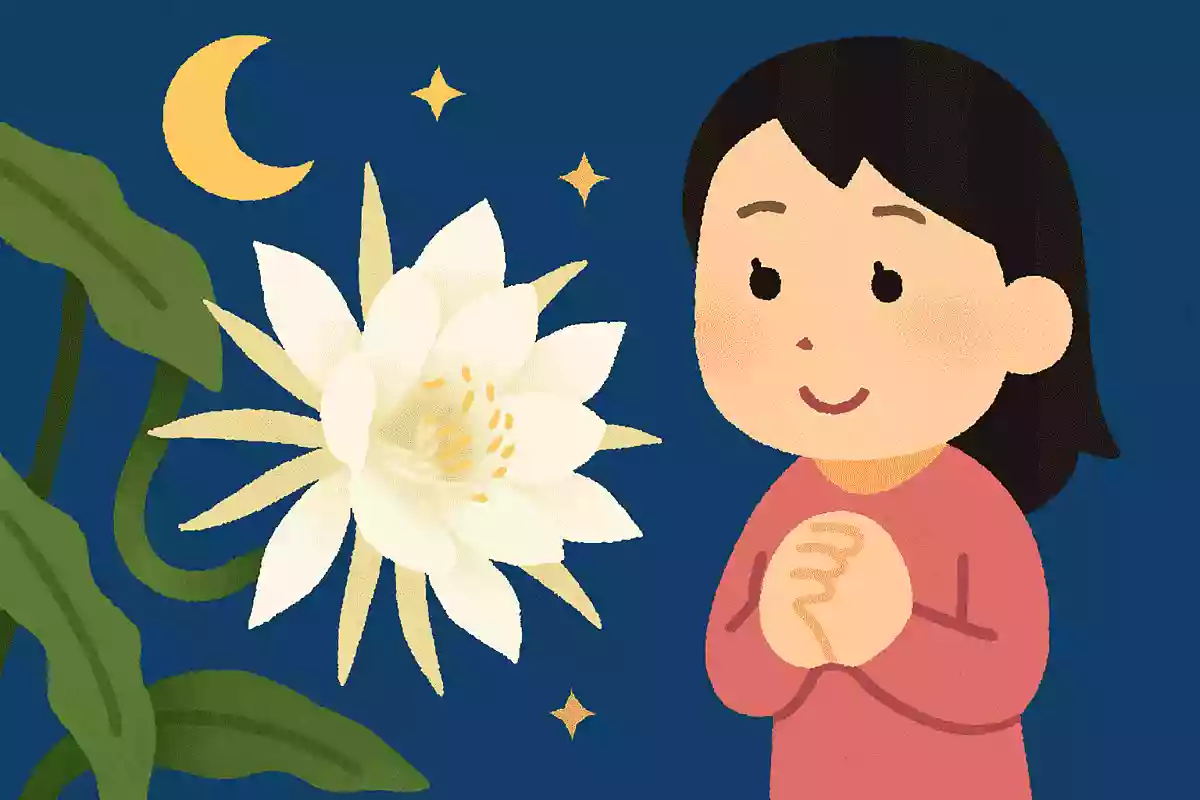
Gekka-bijin is the name of a flower, also affectionately known by the alternative name “Night Queen,” a type famed for blooming only at night.
The way it quietly displays its beauty while people are fast asleep makes it seem as if it deliberately conceals its own charm.
Another point is that its beauty has spawned various folk tales, suggesting that it has long been cherished as a special flower.
Strictly speaking, it’s not a four-character idiom but simply a name; still, as a cool four-character word, it comes highly recommended.

To each their own.

A four-character proverb meaning “ten people, ten colors = everyone has different ways of thinking and preferences.” For example, some people like curry, while others like ramen.
In the same way, it’s natural that each person values different things and likes different things.
This phrase is perfect for when you want to be considerate of those around you.
If you find yourself wondering, “Why does so-and-so think that way?”, try remembering, “Jūnin toiro—everyone’s different.” Everyone’s different, and that’s what makes everyone good.
That’s the wonderful part of this proverb.
If both adults and children can enjoy these “differences,” every day will become more colorful.

innocent and pure
This is a four-character idiom that describes an unadorned, innate natural disposition, expressing innocence and straightforwardness.
“Tenshin” means the unaltered form given by heaven, and “ranman” depicts a radiant state like flowers blooming in profusion, thereby conveying pure light.
It has a nuance close to “childlike innocence,” and using this term can also underscore how valuable purity is.
It’s a phrase that can convey a truthful, straightforward personality and a pure heart.
work in the fields on sunny days, read books on rainy days

It’s a four-character idiom that describes a lovely way of life: working in the fields on sunny days and reading books at home on rainy days.
It carries the meaning of living in harmony with nature while taking good care of both body and mind.
For example, you might use it like this: “Since the weather is nice today, let’s play in the garden, and if it rains, let’s read books at home.” A seikō-udoku lifestyle—‘plowing in fair weather, reading in rainy weather’—offers a hint for enjoying each day at a relaxed pace.
It’s a phrase that helps both children and adults cherish comfortable moments.
Even when you’re busy, try being active outdoors on sunny days and taking it slow with some reading on rainy days to refresh yourself.
Learning new things by revisiting the old

This is a four-character idiom that expresses studying matters of the past to gain new knowledge and insights.
It originates from a passage in the Analects, a classic of ancient China: “If you review the old and learn the new, you are fit to be a teacher,” conveying how essential the wisdom of our predecessors is.
It reminds us that instead of focusing only on the new, there are times when knowing history is what truly matters for a better future.
It is also a phrase that conveys an attitude toward things—valuing the history and the legacies left by those who came before us.
A hundred flowers in full bloom
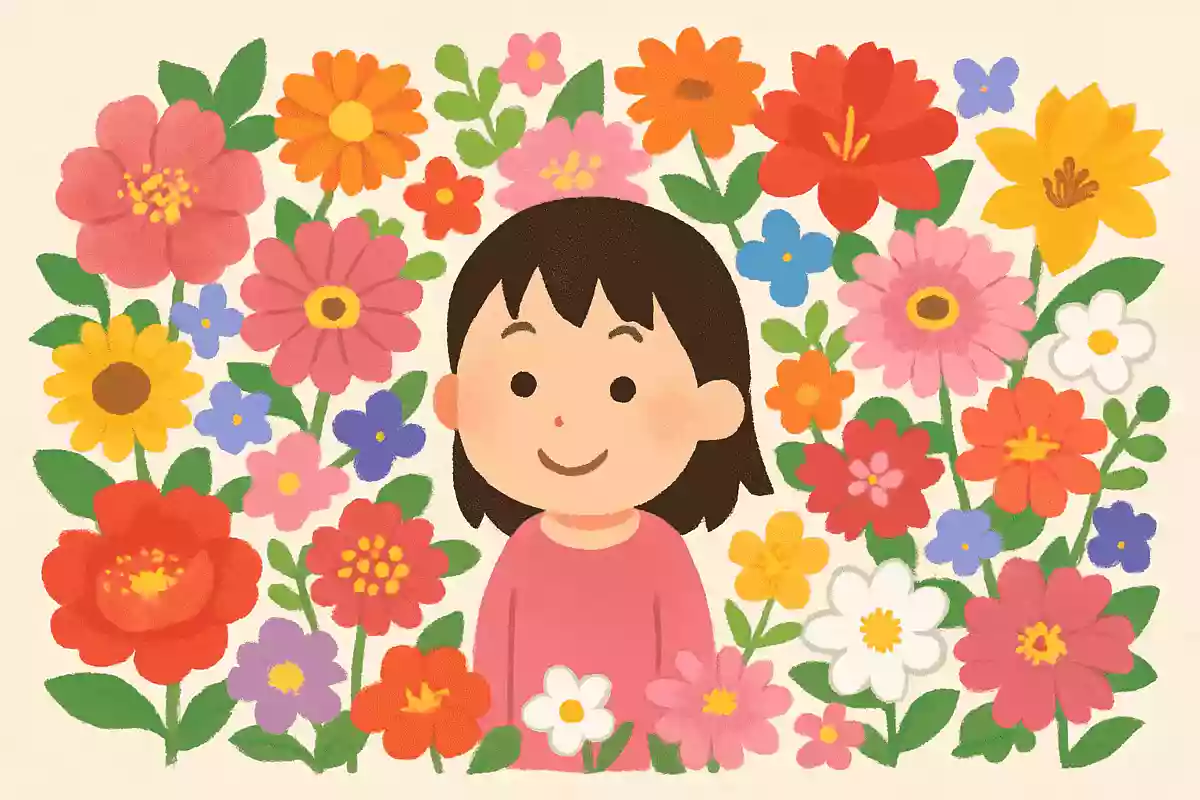
A four-character idiom that describes the scene of many flowers blooming beautifully all at once.
It also means that various things are shining beautifully at the same time.
For example, when everyone showcases different strengths at a school cultural festival, you can say, “It’s like hyakka ryōran.” The image of this phrase is that many unique personalities and talents sparkle all at once.
It’s easier to remember if you picture a spring landscape full of blossoms.
When everyone’s good qualities come together, the world becomes more fun—like a flower field in full hyakka ryōran.
flowery rhetoric

They’re “beautiful words” and “lovely turns of phrase.” For example, things like “You look super cool!” or “That picture is like a dream!”—words that feel nice to hear.
Using flowery expressions makes your speech and writing more enjoyable and really resonates with the listener.
“Your smile shines like the sun!” is another example.
When you use words with care, you can make others happy and lift their spirits.
Try using lots of kind, beautiful words at school and at home that will make others smile!