

A four-character idiom quiz that elementary schoolers will love! Questions become fun once you understand the meanings

We’re introducing a four-character idiom quiz that’s fun for everyone—from elementary school students to adults.
Do you really know the true meanings of idioms you use without thinking, like “一喜一憂” (being swayed between joy and sorrow) and “一石二鳥” (killing two birds with one stone)? Even adults might be surprised by some of the questions.
These idioms are useful for schoolwork too, and we present them in a quiz format with explanations that are easy for elementary schoolers to understand.
As you solve the quiz, you’ll experience the richness of Japanese expression.
Try it with family or friends to learn four-character idioms even more enjoyably!
Four-character idiom quiz that elementary school kids will love! Problems that become fun once you understand the meanings (1–10)
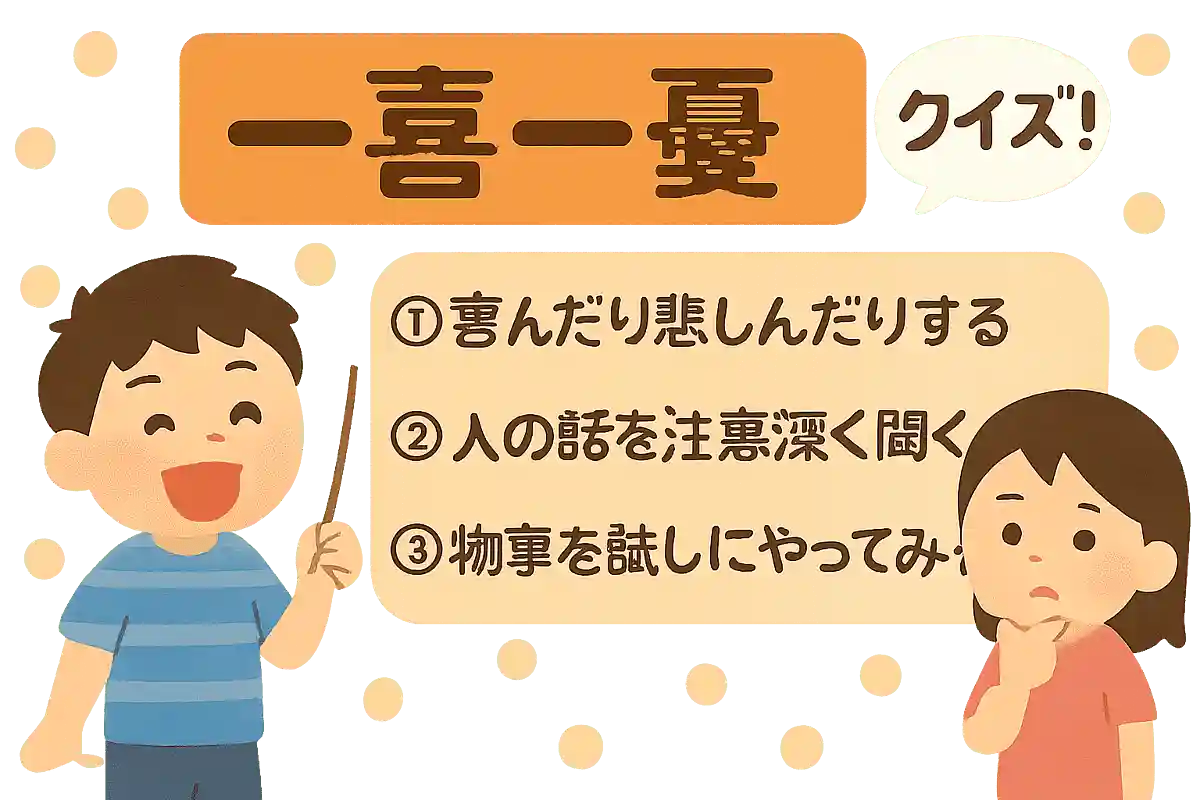
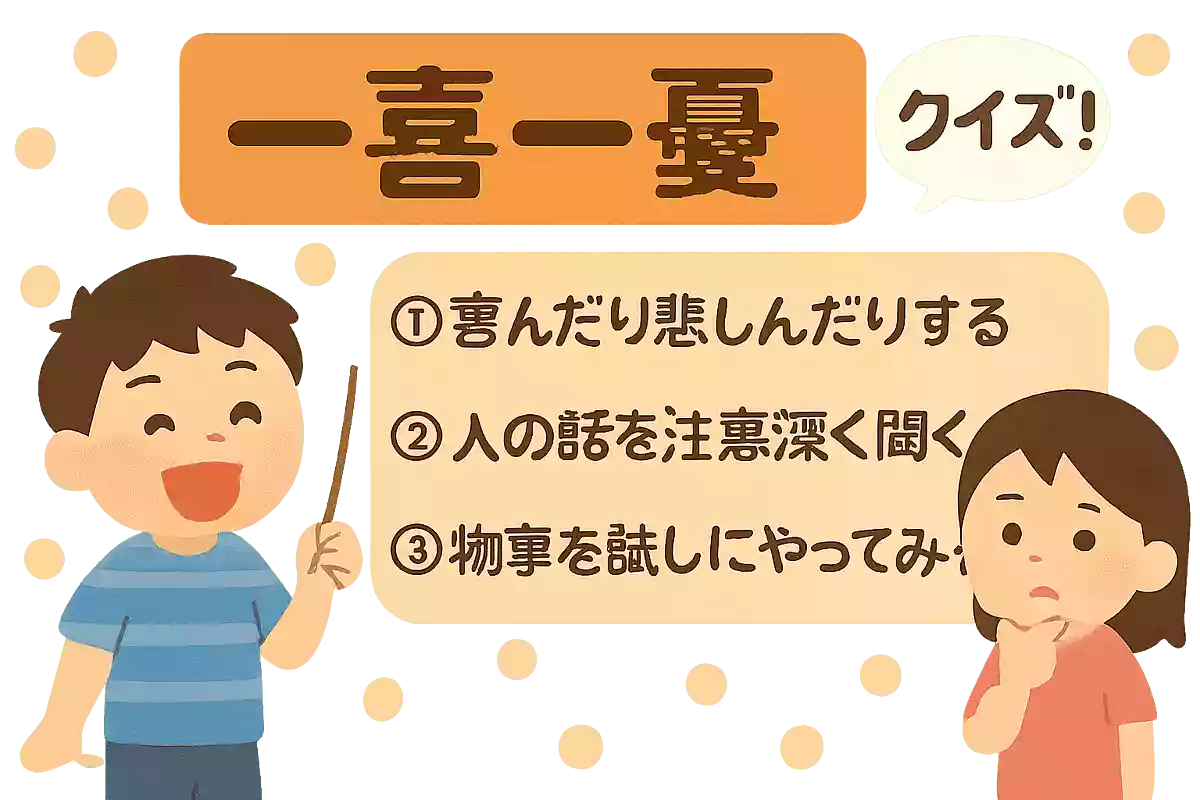
Which of the following best describes the meaning of “ikkyi ichiyū” (to be elated and dejected by turns)?
- Things that make me feel very happy
- To be delighted and saddened by the same thing
- Not worrying about anything
See the answer
To be delighted and saddened by the same thing
“Ikki-ichiyū” means having your mood swing between joy and worry every time a situation changes. It’s used like, “Instead of getting elated or discouraged by your test scores, let’s focus on doing our best for the next one!”

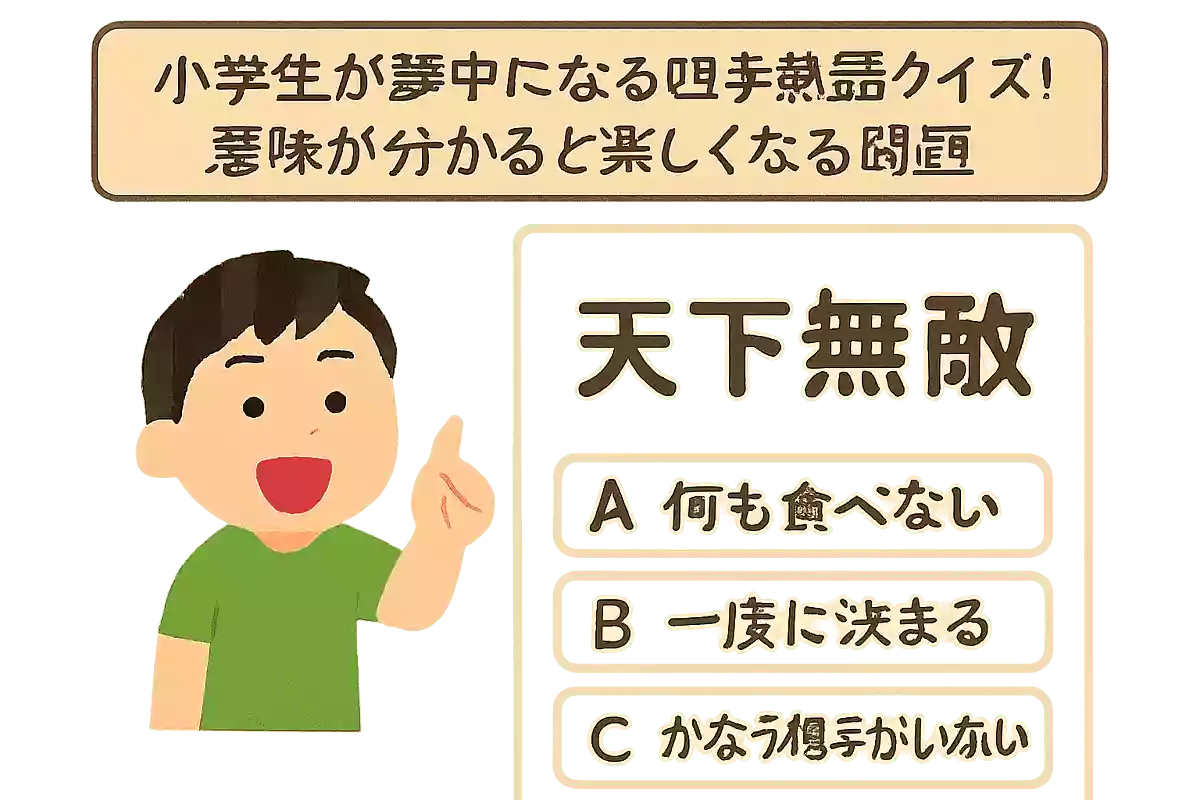
Which of the following best describes the meaning of “tenka muteki” (invincible under heaven)?
- Helping each other with everyone across the country
- Being so strong that it won’t lose to anyone
- Traveling to various countries
See the answer
Being so strong that it won’t lose to anyone
“Tenkamubeki” means “so strong that there’s no rival in the world.” In other words, it describes being unbeatable anywhere. You can use it like this: “That kid is unbeatable at arm-wrestling in our class.”
Which of the following is the meaning of “killing two birds with one stone”?
- to kill two birds with one stone
- to catch one bird with two stones
- Being able to do two things at once
See the answer
Being able to do two things at once
“One stone, two birds” means that by taking one action, two good things happen. Haven’t you ever had such an experience? It’s a very advantageous situation, isn’t it?
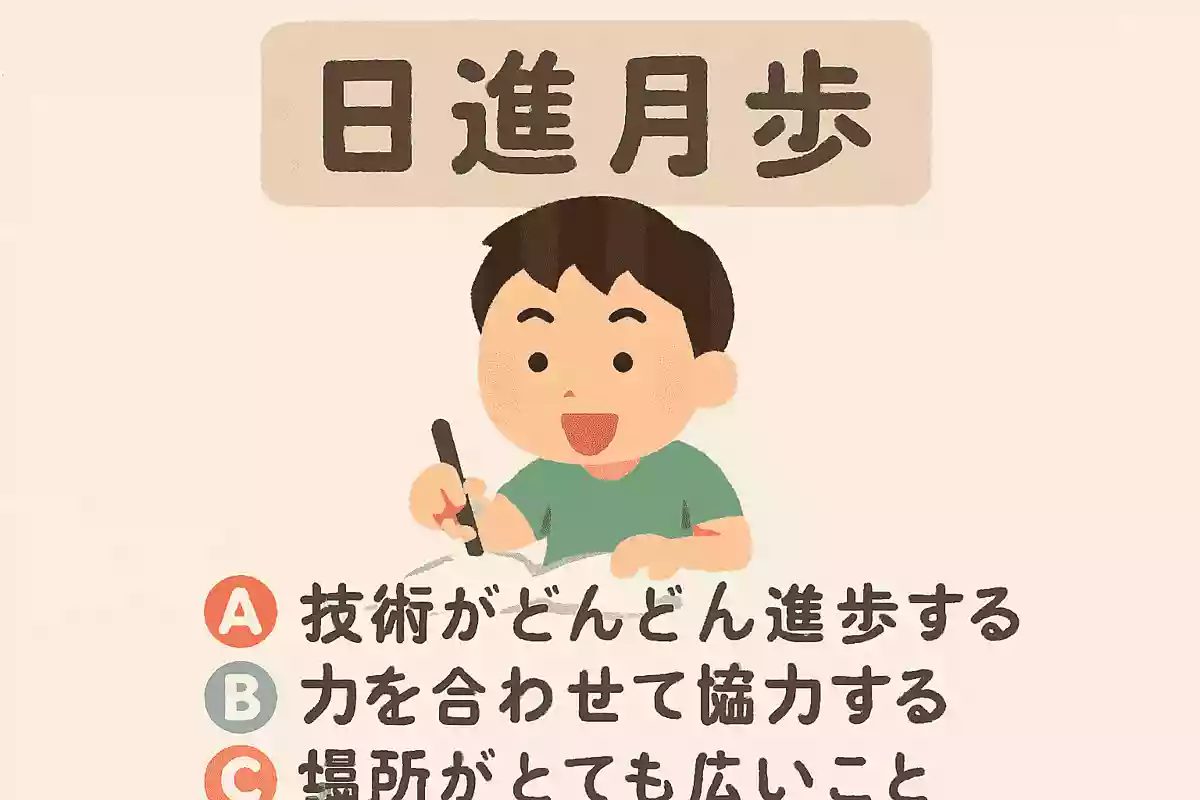
Which of the following describes the meaning of “nisshin-geppo” (steady daily progress)?
- Eating rice every day
- the way things keep progressing and developing
- Only being able to meet once a month
See the answer
the way things keep progressing and developing
“Nisshin geppō” literally means progressing day by day and stepping forward month by month—i.e., advancing or developing rapidly. It’s used like: “Robot technology is advancing at a rapid pace.”
Which of the following is the meaning of “shinra-banshō” (all things in the universe)?
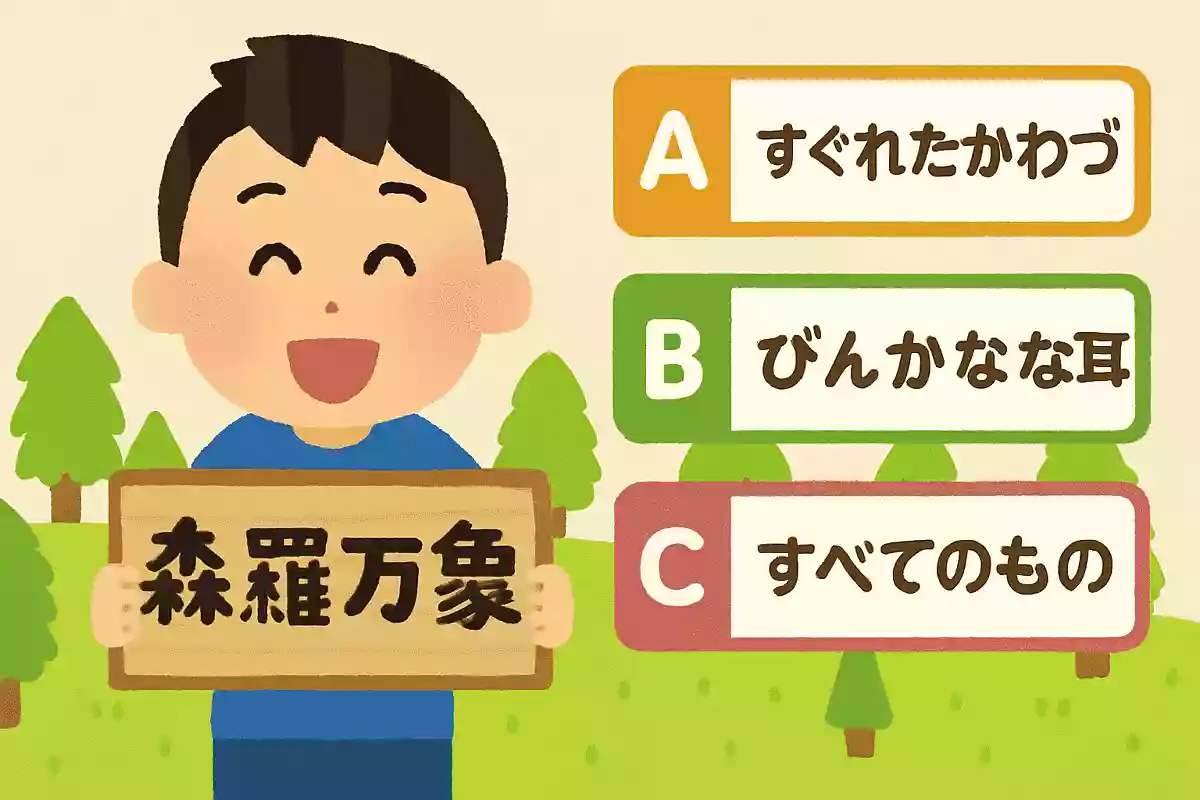
- All natural and cosmic phenomena
- Various animals in the forest
- The fact that the weather changes
See the answer
All natural and cosmic phenomena
“Shinra-banshō” refers to everything lined up in the forest and everything that exists in the universe; in other words, it denotes all phenomena in nature and the cosmos. It’s used in sentences like, “The fun of science lies in learning how the shinra-banshō works.”
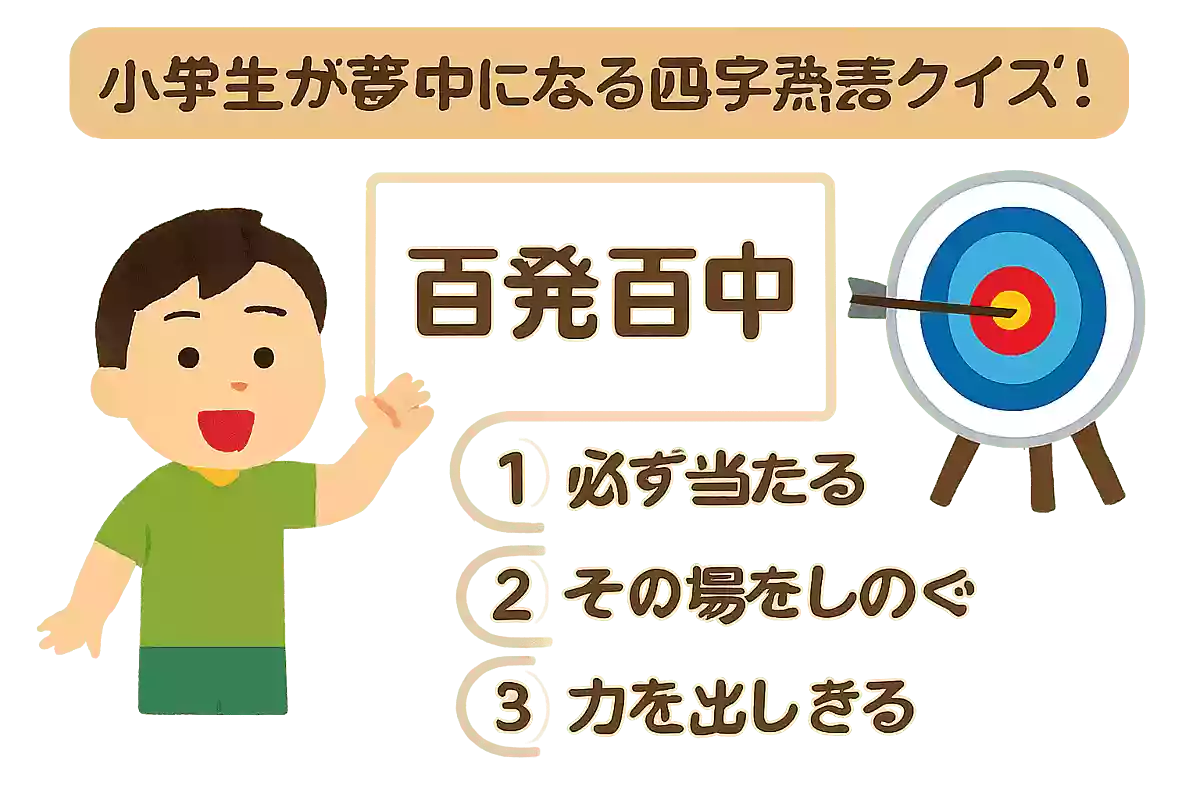
Which of the following is the meaning of “hyappatsu hyakuchū” (literally “a hundred shots, a hundred bullseyes”)?
- Always staying healthy and energetic
- Everything you do goes well
- Having a kind heart
See the answer
Everything you do goes well
Hyappatsu hyakuchū means “to succeed every single time” or “to always hit the target without missing.” It’s a four-character idiom that evokes the image of shooting arrows at a target.
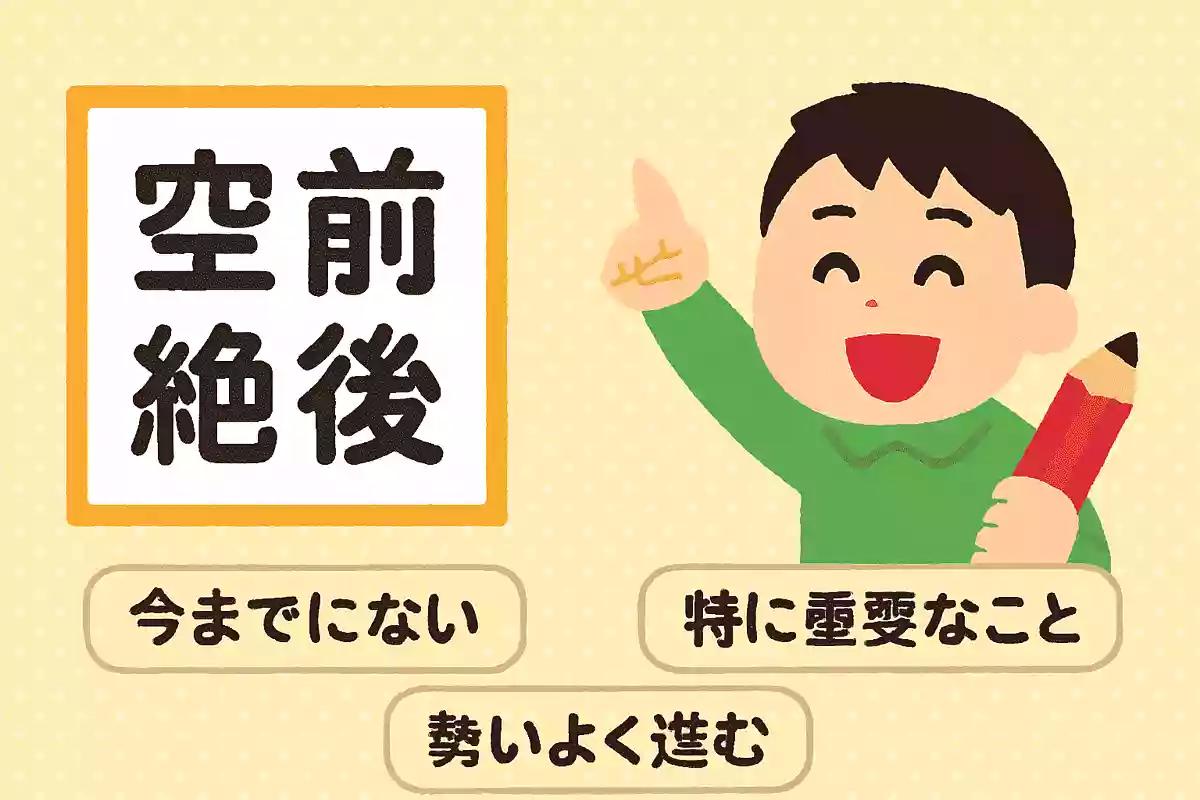
Which of the following is the meaning of “unprecedented and unparalleled”?
- Something so rare that there are no examples before or after it
- being in a great hurry
- As high and far as the sky and the ground are
See the answer
Something so rare that there are no examples before or after it
“Kūzen-zetsugo” refers to something extraordinarily rare and exceptional—so unprecedented that there has been nothing like it before and there will likely be nothing like it in the future. It is used in sentences like, “The world was astonished by the unprecedented discovery.”