

A four-character idiom quiz that elementary schoolers will love! Questions become fun once you understand the meanings

We’re introducing a four-character idiom quiz that’s fun for everyone—from elementary school students to adults.
Do you really know the true meanings of idioms you use without thinking, like “一喜一憂” (being swayed between joy and sorrow) and “一石二鳥” (killing two birds with one stone)? Even adults might be surprised by some of the questions.
These idioms are useful for schoolwork too, and we present them in a quiz format with explanations that are easy for elementary schoolers to understand.
As you solve the quiz, you’ll experience the richness of Japanese expression.
Try it with family or friends to learn four-character idioms even more enjoyably!
- Interesting four-character idioms for elementary schoolers! Words you'll want to use once you understand their meanings
- [For Elementary School Students] A Four-Choice Proverb Quiz Recommended for Kids
- Become a trivia master with a multiple-choice quiz for elementary schoolers! A fun problem collection that captivates both kids and adults
- Learn the meanings too! Cool four-character idioms that elementary school students will want to remember
- Surprisingly tricky! Check your general knowledge with a four-character idiom quiz
- Easy-to-remember, positive four-character idioms for elementary school kids! Words that brighten the heart
- Popular even among elementary school students! Stylish and easy-to-remember four-character idioms
- Fun Quiz Collection Guaranteed to Stump and Delight Elementary School Kids
- Boost your vocabulary with four-character idioms that include numbers! A collection of four-character idioms for elementary school students to learn.
- [For Elementary Students] A Collection of Beautiful Four-Character Idioms to Know
- [Satisfying When Solved] Challenging Quizzes Recommended for Elementary School Students!
- Fun quizzes for elementary school kids: a collection of questions everyone can enjoy together
- Recommended for elementary school class goals! A collection of impactful ideas using four-character idioms
Four-character idiom quiz that elementary school kids will love! Problems that become fun once you understand the meanings (1–10)
Which of the following is the meaning of “bijireiku” (flowery words)?
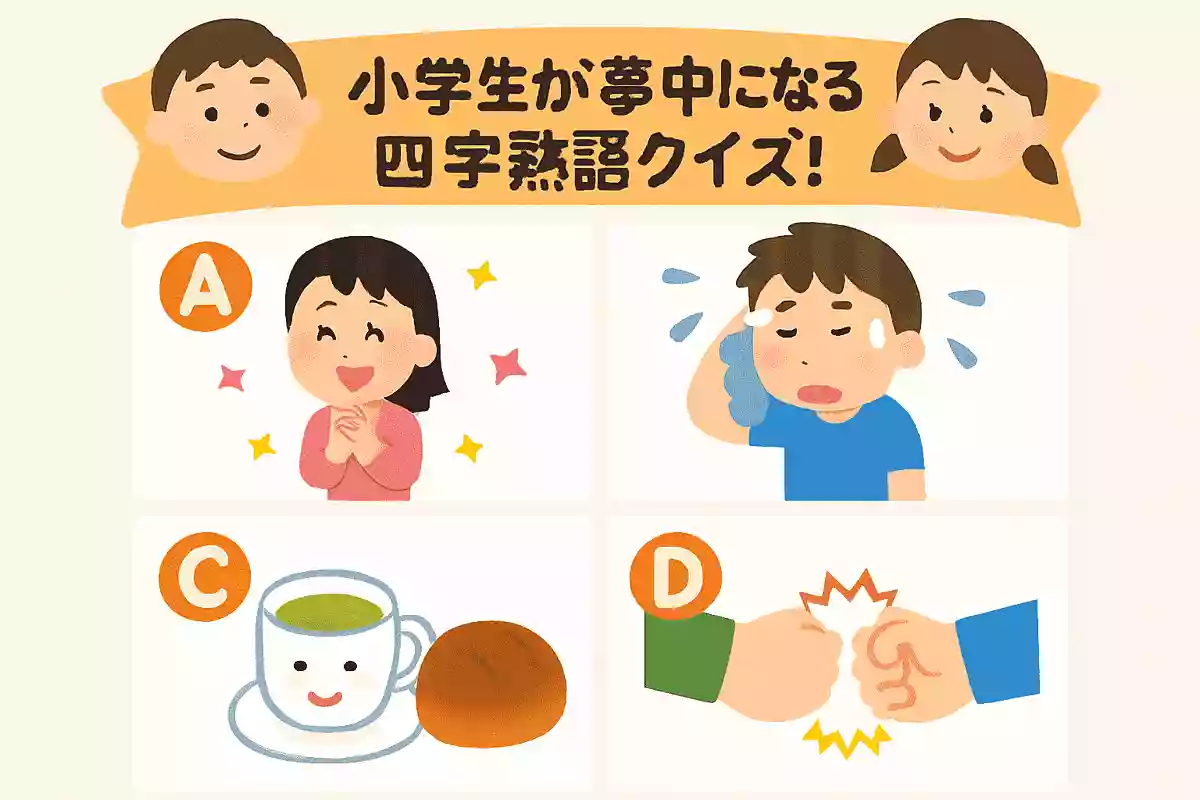
- a laudable deed
- beautiful words and words adorned only on the surface
- Preserving old traditions
See the answer
beautiful words and words adorned only on the surface
“Bijireiku” refers to words that sound elegant or impressive on the surface. They may lack genuine meaning or sincerity. It’s used like this: “His speech was full of flowery words, and I couldn’t see his true feelings.”

Which of the following is the meaning of “rōnyaku nannyo” (people of all ages and genders)?
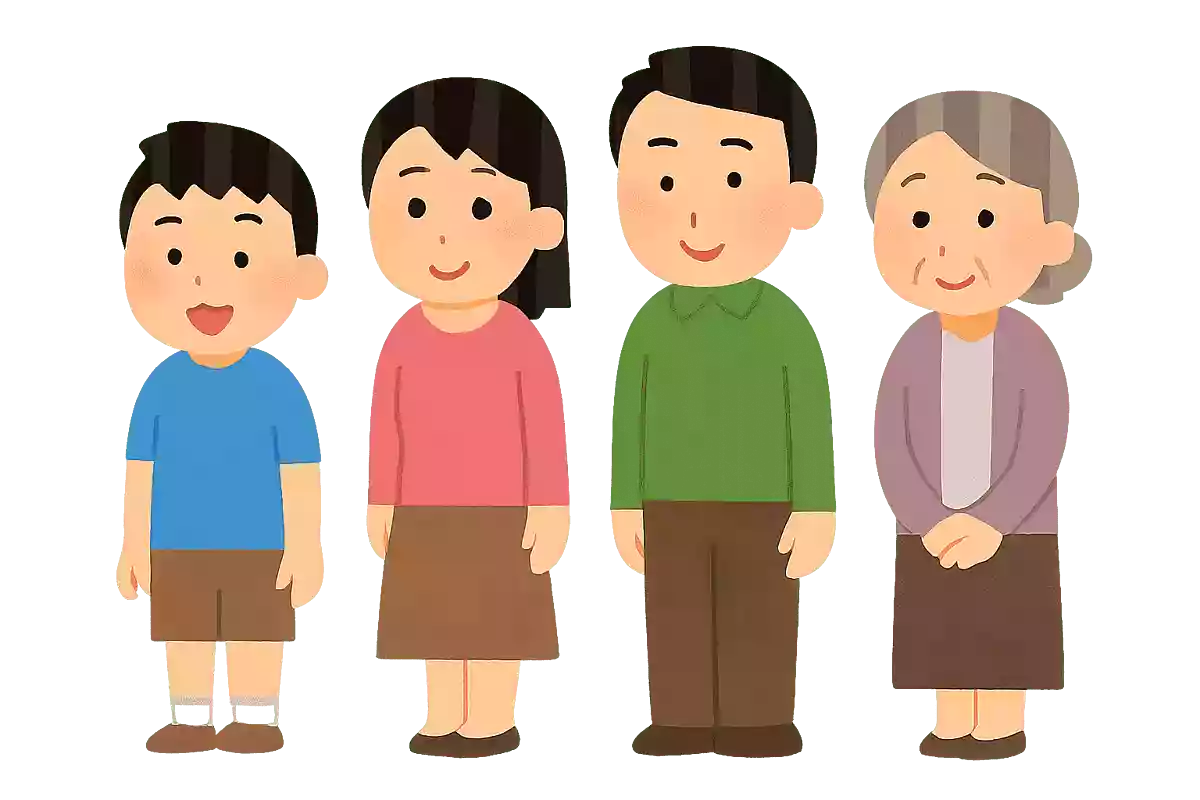
- Represents only boys and girls
- Refers only to older people
- It refers to everyone—from older people to the young, both men and women.
See the answer
It refers to everyone—from older people to the young, both men and women.
“Rōnyaku nannyo” (老若男女) is a term that collectively refers to everyone—older people and younger people, men and women alike. It’s used in sentences like, “This park can be enjoyed by people of all ages and genders.”
Which of the following is the meaning of “self-introduction”?
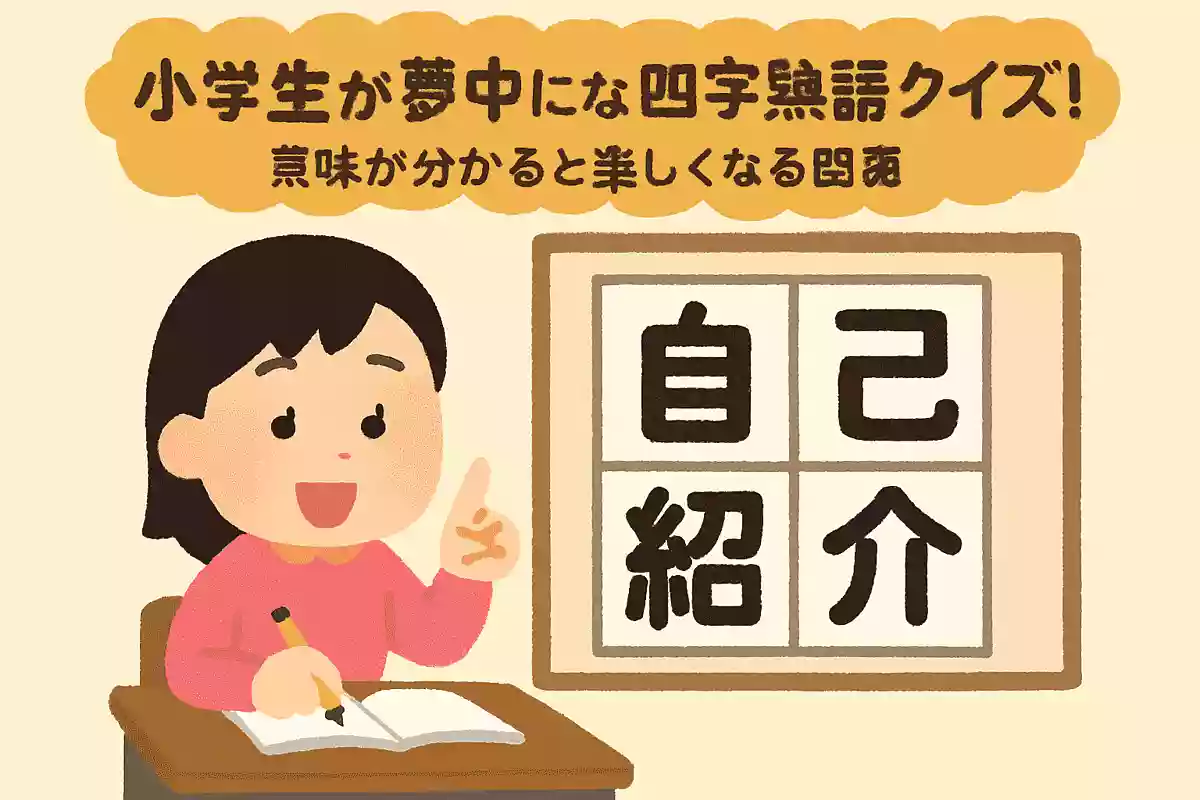
- Talking about myself to everyone
- Introducing a friend
- Reading a book
See the answer
Talking about myself to everyone
“Self-introduction” means introducing yourself to others—that is, telling them things like your name and what you like. You often do this when you meet new friends or teachers for the first time.
Four-character idiom quiz that elementary school students will love! Questions that become fun once you understand the meanings (11–20)
Which of the following is the meaning of “zenryoku tōkyū” (giving it your all)?
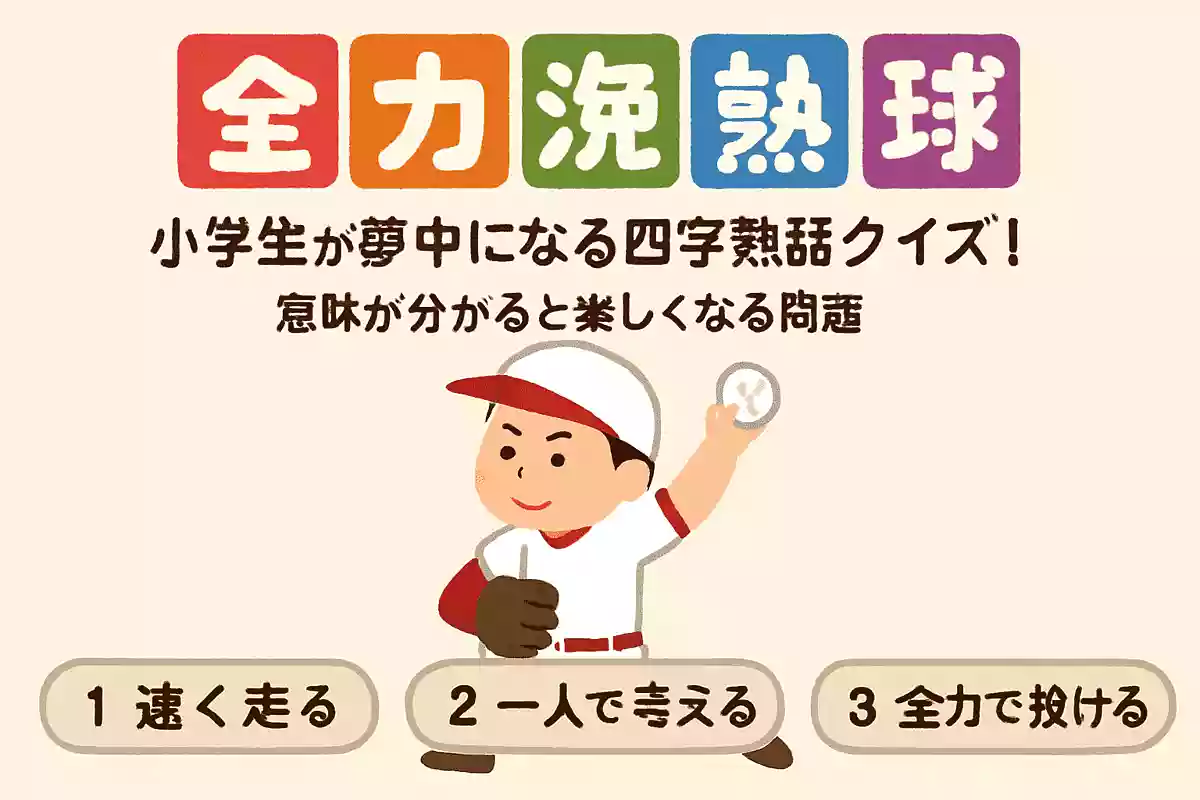
- Doing it without straining yourself
- To give it your all
- to make things very easy (for oneself)
See the answer
To give it your all
“Zenryoku-tōkyū” comes from a baseball pitcher throwing with all their strength, and it’s used to mean “to tackle something by putting all your energy into it.”
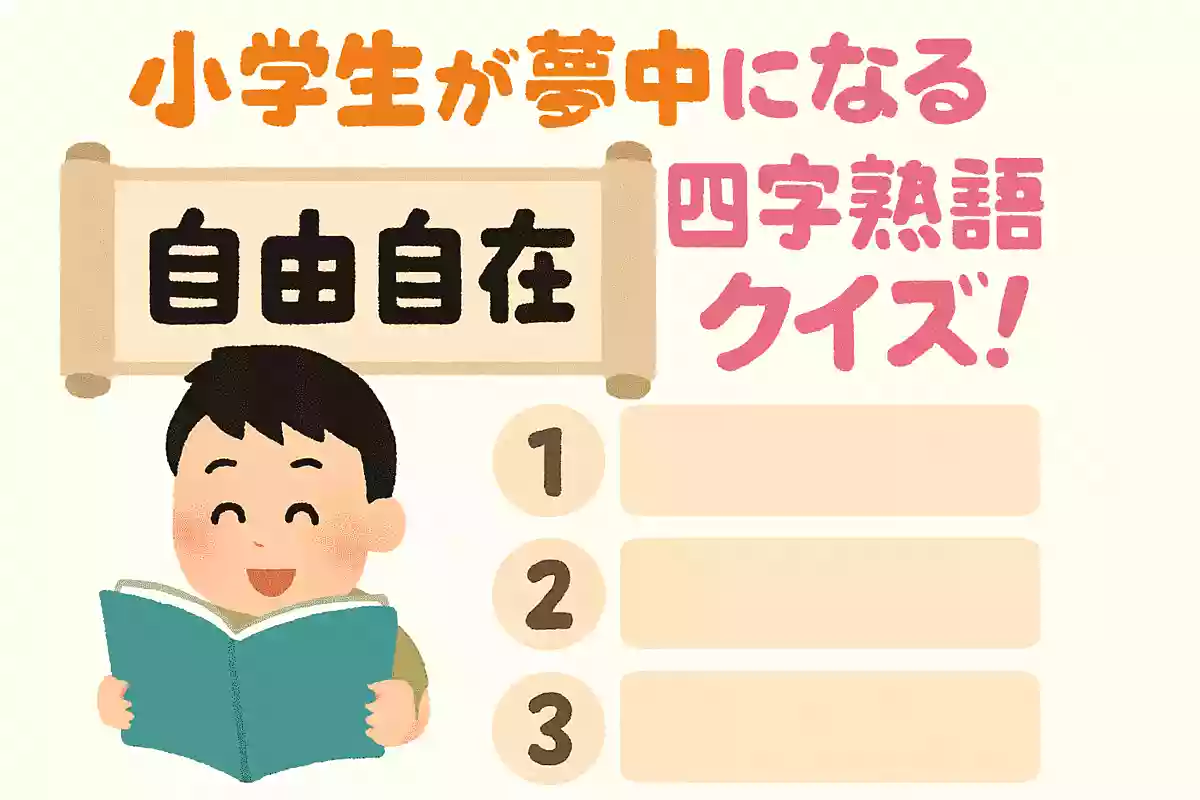
Which of the following is the meaning of “jiyū jizai” (自由自在)?
- Being able to do everything the way you want
- Working together with everyone
- To study seriously
See the answer
Being able to do everything the way you want
"Jiyū-jizai" means being able to act or do things exactly as you intend. For example, you can use it like this: "I can use scissors freely and skillfully."
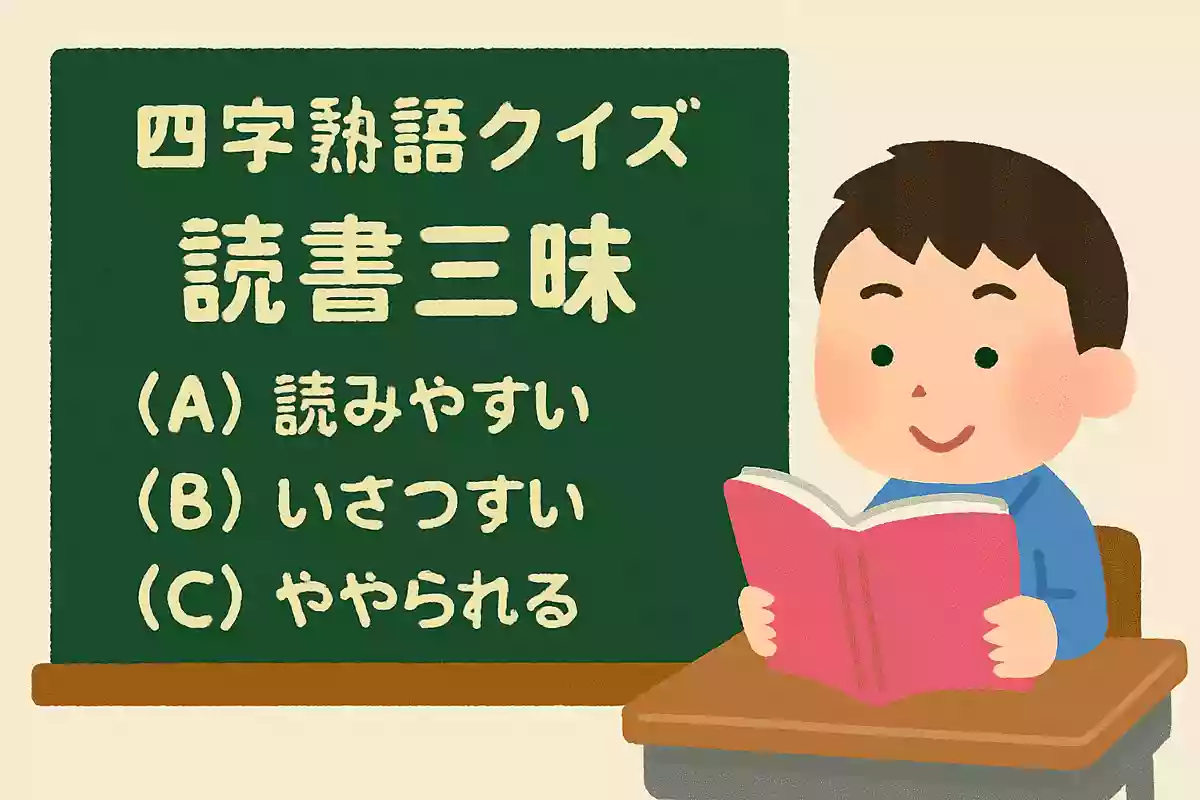
Which of the following is the meaning of “dokusho-zanmai” (being absorbed in reading)?
- Collecting a lot of books
- Becoming the author of various books
- Spending time idly doing nothing
See the answer
Being absorbed in reading a book
“Dokusho-zanmai” is a four-character idiom meaning to be so absorbed in reading that you forget everything else. You can use it like this: “I spent last Sunday completely immersed in reading.”
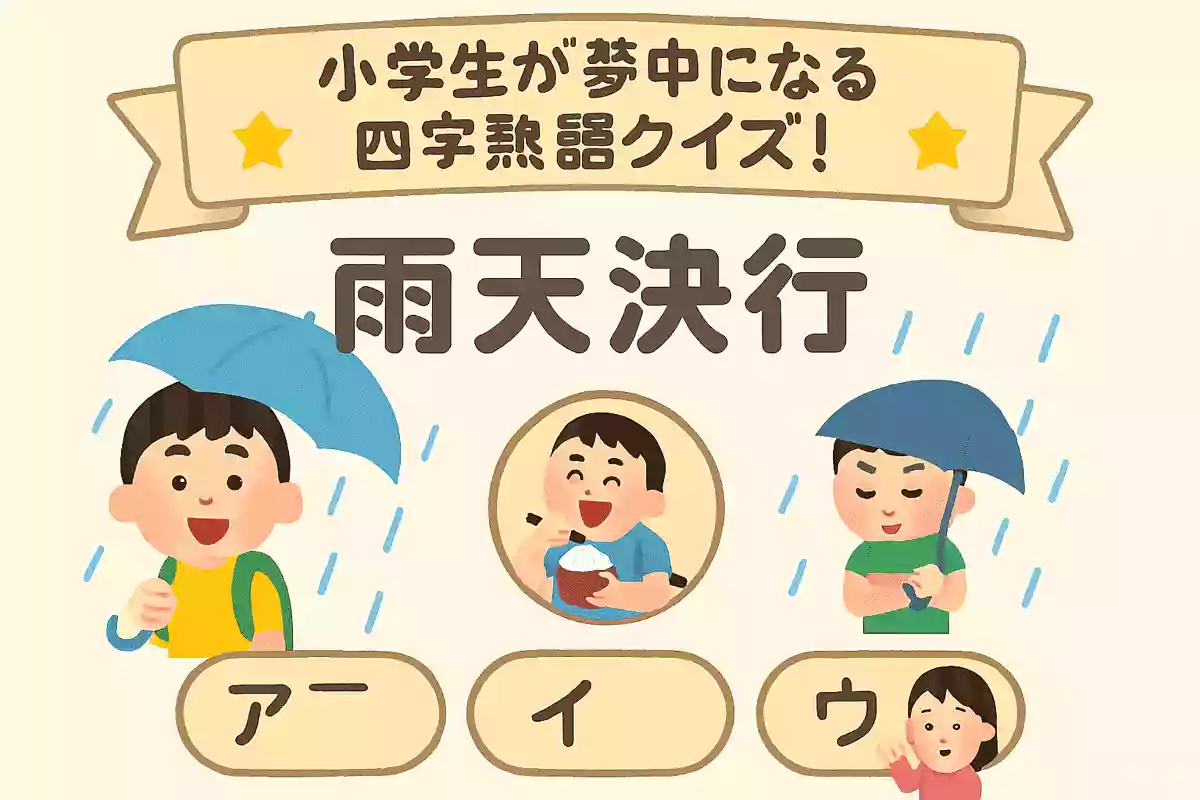
Which of the following does “uten kekkō” (held even if it rains) mean?
- It will be canceled if it rains.
- We will proceed as scheduled even if it rains.
- Only on sunny days
See the answer
We will proceed as scheduled even if it rains.
“Uten kekkō” means that an event will proceed as planned even if it rains, without being canceled. For example: “Next week’s field trip will be held rain or shine.”