

Popular even among elementary school students! Stylish and easy-to-remember four-character idioms

There are plenty of chic, beautifully sounding four-character idioms.
If children get familiar with these stylish kanji phrases from elementary school, they’ll naturally start using them in daily study and life.
So here, we’ll introduce fashionable four-character idioms that are easy to use.
We’ll also answer questions like “In what situations can I use them?” and include ideas to make learning fun! It’s also a great idea to add heartfelt words in stylish characters to a handmade card.
Find words that speak to your heart and try using them in your everyday life.
- Interesting four-character idioms for elementary schoolers! Words you'll want to use once you understand their meanings
- Learn the meanings too! Cool four-character idioms that elementary school students will want to remember
- [For Elementary Students] A Collection of Beautiful Four-Character Idioms to Know
- Easy-to-remember, positive four-character idioms for elementary school kids! Words that brighten the heart
- Perfect for elementary school slogans! A collection of four-character idiom ideas you'll want to use
- Recommended for elementary school class goals! A collection of impactful ideas using four-character idioms
- [Elementary School Students] Perfect for Kakizome! A Collection of Four-Character Idiom Ideas
- For Elementary School Students: Four-Character Idioms You Can Use for New Year’s Resolutions — How to Set Cool Goals!
- Four-character idioms that wish for happiness! Words that will warm the hearts of elementary school children
- Easy for elementary school students to remember! A four-character idiom that expresses the feeling of trying your best
- [Four-Character Idioms] Impressive and Cool Sound! A Collection of Famous Quotes Worth Knowing as General Knowledge
- [For Elementary School Students] Four-character idioms you can use in sports! Words that are helpful for cheering and goal setting
- A four-character idiom quiz that elementary schoolers will love! Questions become fun once you understand the meanings
Popular with elementary schoolers too! Stylish and easy-to-remember four-character idioms (31–40)
with all one’s might

When you set out to do something, the determination to work hard and see it through to the end is important.
So how about adopting the four-character idiom “isshōkenmei” as your New Year’s resolution? The term originates from “isshokenmei,” which referred to samurai risking their lives to protect their fief, their very means of livelihood.
Today, it’s widely used with the meaning of “putting one’s life on the line.” While life-or-death situations are rare in modern times, it’s a phrase that conveys a strong will to accomplish something—making it well-suited as a New Year’s resolution.

telepathy; tacit understanding (literally: ‘heart-to-heart communication’)

“Ishin-denshin” is a four-character idiom meaning to communicate feelings heart-to-heart without putting them into words.
Incorporating it into your New Year’s resolutions can make you more mindful of how you interact with friends and family.
By acting with consideration for others’ feelings even without being told, and by understanding from expressions and gestures, you can naturally build trust.
In team activities or group study as well, respecting each other’s feelings leads to smoother cooperation.
By keeping this phrase in mind, you can value compassion and spend the year growing together with those around you.

Late bloomer

“Taiki-bansei” (literally, “a great vessel matures late”) is a four-character idiom meaning that even if talent or ability doesn’t show right away, it will grow over time and eventually blossom greatly.
If you adopt it as a New Year’s resolution, it helps you keep striving without rushing, even when results don’t come immediately.
Whether it’s studying, sports, art, or music—whatever you’re challenging yourself with—even if things don’t go well at first, daily efforts accumulate and lead to significant achievements in the future.
It’s a phrase that teaches the importance of continuing small efforts and ingenuity, fostering a mindset that enjoys your growth over the long run.
It’s a practical resolution that helps you stay aware of the value of developing your abilities from a long-term perspective.
A fresh start

“Shinki itten” is a four-character idiom that means resetting your mindset or circumstances and taking positive action.
Keeping it in mind at the start of a new year helps you clear your head and build the resolve to take on challenges.
For example, even if your studies or sports haven’t gone well, remembering this phrase can help you switch gears and try again.
It can also prompt you to reconsider your relationships with friends and family, enriching your daily life.
Adopted as a New Year’s resolution, it’s a phrase that encourages steady growth while maintaining a positive outlook.
Say what you mean, do what you say.

“Yuugen Jikkou” is a four-character idiom meaning to firmly carry out what you say you will do, and it encourages turning spoken goals into concrete actions.
If you decide “I’ll work hard on kanji this year” or “I’ll exercise every day,” it’s important not just to say it but to actually follow through.
Even when things get difficult along the way, the mindset of seeing it through because you said you would fuels your ability to keep making an effort.
The small steps you take each day build confidence and earn the trust of those around you.
If you choose it as your New Year’s resolution, it will be a year in which you link words with actions and truly feel your own growth.
sincerity
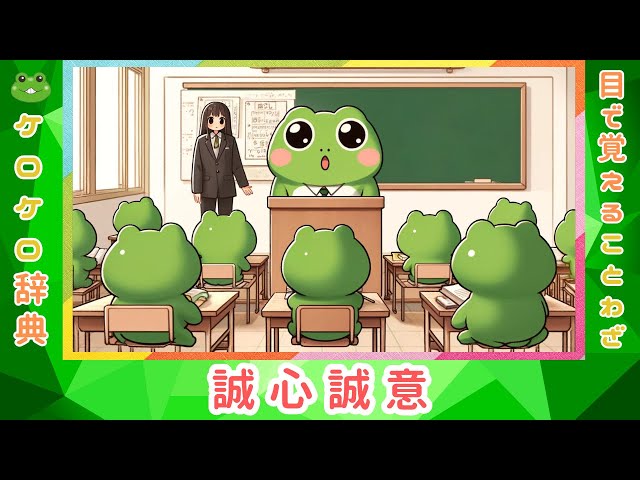
Seishin-seii is a four-character idiom that means acting sincerely and wholeheartedly.
If you include it in your New Year’s resolutions, you can be more mindful and considerate in how you interact with friends, family, and teachers.
By greeting people properly, keeping promises, and helping those in need, the spirit of “seishin-seii” shows up in your daily actions.
When you put your heart into efforts like studying and lessons, it becomes easier to feel your own growth.
Valuing small actions each day builds trust with those around you and leads to a pleasant, fulfilling life.
Once-in-a-lifetime encounter

Encounters with people sometimes lead to long-term relationships like friendships, but in most cases they end as a single passing moment.
In Japanese, a once-in-a-lifetime encounter is expressed by the phrase ichigo ichie.
Precisely because most encounters are ichigo ichie, we should cherish the friends we’ve grown close to and the family who always helps us.
It might be nice to reframe your thinking with that sentiment.
Except for the character 期, the other kanji are relatively easy to write, so try your first calligraphy of the year while paying attention to balance.

single-minded devotion
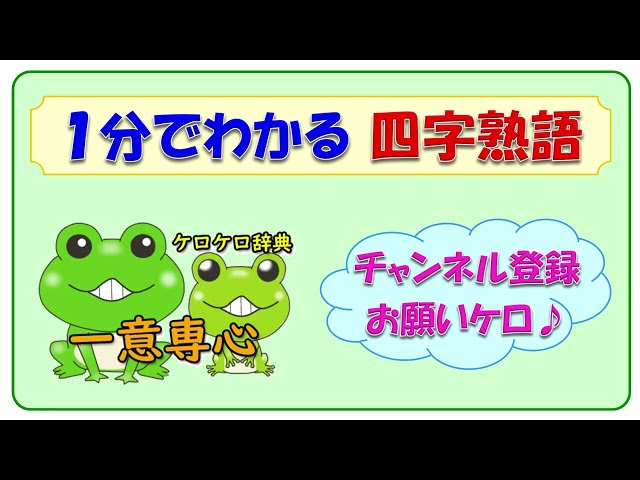
Elementary school children are at an age where so many things catch their interest, aren’t they? It’s not uncommon for kids to get so absorbed in various interests that their studies get neglected or they don’t hear what their family is saying.
If this is the year a child has decided to focus on one thing and really commit to it, the four-character idiom ichi-i senshin (single-minded devotion) is a perfect fit.
It’s wonderful to be curious about many things, but to make sure the important things don’t get neglected, let’s write this goal in a New Year’s calligraphy piece and concentrate on our goals and what’s right in front of us!
Stay true to your original intention.
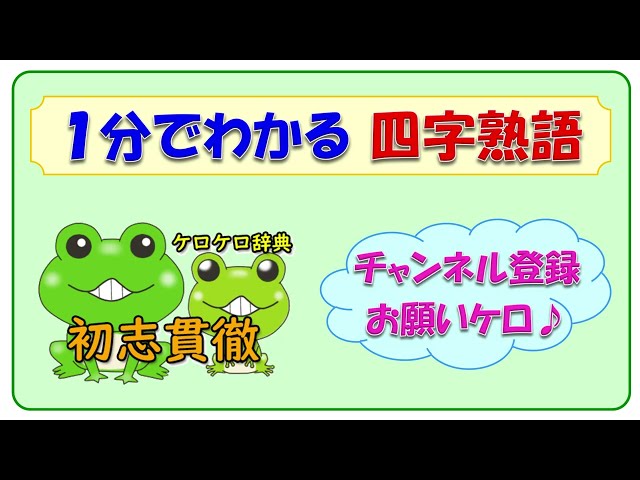
It’s not easy to keep going steadily and work hard until you achieve the goal you set at the beginning.
If your child tends to give up after just a few days or quits as soon as they face a problem, why not try writing this phrase in their first calligraphy of the year to help them develop a never-give-up mindset? This phrase means to see things through to the end without abandoning the original goal, no matter how high a wall you encounter along the way.
Try setting concrete goals while adopting this phrase as a resolution.
steady progress day by day; making rapid strides

Elementary school children who grow the more they try are the very embodiment of the phrase “steady progress day by day,” aren’t they? This expression, which describes growing, developing, and making advances day after day, is also recommended for kakizome (the first calligraphy of the year).
Another plus is that it doesn’t contain complicated kanji, making it easier to grasp each component clearly.
On the other hand, while you grow more as you tackle things, you won’t grow at all if you do nothing.
If your child tended to slack off a bit last year, have them write this four-character idiom for their New Year’s calligraphy and value daily effort!