

![[Piano Recital] Carefully Selected Masterpieces and Popular Pieces Recommended for 3rd Grade Elementary School Students!](https://i.ytimg.com/vi_webp/imtnyZeqMXE/maxresdefault.webp)
[Piano Recital] Carefully Selected Masterpieces and Popular Pieces Recommended for 3rd Grade Elementary School Students!


A piano recital where children showcase the results of their daily practice to family and friends.
When choosing pieces—whether it’s a favorite song, a piece that lets them show off newly acquired techniques, or something unique that you won’t find in standard piano method books—it can be quite challenging to settle on a selection that satisfies the teacher, the student, and the parents alike.
In this article, we’ve picked out recommended pieces for piano recitals to help guide your selection.
This time, we’ve focused on pieces especially suitable for around third-grade elementary school students.
If you’re struggling to choose a recital piece, please use this as a reference!
[Piano Recital] Carefully Selected Masterpieces and Popular Pieces Recommended for 3rd Graders (1–10)
At the time of the danceHeinrich Lichner

“At the Dance Hour” by the German composer Heinrich Lichner—known for leaving many works for beginning pianists—is a piece that, like Lichner’s “Forget-Me-Not” and “A Short Story,” is often chosen for recitals.
While maintaining a light waltz rhythm, it’s best to play the cute melody and the triplets that appear like ornamentation with a bright, sparkling tone.
Also, pay attention to the sustained bass notes on the first beat of the accompaniment!

castanetWilliam Gillock

William Gillock’s “Castanets” features a striking opening with a succession of chords and an exotic musical character.
Not only is it varied and fun to play, but it also incorporates many essential elements for progressing in piano study—such as alternating hands, tempo control, and passages requiring finger independence—allowing students to build skills that will benefit future performances as they practice.
It’s a perfect choice for children who think “standard pieces are boring” or who, precisely because it’s a recital, want to try something with a different atmosphere from the pieces found in their usual textbooks.
Dance and SongNakata Yoshinao

This is a captivating solo piano piece woven from two elements: “Dance” and “Song.” Rhythmic, Japanese-style melodies blend beautifully with a gentle singing quality, creating an evocative work that conjures scenes of a summer night.
The invigorating “Dance” section, brimming with mixed meter in 5/8 and syncopation, alternates with the “Song” section, sung over graceful harmonies, holding the listener’s heart throughout.
It’s recommended for those seeking a family-friendly recital piece or wishing to deepen rhythm study while valuing a Japanese aesthetic.
With thoughtful use of staccato and pedaling, performers can further broaden expressive range, making it a rewarding work to learn.
TarantellaWilliam Gillock
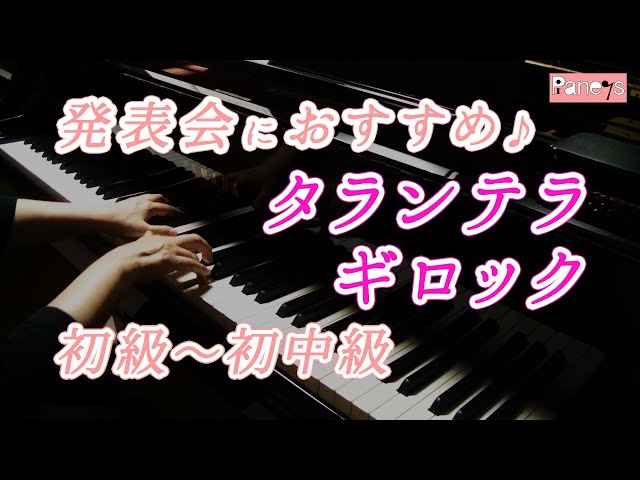
Composed when William Gillock was 18, this piece is one of the signature works by a composer widely known for his many piano pedagogy pieces.
Its sprightly rhythm, inspired by a traditional Italian dance, and its beautiful melody are especially striking.
Gillock, sometimes called the “Schubert for children’s composers,” left over 300 educational piano works.
This piece not only develops technique but also refines musical sensitivity.
From the flowing melody at the opening and the light, bouncing dotted rhythms to the dance-like, powerful sections, it presents a variety of scenes within a short span.
It’s best to capture the character of each and play with those distinctions in mind.
Serenade of the BuglerFritz Spindler

This piece is notable for its breezy melody and vibrant energy.
Skillfully rendering a trumpet’s timbre on the piano, it brightens and invigorates the listener.
The briskly paced tune feels as refreshing as morning light, while repeated notes and light staccato further enhance its charm.
The performance calls for finger independence and a good sense of rhythm, yet it remains approachable at a moderate technical level.
It’s perfect for recitals and concerts, offering a friendly appeal that both performers and audiences can enjoy.
A delightful work that inspires a bright, positive mood—why not add it to your repertoire?
Spinning SongAlbert Ellmenreich

Albert Ellmenreich’s signature work, Spinning Song, by the German composer, is a beloved classic often performed at piano recitals.
Depicting women briskly spinning thread, this piece is approachable for beginners yet rhythmically engaging and satisfying to play.
Key performance tips: keep a sense of speed while maintaining a delicate, light touch, and use a wide dynamic range to create expressive phrasing.
In sections where the left hand takes the lead, pay close attention to the volume balance between hands and guard against any disruption of tempo.
Gypsy Dance (Dance of the Gypsies)Heinrich Lichner

This passionate work in D minor is widely loved as a short piece influenced by Romani music.
It is characterized by a continuous stream of sixteenth notes in the right hand and a lively rhythm that creates an exotic atmosphere.
From measure 85, there is an instruction to play “with heart, and sustain the tones fully,” calling for an expressively rich performance.
From the vibrant opening, through the contrasting middle section, to the brilliant finale, the unfolding that captivates the audience is striking.
This piece is recommended for those who want to develop their musical expressiveness or present a distinctive performance at a recital.
In particular, its rhythmic character and approachable melody make it perfect for bringing out the abilities of a third-grade elementary school student.