

Recommended Songs to Try on the Melodica for Kindergarten Seniors

Kids get so excited about playing the melodica, don’t they?
Especially in the senior kindergarten year, they can play more songs and it becomes more and more fun.
When playing the melodica while listening to the sounds around them and keeping the rhythm, the most important thing is to enjoy the process.
So this time, we’ve gathered lots of songs that are fun to perform.
Try playing a variety of pieces during daily nursery activities, and when the children find songs they love, be sure to showcase them at recitals or events!
- [Childcare] A collection of recommended melodica (pianica) songs for 4-year-olds
- Ensemble Performances by Older Kindergarteners Heat Up! A Collection of Recommended Song Ideas for Recitals
- I want to sing it at the senior class recital! A choral piece that 5-year-olds can sing with all their heart
- I Want to Sing at the Kindergarten Seniors’ Recital! A Collection of Moving Song Ideas That 6-Year-Olds Can Sing with All Their Heart
- Recommended Songs to Try on the Melodica for Kindergarten Seniors
- Recommended for 5-year-olds! A collection of ideas for plays and dances for senior kindergarteners’ performances
- [Piano Recital for 5-Year-Olds] Play Disney’s Beloved Classics! A Curated Selection of Recommended Pieces
- Choral songs that captivate 4-year-olds! A collection of heartfelt song ideas for junior kindergarten recitals
- [Childcare] I want to have fun with the kids! Simple songs for handbells
- [For 5-year-olds] A curated selection of recommended pieces for a piano recital!
- [April 2026] Trending songs: A roundup of the hottest, viral tracks right now
- Recommended songs for eurhythmics. Let's enjoy music using our bodies!
- Kids will love it! A collection of dance song ideas with easy-to-follow rhythms
[Kindergarten Oldest Class] Recommended Songs to Try on the Pianica (1–10)
Under the SeaSakushi: Hawādo Asshuman / Sakkyoku: Aran Menken

How about performing a popular, upbeat number from Disney’s 1989 animated film The Little Mermaid? Composed by Alan Menken, Under the Sea is a lively song in which Sebastian the crab tells Ariel, who longs for life on land, just how wonderful life in the ocean really is.
This number, which energetically conveys the fun of living under the sea, has a brisk tempo and a bright feel that makes you want to sing and dance.
Calypso, a folk music style born in the Caribbean, is characterized by a lively 2/4 rhythm and lots of percussion, giving it a festive vibe.
Try playing all sorts of instruments with your friends and make some joyful noise together!

Puppy MarchSakushi: Kuno Shizuo / Sakkyoku: Gaikoku kyoku

This is a fun piece themed around dogs that children love.
Set to a lively rhythm, it portrays a cute puppy happily walking along.
The lyrics are simple and easy to remember, making it a song kids can sing along to while they dance.
It’s perfect for performance on the melodica, and playing to the rhythm lets children feel the joy of music.
When everyone performs it at a recital or event, the venue is sure to be filled with smiles.
It’s a heartwarming piece that parents can enjoy together with their children.
Frog ChorusSakushi: Okamoto Toshiaki / Sakkyoku: Doitsu kyoku
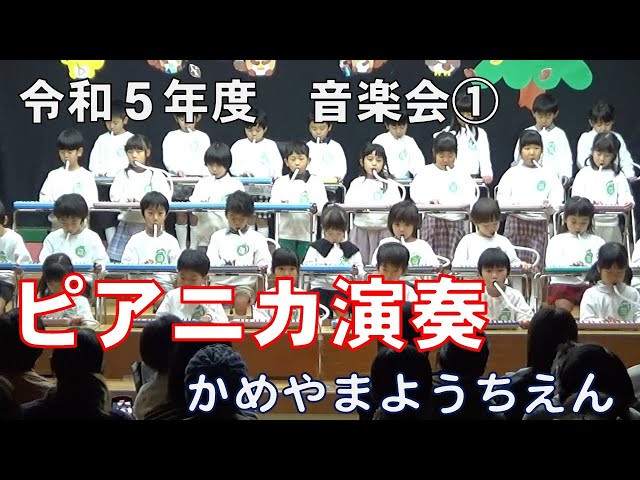
The defining feature of “Kaeru no Gasshō” (Frog Chorus) is, above all, its canon style, where the same melody is sung in a round.
Layering the melody with many voices makes it a delight for listeners as well.
The main theme is a familiar tune you may have heard or sung somewhere.
Based on a 19th-century German children’s song, “Kaeru no Gasshō” is very simple and easy to perform, so it works at a slow tempo or an upbeat one.
Even small children in kindergarten can enjoy practicing and performing it.
[Kindergarten Senior] Recommended Songs to Try on the Pianica (11–20)
Hi-hoSakushi: Rarī Morei / Sakkyoku: Furanku Chāchiru

Would you like to perform one of the memorable songs from Disney’s Snow White? The cheerful melody hummed by the dwarfs excites children’s hearts.
It’s rhythmic and easy to remember, so it seems perfect for everyone to enjoy playing together.
The lyrics convey the joy of working, making it a wonderful piece to teach children the importance of cooperating with friends.
Loved ever since the film’s 1937 release, this song has stood the test of time.
It’s also used in Disneyland parades, so children will likely find it familiar.
If you perform it at a recital, parents will surely find themselves humming along too.
tulipSakushi: Kondo Miyako / Sakkyoku: Inoue Takeshi

The traditional Japanese song “Tulips” is a simple, beautiful melody that everyone knows, and it’s perfect for 5-year-olds to try.
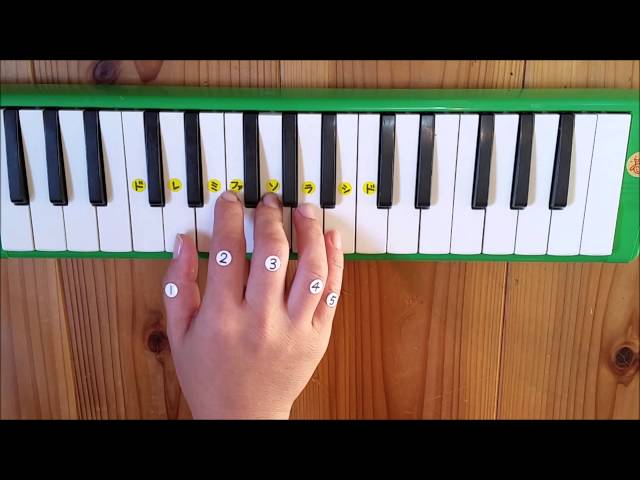
You can play it using just six notes—do, re, mi, fa, so, la—so anyone can give it a go and enjoy the sense of accomplishment of “I did it!” It’s helpful to practice with Do-Re-Mi stickers, color stickers, or finger numbers.
Like a bed of colorful tulips, enjoy the tones that reflect each child’s unique personality.

Mickey Mouse MarchSakushi, sakkyoku: Jimī Dotto

The Mickey Mouse March is a signature Disney song beloved by children and adults alike.
Its melody is bold yet friendly, and it’s delightful that you can play it with hardly changing the shape of your five fingers.
Using tonguing lets the melody bounce lightly even while keeping your fingers pressed down, making it fun to play all the way through.
It’s great to practice while imagining Mickey Mouse and other beloved Disney characters marching along energetically!
There’s no such thing as ghosts.Sakushi: Maki Minori / Mine Akira
This fun, ghost-themed song charms listeners with lyrics that give children courage and a lively melody.
Since it was broadcast on NHK’s “Minna no Uta” in 1966, it has been loved by many generations.
Crafted by Minori Maki and Akira Mine, this classic humorously portrays the feelings of children who deny the existence of ghosts yet still feel a little scared.
It’s also perfect for performance on a melodica.
The song has been adapted into a picture book as well, so enjoying the book alongside the song is highly recommended.
With its bright tone, it’s a warm piece that stays close to children’s hearts.