

Recommended Songs to Try on the Melodica for Kindergarten Seniors

Kids get so excited about playing the melodica, don’t they?
Especially in the senior kindergarten year, they can play more songs and it becomes more and more fun.
When playing the melodica while listening to the sounds around them and keeping the rhythm, the most important thing is to enjoy the process.
So this time, we’ve gathered lots of songs that are fun to perform.
Try playing a variety of pieces during daily nursery activities, and when the children find songs they love, be sure to showcase them at recitals or events!
[Kindergarten Oldest Class] Recommended Songs to Try on the Pianica (1–10)
Ode to Joy

Known as the fourth movement of Beethoven’s Symphony No.
9, this piece premiered in Vienna in 1824.
It is characterized by its majestic and powerful choral and orchestral performance, and it carries the message that “all people are brothers.” It might be a bit challenging for older kindergarteners to perform, but with a simple arrangement, children can enjoy playing it too.
Widely cherished around the world as a symbol of peace and brotherhood, it is often performed at international events such as the Olympics.
Performing it together with children can help them feel the wonder of music and the importance of human connection.
Flowers will bloom.sakushi: iwai shūji / sakkyoku: kanno yōko

Accompanied by a teacher’s or adult’s piano performance, the gentle melody of “Hana wa Saku” is easy to play and its beautiful tune resonates in the heart.
Let’s try performing this tender piece on the melodica.
“Hana wa Saku” is a charity song wishing for the recovery from the Great East Japan Earthquake that occurred on March 11, 2011.
You may have heard the chorus melody somewhere before.
The lyrics were written by film director Shunji Iwai from Miyagi Prefecture, and the music was composed by Yoko Kanno, who is also from Miyagi.
It would be wonderful to play it softly and with feeling, keeping in mind those who lost their lives in the disaster and the affected areas.

Do-Re-Mi-Fa, it’s all right!B.B. Kuīnzu

“Doremifa Daijobu” by B.B.
Queens, the theme song of Nippon TV’s popular show “My First Errand,” is a tune familiar to both children and adults.
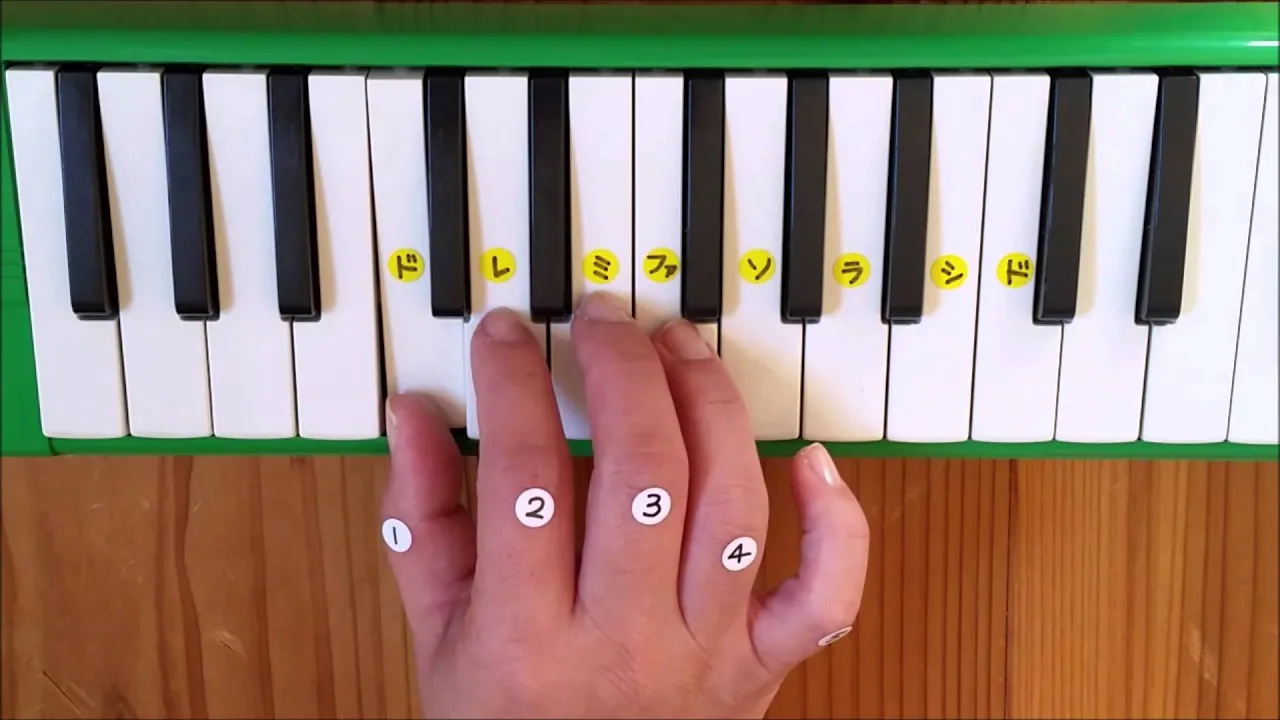
Despite its lively, upbeat tempo, the song is actually built entirely on either the Do-Re-Mi-Fa-So-La-Ti-Do scale or its reverse, Do-Ti-La-So-Fa-Mi-Re-Do.
Starting with a catchy intro, the melody ascends step by step from Do, then descends from the higher Do, keeping things bright and engaging all the way through.
It’s fun to hum along to the cute, child’s-eye-view lyrics while practicing.

When I Become a First Gradersakushi: mado michio / sakkyokusha: yamamoto naozumi

This is a song that captures children’s excitement about starting elementary school.
It expresses the wish to make a hundred friends and portrays thrilling dreams like climbing Mount Fuji and dashing all around Japan.
Since its release in 1966, it has become a classic sung at kindergarten graduation and school entrance ceremonies.
The lyrics by Michio Mado and the melody by Naotsune Yamamoto blend beautifully.
It’s a heartwarming piece that encourages children as they look forward to a new environment—please consider performing it!
My Neighbor TotoroInoue Azumi

Azumi Inoue’s theme songs from Studio Ghibli films are beloved by children and are perfect for the melodica.
Let’s play them while recalling scenes from the movies, carried by their gentle melodies.
It’s also fun to express elements from the lyrics—like rain, the moon, and the ocarina—together with the children through sound.
The slow tempo makes it easy for everyone to play in sync.
If you perform at a recital, the parents are sure to be pleased.
It can also spark children’s imaginations about nature and mysterious creatures.
Lovers ConcertoSakushi, sakkyoku: Sandi Rinzā, Denī Randoru, Kurisuchian Betsōruto

It’s a masterpiece that beautifully fuses the elegance of classical music with the familiarity of pop.
Sung by The Toys in 1965, it became a major hit, reaching No.
2 on the Billboard chart.
Sarah Vaughan’s cover version was also popular in Japan, and it was used in commercials and TV dramas.
Its gentle melody and heartwarming lyrics are part of its charm, and I think children would enjoy performing this piece.
If it’s played at recitals or events, it might evoke a sense of nostalgia among the parents.
Toy Cha-Cha-ChaSakushi: Nosaka Akiyuki, Yoshioka Osamu / Sakkyoku: Oribe Nobuyoshi

This song, where the world of toys dances joyfully, is characterized by a bright rhythm that excites children’s hearts.
The lyrics, which sing about toys jumping out of their box at night to enjoy a party, spark children’s imaginations.
Released in 1962, the piece has been loved by many through television programs and records.
Set to a lively cha-cha-cha rhythm, it’s a song everyone can sing and dance to together, making it perfect for events like recitals and sports days.
How about creating choreography with the children and enjoying a fun performance?