



As graduation season approaches, do you ever find yourself wanting to listen to old songs for some reason? Japanese music from the 1970s is full of classics about partings and new beginnings.
Chats with friends, tender first loves, and the mix of excitement and anxiety about the road ahead—songs from that era delicately weave together the complex emotions of youth.
In this article, we’re introducing 70s tracks perfect for graduation season.
We’ve picked a wide range, from songs directly about graduation to pieces that evoke the coming of spring and the brilliance of youth.
Let the nostalgic melodies wash over you as you gently trace back your memories of those days.
- [80s Graduation Songs] Nostalgic Classics & Hits That Have Become Standards
- [Showa-Era Graduation Songs] Nostalgic? Emotive? A curated selection of timeless classics loved across generations
- [Recommended for people in their 70s] Classic nostalgic hits: A collection of youth songs
- [Graduation Songs] Choral pieces perfect for singing at elementary school graduation ceremonies: A collection of moving classics
- [2026 Edition] Songs Loved by People in Their 60s: Classic Hits from Their Youth
- A collection of nostalgic hit songs and classics from the 70s
- [2026] A Collection of Memorable Graduation Songs from the 40s [Japanese Music]
- [Great Lyrics!!] Recommended Tear-Jerking Graduation Songs with Heartfelt, Moving Words [2026]
- [1970s] Collection of Japanese hit songs. Nostalgic masterpieces of Japan
- Heart-touching, tear-jerking masterpieces from the Showa era
- Thank you, Teacher: A Song of Gratitude for Teachers and Mentors — An Emotional Farewell Song for the Journey Ahead
- [For Seniors] Recommended Spring Songs for People in Their 70s: A Collection of Nostalgic Spring Tunes
- [2026] A Collection of Youthful Songs to Play at Graduation Ceremonies [J-POP]
Still packed with timeless classics! A roundup of 1970s Japanese graduation songs (1–10)
Galaxy Express 999Godaigo

Created as the theme song for a theatrical animated film, this is a send-off anthem loved across generations.
Its lyrics, woven from both English and Japanese, and the exhilarating arrangement by Mickey Yoshino vividly capture the thrill of stepping into the unknown along with a touch of loneliness.
Released in July 1979, it is one of Godiego’s signature singles and became a record-breaking hit, topping the music show “The Best Ten” for seven consecutive weeks.
The original author, Leiji Matsumoto, reportedly said that the song’s brightness, heard during a sorrowful farewell scene, conveyed the protagonist’s hope for the future.
It’s recommended for everyone standing at a crossroads in life—be it graduation, a job transfer, or any new beginning.
In times of uncertainty, surrender yourself to this powerful melody; it will surely give you the courage to move forward.
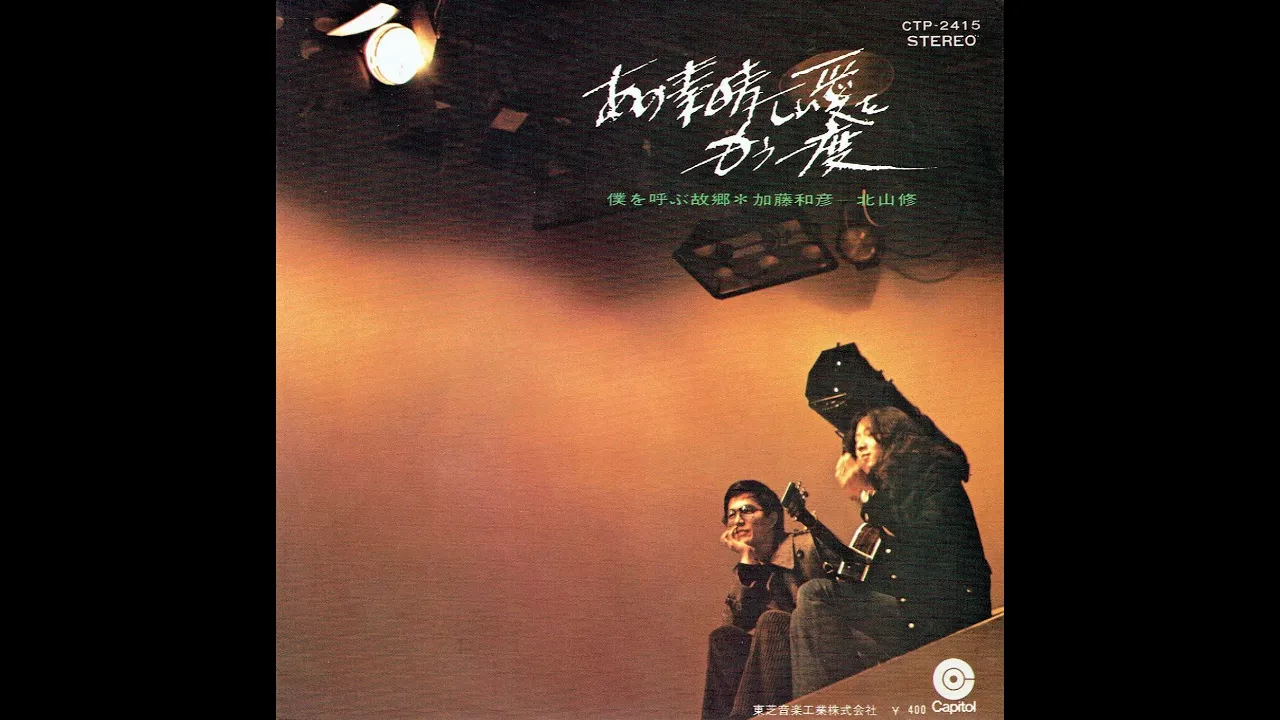
Let me have that wonderful love once moreKatō Kazuhiko, Kitayama Osamu

A timeless song whose refreshing acoustic guitar tones and seamless harmonies resonate in the heart.
It sings, with a refined melody, of the ache of a love that has ended and of memories of beautiful days that will never return.
Originally produced as the debut song for a female duo, it was released in April 1971 as a single credited jointly to Kazuhiko Kato and Osamu Kitayama.
Since then, it has been included in music textbooks and sung as a staple at choral competitions, gaining widespread popularity across generations.
In 2002, it was also chosen as the theme song for FNS 27-Hour Television.
Evoking both the brilliance and the bittersweetness of youth, this is a track you’ll want to listen to quietly during farewells with friends or seasons of new beginnings.
Farewell, youthogura kei

It’s a classic that holds both a powerful resolve and a touch of melancholy—bidding farewell to the shimmering season of youth and choosing to move forward without calling out to the past.
Sung by Kei Ogura, a singer-songwriter who created numerous masterpieces while working as a bank clerk, the song was released in February 1971 as the B-side to his debut single Shiosai no Uta and later included on the album Seishun — Sabaku no Shōnen.
In 1993, a remade version was released as the theme for NTT’s “Telewise” commercial, showing how it has been loved across generations.
This piece, which sings of a clean break from days gone by, is one to hear especially during graduation season as you take a new step forward.
If you overlay it with your younger self, your heart is sure to be stirred.
GraduationTHE ALFEE

A song that conjures a poignant inner landscape, where the seasons quietly turn their pages and past loves and days of youth become buried beneath the snow.
It’s an early track by THE ALFEE, the rock band that has long led Japan’s music scene, included on their first album, “Seishun no Kioku” (“Memories of Youth”), released in July 1975.
This work is also known as the first song written and composed by Toshihiko Takamizawa.
Koji Makaino’s arrangement highlights the beautiful melodies and the introspective world of the lyrics.
More than just a farewell song, it holds both the radiance and the ache of days when young lives burned brightly—tightening the chest with its bittersweetness.
On a night when you want to quietly bask in memories, why not listen to it alone, taking it in deeply?
spring thunderfuki no tō

It’s a lyrical folk song that makes you want to look up at the sky just as Hokkaido’s long winter comes to an end.
Released as a single in February 1979 by Fukinotou, it was also included on the album “Jinsei • Haru • Oudan” and is cherished as one of their signature numbers.
The lyrics, written and composed by Yasuyo Yamaki—said to carry a prayer for his ailing mother—resonate with the unsettled feelings that come with the change of seasons, striking a deep chord.
Ichizo Seo’s arrangement dramatizes both stillness and intensity, powerfully stirring the emotions.
Fans also know that this song marked their first appearance on “Yoru no Hit Studio” in March 1979.
As graduation season blends farewells with new departures, why not listen to it amid the mix of anxiety and anticipation that comes with taking a new step forward?
Our JourneyNakamura Masatoshi

This single was released in October 1975 as the theme song for the TV drama “Our Journey,” starring Masatoshi Nakamura, who enjoyed immense popularity from the very start of his acting career.
The lyrics and music were written by Kei Ogura, who likens the long life ahead to a journey, vividly portraying both the hopes of young people pursuing their dreams and the moments of sudden loneliness and melancholy.
Capturing the hearts of the youth of its time, it became a long-running hit, staying on the Oricon charts for 45 weeks.
Nakamura’s warm, enveloping voice seems to gently nudge you forward, even when you’re filled with uncertainty.
It’s an unfading classic that we hope those taking a new step at graduation—and those who wish to reminisce about their youthful days—will listen to.
cosmos (flower)Yamaguchi Momoe

A timeless, heart-stirring ballad named after a flower that colors Japan’s autumn.
It is sung by Momoe Yamaguchi, a legendary figure of the Showa-era kayōkyoku.
The song portrays the gratitude and loneliness a daughter feels toward her mother on the eve of her wedding, set against scenes of gentle sunlight.
Written and composed by Masashi Sada, it beautifully captures the bittersweet emotions of leaving one’s family home.
Released as a single in October 1977, it won the Vocal Performance Award at the 19th Japan Record Awards.
Since December 2008, it has also been used as the approach melody at Keikyu Kurihama Station.
When you want to reflect on your gratitude to your family before a new beginning, please give it a listen.
In graduation or farewell seasons, you might even find tears falling as you think of someone dear.