


We’re showcasing the debut songs of Japanese male artists who started their careers in the 1970s.
From top idol singers like the “New Big Three” — Hideki Saijo, Hiromi Go, and Goro Noguchi — to many others.
It was also an era when the foundation of Japanese music was built, centered around folk songs and New Music.
There are still many singers from that time who remain active today!
Beyond the allure of the era’s backdrop, I think it’s wonderful that their music still feels fresh even now.
Let’s listen to the debut songs of male artists who debuted in the 1970s!
- [1970s] Collection of Japanese hit songs. Nostalgic masterpieces of Japan
- Debut song of a 1970s idol
- [Showa Kayō] A roundup of Japanese love songs that hit in the 1970s
- Heart-touching, tear-jerking masterpieces from the Showa era
- Classic and hit songs by nostalgic Japanese idols from the 1970s
- Dawn of Japanese Rock: A Collection of Debut Songs by 1970s Japanese Rock Bands
- Popular Oldies and Classic Songs Ranking: 1970s Japanese Music
- Popular Showa-era pop. Timeless hit songs.
- [1970s] Classic and hit songs of Japanese rock that blazed through the dawn era
- Nostalgic Japanese hit songs from the 1970s: the golden age of idols and kayōkyoku (Japanese pop songs)
- [Japanese Music] A Collection of Heart-Touching Hit Folk Songs from the 1970s
- [Recommended for people in their 70s] Classic nostalgic hits: A collection of youth songs
- Cool songs from the Showa era. Masterpieces from Showa that shine with sensuality, passion, and rugged charm.
Debut songs by Japanese male artists in the 1970s (1–10)
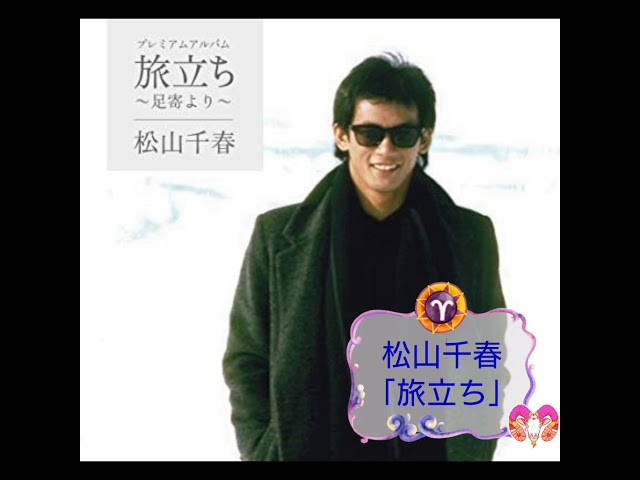
DepartureMatsuyama Chiharu
This is the debut single by singer-songwriter Chiharu Matsuyama, who made his media debut in 1976 with the 15-minute segment “Chiharu no Hitori Uta” on Sunday Jumbo Special and made his major-label debut the following year.
It’s a song he performed during the regional qualifiers of the National Folk Music Festival, where he participated as an amateur but failed to advance, and it became a local hit in his hometown of Hokkaido.
The melancholic acoustic guitar and strings, along with Matsuyama’s characteristically soaring, crystalline vocals, leave a strong impression.
It’s a folk number whose powerful singing and sophisticated arrangement convey a maturity that hardly seems like a debut track.

Season of LoveSaijō Hideki

The debut single by singer Hideki Saijo, who became a top male idol of the 1970s with his overwhelming vocal power and singing ability—so impressive he was dubbed a “belting” type.
Released with the tagline “Wild 17,” the song also drew attention when fellow member of the ‘New Big Three,’ Hiromi Go, covered it in 1975, three years after its release.
His voice, which conveyed both the clarity of a teenager and a maturity beyond his years, made a shocking impact on the pop scene despite being a debut track.
It’s an essential number when discussing male artists of the 1970s, and one that showcases the charm of classic kayōkyoku.
Carrying Yousawada kenji

This is the debut solo single by singer Kenji Sawada—better known by his nickname, Julie—following his time with The Tigers and PYG.
Twenty-nine years after its release, in 1990, it was remade as “Kimi o Nosete 1990 version” and gained attention when it was used in a Honda Today commercial.
The ethereal string intro and Sawada’s rich, resonant vocals showcased his undeniable talent, even on a debut solo single.
A timeless masterpiece with a moody kayōkyoku atmosphere that feels effortlessly comforting—you’ll want to keep listening forever.
Love TrainOhtaki Eiichi

This is the debut single by singer-songwriter Eiichi Ohtaki, who first emerged as the vocalist of the legendary rock band Happy End, a pioneering force in Japanese rock history, and who pursued a solo career in parallel with the band.
With guitar riffs and arrangement reminiscent of Western rock ’n’ roll, its sound clearly set itself apart from the mainstream kayōkyoku of the time—a cool aesthetic.
His smoky vocals and the antique band sound may feel surprisingly fresh to many listeners today.
A pop yet emotional rock tune that laid the groundwork for countless rock bands active in the current J-pop scene.
No need for dreamsyashiki takajin

This is the first single by singer, TV personality, host, and radio presenter Takajin Yashiki, who was active primarily in the Kansai region and passed away in 2014.
Released simultaneously with his debut album “TAKAJIN,” it effectively became his debut single after the 1971 track “Shōfu Kazuko” (“Prostitute Kazuko”) was banned from release due to social norms.
Riding on a light, lively sound, his straightforward yet soulful vocals reaffirm Yashiki’s exceptional singing ability.
It’s also a track that showcased his strong songwriting skills, exuding the distinctive sensuality of classic kayōkyoku (Japanese pop).
Farewell, my loverSakai Masaaki

This is the debut single by singer Masakazu Sakai, who made his major debut with The Spiders at age 16 and went on to thrive as a solo artist after the band disbanded.
The song won the Popularity Award at the 1971 Japan Record Awards and is still widely covered today, recognized as a timeless classic.
Its arrangement, carrying lyrical words and vocals, evokes the comforting charm of vintage 1970s kayōkyoku.
Though Sakai is now strongly associated with variety shows and nicknames like “Maestro” and “Mr.
Hidden Talents,” this enduring debut track reveals a new side of him.
Wandering Love SongNagabuchi Tsuyoshi

This is the second single released by singer-songwriter Tsuyoshi Nagabuchi, whose grand scale captures fans’ hearts—he famously drew about 100,000 people and achieved great success with an all-night concert held at the foot of Mt.
Fuji in 2015.
Although he released his first single, Amano Arashiyama, in 1977, he paused his activities afterward, and when this song was released it became known as his re-debut track.
Its poignant lyrics—said to recount his own romantic history in a female voice—and the delicate tone of the acoustic guitar blend to create a lyrical atmosphere.
With a wistful melody that resonates deeply, it’s a folk song loved across generations.