

[1980s] A roundup of debut songs by enka singers

In the 1980s, a new enka boom had arrived.
Do you remember being captivated by the songs performed on programs like the Japan Kayō Awards and the Red and White Song Battle? Singers whose richly emotional voices made them instant icons of the era—those voices still linger in the memories of many today.
In this article, we’re highlighting the debut songs of enka singers from the ’80s.
You might rediscover some nostalgic gems, so be sure to read to the end and rekindle your appreciation for these timeless classics!
- Great enka masterpieces and hit songs of the 1980s
- [Enka] A special feature on female singers in their 80s. Singers who were active from the early to mid-Showa era.
- Debut song of an enka singer
- Great enka masterpieces and hit songs of the 1970s
- Cool masterpieces of enka, the heart of Japan
- A roundup of male enka singers in their 70s: legendary vocalists who support the enka world
- [2026] A roundup of female enka singers in their 60s: Artists who support Japanese enka
- A roundup of captivating enka female singers in their 50s [2026]
- A roundup of female enka singers in their 20s: The young divas of the enka world
- Showa-era kayōkyoku: hit songs by male singers, classic masterpieces of Japanese popular music.
- Great enka masterpieces and hit songs of the 1990s
- 【2026】A Collection of Masterpieces: Enka and Kayōkyoku Duets by Two Women
- [For Women] A roundup of enka songs that can score high in karaoke
[1980s] Compilation of Debut Songs by Enka Singers (1–10)
Can you hear the swan song?Takeyama Akiyo

Released in July 1987, “Can You Hear the Swan’s Song?” is a heartwarming enka piece created to encourage those living solitary lives in the northern provinces.
Its gentle words seem to sit beside those carrying loneliness and sorrow, offering comfort with a hopeful message: “If you cry all you need to, you’ll see tomorrow.” The lyrics were written by Osamu Yoshioka, and the music was composed by Shosuke Ichikawa, Takeyama’s mentor.
On lonely nights or in moments alone, the vocals are sure to seep into your heart.
Genkai SeaDandano

Set against the rough, surging waves of the Genkai Sea, this debut single by Dan Taotoko portrays a young man’s resolve to leave for Tokyo and the bond he shares with his father.
With lyrics by Osamu Yoshida and composition by Shosuke Ichikawa, the number richly conveys a man’s melancholy and pride.
The singer’s soaring voice pairs perfectly with the powerful arrangement.
In 1987, it was included on the album “Otokobana,” and later reissued as an on-demand pressing.
A robust enka piece recommended for those who want to recall the bittersweet ache and hope of the day they left their hometown.
Flower of LifeMaki Yufuko
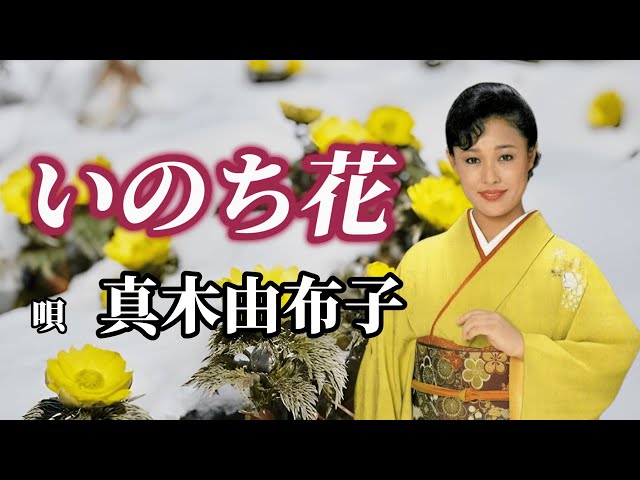
This is the debut single “Inochi-bana,” released in November 1989.
The song won the Bronze Prize at the Shinjuku Kayō Festival, marking the true start of the artist’s career as an enka singer.
Created by the golden duo of lyricist Miyuki Ishimoto and composer Shosuke Ichikawa, it poetically depicts the love and fate of a man and woman through natural imagery such as flowers and boats.
It is a quietly resonant piece for those at life’s turning points, or for anyone who has experienced a fateful encounter or parting.
[1980s] Compilation of Enka Singers’ Debut Songs (11–20)
A woman’s life waits for no one.Chō Hoyūki

A debut single released by Apollon in June 1985.
Through the figure of a woman clinging to the man she loves, it portrays the resolve and heartbreak of a woman who lives for love.
As the title suggests, the lyrics capture the urgency and passion of a fleeting chance at love within life’s limited time.
After making her debut with this song, Yuki Nagaho won the Newcomer Award at the All Japan Cable Broadcasting Awards in 1987.
She went on to produce hits such as “Shinobi-gawa” and “Ho no Ji-gasa,” and in 1994 she also performed at NHK’s Kōhaku Uta Gassen.
Hydrangea BridgeJōnouchi Sanae

Sanae Jōnouchi was active as member No.
17 of Onyanko Club, and even during her time in the group she had a strong inclination toward becoming an enka singer.
She made her solo debut with this song in 1988.
She was the only member to break into the enka world, and with this song she set a record on the Oricon charts as the first enka release ever to debut at No.
1.
Dream LightKitaoka Hiroshi

Hiroshi Kitaoka’s debut single.
Released in June 1984, it marked a brilliant start, winning numerous newcomer awards including the ABC Kayō Grand Prize Silver Award, the TV Asahi Music Festival Newcomer Award, and the 17th Japan Cable Awards Newcomer Award.
Although he later established a unique style as an onnagata (female-role) singer, this song lets you savor his richly emotional vocals straight up as an enka singer.
It is also included on his best-of album “~Hitohira Kasanete~,” and continues to be beloved by many fans as an essential track when discussing his career.
Tears the color of happinessOgata Daisaku

A debut work by Daisaku Ogata, released in November 1981.
With lyrics by Kaoru Kagawa and music by Tetsuya Gen, this piece delicately portrays a poignant emotional state where the contrasting feelings of tears and happiness intersect.
As the protagonist’s longing for their loved one deepens, even the tears that flow come to feel precious—an intricate inner world sung over an emotionally rich melody characteristic of enka.
Ogata’s vocals sensitively express a heart wavering between the pain of parting and the love that remains.