

A roundup of male enka singers in their 70s: legendary vocalists who support the enka world

Enka, long beloved by many listeners, is often called the “heart of Japan,” isn’t it?
In particular, many older folks probably grew up listening to enka from childhood, don’t you think?
In this article, we’ll introduce male enka singers in their 70s from the vibrant enka scene, where countless artists are active.
We’ve selected a wide range—from singers who are popular across generations to those every enka fan is sure to know.
If any singer catches your eye as you read, be sure to check out songs beyond the ones featured here!
Roundup of male enka singers in their 70s: The master vocalists supporting the enka world (1–10)
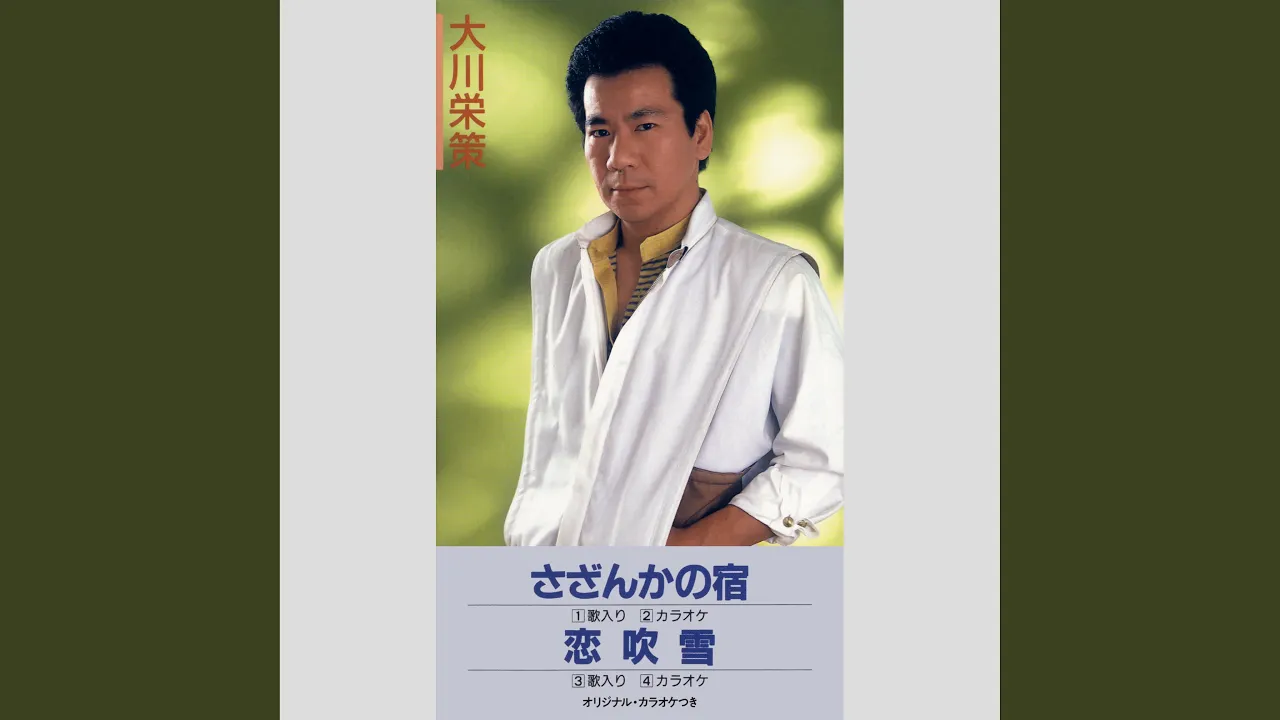
The Camellia Sasanqua InnŌkawa Eisaku

Eisaku Okawa is a renowned singer who represents Japan’s enka music scene.
He debuted in 1969 with “Men’nai Chidori” and went on to release numerous hit songs.
Among them, “Sazanka no Yado,” released in 1982, became a major hit and won the Long-Seller Award at the Japan Record Awards; it remains beloved by many as his signature song.
With emotionally rich vocals and a musical style that fuses elements of traditional Japanese music, he continues to captivate fans across generations.
His warm personality, cultivated over many years of musical activity, is another charm that draws in fans.
His lyrics, often themed around Japan’s natural beauty and the pathos of life, resonate deeply with listeners.
12th graderFunaki Kazuo

Kazuo Funaki, noted as one of the “Big Three” of the kayōkyoku world, debuted in the 1960s and shot to fame with youth-themed pop songs performed in a school uniform.
His smash hit “Kōkō San-nen-sei” sold over one million copies within a year of its release.
He went on to succeed across a wide range of styles, including period pieces and folk-inspired songs.
He appeared a total of 10 times on NHK’s Kōhaku Uta Gassen and received the Japan Record Award’s Meritorious Service Award.
A versatile entertainer, he has released 119 singles and 136 albums and has also acted in TV dramas and films.
Even now, he continues to captivate fans with energetic annual tours and headlining stage productions.
He is a recommended artist for those nostalgic for their youth and for anyone looking to rediscover the appeal of classic Japanese pop.
Yokohama TwilightItsuki Hiroshi

Hiroshi Itsuki is known as a singer who represents Japan’s enka music scene.
He debuted with Columbia Records in 1964 and became a million-selling artist with his 1971 hit “Yokohama Tasogare.” He has appeared in NHK’s Kōhaku Uta Gassen for 50 consecutive years and has set numerous records, including two Japan Record Awards for Grand Prize, three for Best Vocal Performance, and ten Gold Awards.
Itsuki’s musical style is characterized by preserving the traditions of Japanese popular song while continually exploring new forms of music.
His life experiences—such as the hardships of his childhood and words he received from Hibari Misora—lend depth to his singing.
He is a recommended artist not only for enka fans but also for those interested in traditional Japanese music.
It was rainy again in Nagasaki today.Maekawa Kiyoshi

Even people who aren’t very familiar with enka often know this Showa-era kayōkyoku classic: “Nagasaki wa Kyō mo Ame Datta” (“It Was Rainy in Nagasaki Again Today”).
Originally the debut single of Hiroshi Uchiyamada and the Cool Five, it has been carried on by Kiyoshi Maekawa after he went solo.
It’s also regarded as a quintessential example of the more sultry subgenre known as “mood kayō,” a bit different from standard pop kayōkyoku.
The dramatic lyrics are famous, too: “I chased after the lover I’d parted from and ended up in Nagasaki—and just like that day, Nagasaki was in the rain.” Incidentally, there’s an anecdote that Kiyoshi Maekawa was discovered while working as a nightclub singer in Sasebo, which led to his debut.
Love-Crying SparrowKadokawa Hiroshi

Hiroshi Kadokawa is an enka singer from Hiroshima Prefecture.
He debuted in 1976 with “Namidagurashi,” winning numerous newcomer awards, including the New Artist Award at the 18th Japan Record Awards.
He went on to release a string of hits such as “Yurushite Kudasai,” “Osaka Monogatari,” and “Hatoba Chanson,” and has appeared three times on NHK’s Kōhaku Uta Gassen.
He is renowned for songs that capture a woman’s heart and is also skilled at vocal impersonations.
In August 2024, he released his 70th single.
He remains highly active, sharing the latest updates on his official website and blog.
He’s a recommended artist not only for enka fans but also for those who enjoy impersonations.
Night in KushiroMikawa Ken’ichi

Kenichi Mikawa is in high demand on both music and variety shows.
His collaborations with the impressionist Korokke are always a delight to watch.
When it comes to Mikawa, the first song that comes to mind is “Onna no Scorpion” (The Scorpio Woman), but “Kushiro no Yoru” is an even moodier, quintessential enka number.
He even performed this song at the 1968 Kōhaku Uta Gassen.
Alongside “Yanagase Blues” and “Niigata Blues,” it’s also famous as part of the local-themed song series.
By the way, Mikawa once performed under the stage name “Kenichi Mikawa” written as “Mikawa Ken’ichi.”
Snow CountryYoshi Ikuzo

Singer-songwriter Ikuzo Yoshi from Aomori Prefecture.
After debuting as an idol singer, he changed his stage name to “Ikuzo Yoshi” in 1977 and shifted to a folk music style.
He later ventured into comic songs and enka, and with the 1986 release of “Yukiguni,” he reached No.
1 on the Oricon chart, establishing himself as a full-fledged enka singer.
His hallmark is a diverse musicality that incorporates not only folk and enka but also comic songs and Tsugaru-dialect rap.
Around 2008, he sparked the “IKZO boom,” becoming a hot topic on the internet.
He has also created many commercial jingles and TV drama theme songs, making him a recommended artist for listeners of all ages.