

[J-Pop] Debut songs by male solo artists from the 1990s

An artist’s debut single is a precious testimony—packed with raw impulses, determination, and all kinds of intentions.
Listeners from later generations are often surprised or convinced when they hear the debut songs of artists with long careers.
There’s something you can only sense in a first work—this isn’t limited to music.
This article spotlights male solo artists in Japanese music who debuted in the 1990s, the golden age of J-pop when CDs sold the most in Japan, and introduces their memorable debut tracks.
Including artists who launched solo careers after being in bands, enjoy the unique charms of debut songs—from mega-hits to hidden gems!
- 1990s Male Singer-Songwriters: Popular Song Rankings [2026]
- Ranking of Popular Songs by Japanese Male Singers from the 1990s [2026]
- Classic and hit J-pop songs from the nostalgic ’90s
- Iconic ballads of 90s J-pop: nostalgic mega-hits and fan favorites
- [J-Rock] Timeless masterpieces that colored the 1990s. Nostalgic hit songs.
- Debut song of a 90s visual kei band
- Popular Nostalgic Songs: J-Pop Ranking [1990s Japanese Music Ranking]
- Male singers with great voices: a collection of cool, seductive vocals
- A roundup of hit love songs from the ’90s
- Recommended love songs sung by male artists for the yutori generation
- Looking back at the gem-like debut songs of female singers who debuted in 1990
- Tear-jerking J-pop from the ’90s. Hit songs and real tearjerkers.
- I want to sing at karaoke! Songs by male artists recommended for Gen Z
[J-Pop] Debut songs by male solo artists from the ’90s (11–20)
You and the PianoHigashino Suminao
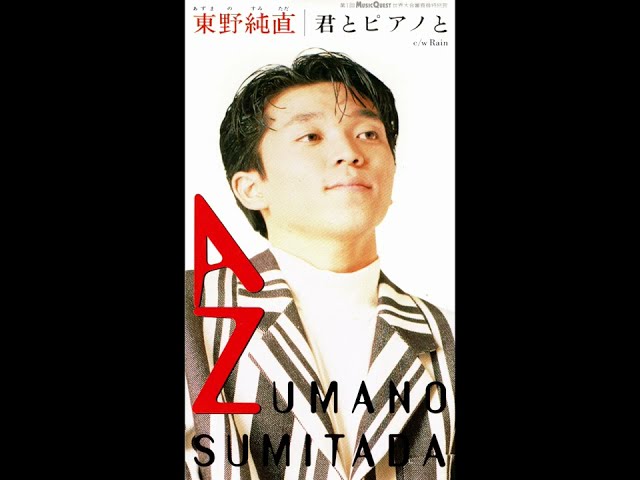
This is the debut single by singer-songwriter Sumitada Higashino, who won the Special Jury Prize at the 1st MusicQuest ’92 World Competition before his debut and now continues his music career while running a ramen shop.
Released on April 1, 1993, the song was used as the ending theme for the TV drama “Kimi to Itsumademo” and as the commercial song for Lotteria’s “Italian Hot.” Its refreshing ensemble, featuring a powerful piano tone, and its straightforward vocals resonate across generations.
With a catchy melody woven throughout, it’s a number whose beautiful arrangement strikes straight to the heart.

SHINING IN THE NIGHTKATSUMI

Many people of a certain generation probably think of KATSUMI when they hear about a distinctive “sauvage” hairstyle and a husky, glossy high-tone vocal.
KATSUMI, who produced many hits in the ’90s, burst onto the scene in 1990 as Pioneer LDC’s first J-POP singer.
His debut single, “SHINING IN THE NIGHT,” was released on April 25, 1990.
It was issued simultaneously with his debut album “SHINING” and came out across various formats such as VHS and LD—an unusual rollout for a newcomer, reflecting the high expectations for him as a major new artist.
His true breakthrough came with his self-penned “Kiken na Megami,” which served as the image song for the Camellia Diamond commercials, a recognized gateway for new artists at the time.
Within the glittering sound that carried over from the ’80s, KATSUMI’s talent as a singer—delivering bold, confident vocals—shines through to the fullest.

Tangerine EyesNakanishi Keizō

This is the debut single by singer-songwriter Keizo Nakanishi, who is also known for creating numerous classic songs such as his signature track “Woman” and “Choo Choo TRAIN,” which he wrote for ZOO.
Released on March 25, 1991, it was used as the theme song for the TV drama “Kimi to Itsumademo.” The arrangement is outstanding, evoking an R&B vibe that wasn’t very common at the time, with its distinctive synth-bass timbre, breezy shuffle beat, and hooky chord progression.
It’s a highly polished pop tune featuring a distinctive vocal tone and a soulful ensemble that feels effortlessly satisfying.
Get Along TogetherYamane Yasuhiro

This is the debut single by singer-songwriter Yasuhiro Yamane, whose roots lie in Western rock of the 1970s and who is now active across a wide range of fields, including serving as the sound producer for the Korean vocal group sg WANNA BE+.
Originally created as a song to celebrate a friend’s wedding, this ballad became a million seller after its release on January 21, 1993, sparked by its popularity on cable radio.
With lyrics that depict vivid, real-life scenes and a beautiful melody, many listeners are likely to feel the deep affection it conveys for the recipient.
It’s an enduring masterpiece—no surprise it became a massive hit.
Precious JunkHirai Ken

This is the debut single by singer-songwriter Ken Hirai, who has gained popularity for his stirring edge voice and diverse musicality.
Released on May 13, 1995, it was used as the theme song for the TV drama “The King’s Restaurant.” From the lively intro that opens with soulful choral work to the pop melody woven by his rich yet faintly wistful vocals, the essence of Ken Hirai as an artist is already on full display.
It’s a polished pop tune whose level of completion hardly seems like a debut—befitting his background performing as a house singer at live music clubs before his official debut.
Bomb A Headm.c.A・T

This is the debut single by m.c.A•T, who is also known for producing numerous hit songs in the 1990s for DA PUMP.
Released on November 21, 1993 as the theme song for the film “Heartbreaker: From Love, With Bullets,” it was also used in a commercial for Achilles’ “Junior Pro” and as the theme for the variety show “KISS×KISS.” Created in response to a request for “genuinely danceable, new Japanese dance music,” the ensemble—cutting-edge for its time—made a powerful impact along with its striking phrases.
It’s the quintessential m.c.A•T track that makes you want to start dancing.
[J-Pop] Debut Songs by Male Solo Artists of the 1990s (21–30)
Until the world endsWANDS

WANDS is a three-piece rock band known as one of the most iconic acts among Being artists who dominated the J-POP scene in the 1990s.
Their 8th single, “Until the World Ends…,” used as the second ending theme for the TV anime Slam Dunk, is a memorable track featuring emotional lyrics and a catchy melody.
For those who listened to it in real time, singing along may bring back vivid memories of that era.
With the 2022 release of the animated film THE FIRST SLAM DUNK, the song has been garnering renewed acclaim as a million-selling number.
In conclusion
I’ve put together a fresh roundup of debut songs by male Japanese solo artists who debuted in the 1990s. Listening to them again now—taking into account how their careers have unfolded since—leads to all sorts of new discoveries you might not have noticed before, which is really interesting. And since most of these artists are still active today, there’s a good chance you can catch these songs live, too!