

1990s J-Pop to listen to in summer: classic and hit summer songs


The 1990s were a time when million-selling hit songs kept coming one after another, and music clearly served as a common topic across generations.
Naturally, there were plenty of summer-themed hits as well.
In this article, we’ve picked out 90s summer songs that have continued to be loved across eras—not only by those who listened to them in real time back then, but also to the extent that people of all ages have probably heard them at least once.
Younger music fans might even discover, “So this song was sung by this artist?” Be sure to check them out!
- [Oldies] Summer Songs Recommended for People in Their 50s [2026]
- Perfect for driving BGM and karaoke! Recommended summer songs for people in their 40s [2026]
- Classic “summer songs” you’ll want to listen to in summer. Timeless J-pop summertime anthems perfect for summer guys and summer girls.
- [Summer Classics] When it comes to summer, it’s got to be this song! A roundup from timeless staples to the latest hit tracks.
- Iconic ballads of 90s J-pop: nostalgic mega-hits and fan favorites
- Songs to Enjoy in Summer! Classic Hits Special (Showa & Heisei)
- [Summer Songs Recommended for Your 30s] A Selection of Nostalgic Hit Tunes!
- A summer song sung by a male vocalist. Summer songs that are also useful for karaoke selection.
- Summer songs with great lyrics. Tracks that make your summer memories even more wonderful.
- Summer Songs That Hit in the 2000s | A Look Back at Nostalgic Summer Tunes!
- [Heisei-Era Summer Songs] A curated selection of timeless summer tunes loved across generations!
- Emotional songs you’ll want to listen to in summer: classic tracks by rock bands and singer-songwriters.
- [Nostalgic Hits] Popular Japanese dance music songs that were hits in the 1990s
1990s J-pop to listen to in summer: classic and hit summer songs (41–50)
Only You ~Summer Heartbreak~Sazan Ōrusutāzu

A poignant classic that colored the summer of 1995.
This exquisite heartbreak ballad portrays lingering feelings for a summer romance that has ended, set against the backdrop of a beautiful seaside scene.
Released as a single in July 1995, it became a major hit as the theme song for the drama “Itsuka Mata Aeru” (Someday We’ll Meet Again).
It was later included on the acclaimed album “Young Love,” and has become a special number—so much so that Keisuke Kuwata has called it “one of my favorite songs” among his own works.
The rich, weighty sound and Kuwata’s voice, which gives full voice to helpless, aching emotion, truly resonate in the heart.
'90s J-Pop to listen to in summer: Classic and hit summer songs (51–60)
Don’t avert your eyes.DEEN

Among the many summer songs produced by so-called Being-affiliated artists and bands, DEEN’s “Hitomi Sorasanaide” is one of the first summer classics that comes to mind.
Released in 1994, it became the group’s first number-one on the Oricon chart and a hit summer song of the ’90s.
The keyboard phrase in the intro alone sets a full-on summer vibe, and while the overall sound and arrangement sparkle, it’s interesting that the lyrics by ZARD’s Izumi Sakai are anything but happy.
Just imagining the reality that will likely befall the protagonist in the not-too-distant future leaves you with an indescribable feeling…

White kiteMy Little Lover
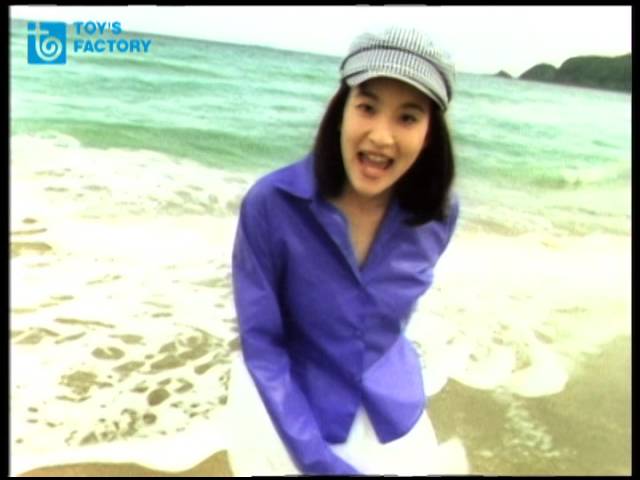
Just from the intro—light, choppy guitar, a bouncy rhythm, and a somewhat sentimental keyboard tone—you can’t help but picture scenes from a distant summer day.
It’s an absolute classic! This is a song released as the second single by “Mylaba,” a.k.a.
My Little Lover, in 1995.
At this point, the renowned producer Takeshi Kobayashi, who worked on the music, had not yet officially joined as a member; the group was active as a duo consisting of vocalist akko and guitarist Kenji Fujii, who now plays in The Birthday.
With akko’s natural vocal timbre delivering the nostalgic lyrics, the song is a perfectly exhilarating pop tune that somehow leaves a lingering, bittersweet aftertaste.
Open your heartZARD

Released in 1996 as ZARD’s 18th single.
Used in a Pocari Sweat commercial, the song features lyrics by Izumi Sakai and music by Tetsurō Oda.
It topped the Oricon Weekly Singles Chart and is one of ZARD’s most popular summer songs, exuding a refreshing summertime vibe.
A Midsummer Night’s DreamMatsutōya Yumi

When it comes to Yuming’s summer songs brimming with passion and a bewitching vibe, it has to be Midsummer Night’s Dream! The moment you hear that striking intro phrase, it feels like an invitation straight into a “midsummer night.” Beyond the Latin-scented rhythms and lyrics packed with keywords that evoke a Caribbean summer, the sultry guitar by Shigeru Suzuki—renowned for his work with legendary bands like Happy End and Tin Pan Alley—is unbelievably cool.
At the same time, many people probably also recall Shiro Sano’s overwhelming, chilling performance in the unconventional 1993 drama Dare ni mo Ienai, which used this song as its theme.
Personally, the drama’s imagery looms large for me, so this track also carries a strong impression of a dangerous summer…
I love it!Hirosue Ryōko

Singer Ryoko Hirosue, who enjoyed enormous popularity in the late 1990s—enough to spark the “Hirosue boom”—and continues to thrive as an actor today.
Her second single, “Daisuki!” provided by singer-songwriter Mayo Okamoto, was used as the theme song for Asahi Soft Drinks’ Mitsuya Cider commercial.
With lyrics themed around driving, it makes a perfect summer soundtrack for fun outings.
It’s a refreshing pop tune whose cute vocals and catchy melody will stick in your head.

Can’t Say Anything… SummerTHE JAYWALK

Among the countless smash hits that emerged in the 1990s, one of the quintessential summer songs is “Nanimoiienakute… Natsu” (“Speechless… Summer”).
In fact, this track was a rearranged summer version of the original song “Nanimoiienakute,” with revised lyrics, re-released as a single in 1991.
It actually became a hit starting in the summer of 1992.
The memorable lyrics and the understated yet deeply moving melody are truly remarkable.
If you’ve experienced something similar to the song’s protagonist, you may find yourself in tears just listening to it.
Although the band later faced an unfortunate incident involving a member, the song’s universal value has become timeless.