

Beginner Piano: Carefully Selected Easy and Famous Pieces You Can Play with One Octave

Have you ever thought, “I want to try playing the melody of a song I know on the piano!”?
Not just on the piano—being able to casually play a famous tune on any instrument is pretty cool, right?
In this article, we’ll introduce plenty of pieces whose melodies stay within a single octave, making them easy for piano beginners to play.
If a song has a narrow range and few large leaps, beginners can absolutely master it by practicing slowly and calmly.
Once you get used to it, you can add left-hand bass notes and challenge yourself to play with both hands!
We’ve collected famous songs you can practice by ear even if you can’t read sheet music perfectly, so pick your favorites and give them a try!
- [Disney] Playable even if you’ve just learned Do-Re-Mi! A selection of iconic songs from beloved Disney animations
- [For Kids] Play Piano with One Finger! Recommended Songs Collection
- [Anisong] Easy for Piano Beginners! Recommended Practice Pieces
- Even beginners can play them easily on the piano! A curated selection of popular and latest J-POP songs.
- [For Beginners] Recommended Ghibli Masterpieces You’ll Want to Play on the Piano
- [Piano Sheet Music] Free downloads available! A roundup of easy-to-play pieces
- [Beginner] Start Here: Classic Practice Pieces Recommended for Adult Piano Beginners
- [Piano Beginners] J-POP That Looks Hard but Is Surprisingly Playable [2026]
- Disney Classics on Piano: A Curated Selection of Easy Pieces, Perfect for Recitals
- [Children’s Song] Easy Even for Piano Beginners! Introducing Nursery Rhymes with Simple Chords
- [Easy to Play Even If You're Not Good with Both Hands!] Simple piano pieces for absolute beginners. Recommended piano songs.
- [Piano Pieces] Easy for Children to Play! A Roundup of Simple Classical Works
- [For Piano Beginners] Play Right Now with Free Sheet Music! A Roundup of Recommended Practice Pieces
Beginner Piano: Songs You Can Play with One Octave | A Curated Selection of Easy & Famous Pieces (21–30)
Baroque HoedownPerrey & Kingsley
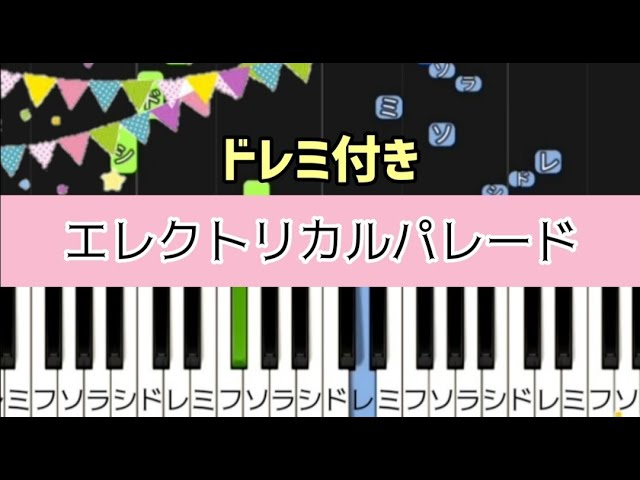

“Baroque Hoedown,” the familiar theme song of Disneyland’s signature “Electrical Parade.” If you’re a Disney fan, just hearing the opening probably makes you excited, doesn’t it? Despite its upbeat rhythm and tempo, it’s actually quite approachable on piano—the main theme’s melody stays within a single octave, making it beginner-friendly.
Find sheet music with minimal leaps and a simple rhythmic accompaniment, and start practicing right away!

Ecossaises in E-flat major, WoO 86Ludwig van Beethoven

This is a lively piece inspired by Scottish folk dance.
Included in the November 1825 album “Ernst und Tändeley,” it is a short, charming dance written in E-flat major.
Despite its simple two-part form, it features a friendly melody and a pleasant rhythm.
The work gained popularity as a salon piece and for ballroom use, exuding an elegant and cheerful atmosphere.
It is perfect for those who want to enjoy practicing the piano or experience a sense of fulfillment in a short performance time.
With its approachable structure and appealing melody, it serves as a good step in piano study.
[First Piano] Songs You Can Play in One Octave | Carefully Selected Easy & Famous Pieces (31–40)
Allegro in F major, K. 1c, from Nannerl’s Music BookWolfgang Amadeus Mozart

Though composed at the age of five and only 24 measures long in F major, this miniature brims with charm that captures listeners’ hearts.
Structured in binary form, it has a bright, lively character and a cheerful atmosphere reminiscent of folk dances from southern Germany.
Its approachable length of 24 measures and familiar melodic line are distinguishing features, and the piece presents few technical hurdles, making it easy to tackle.
It’s an ideal choice for those just beginning piano study or becoming comfortable with reading music.
That said, playing with an awareness of Classical-era elegance and expressiveness will cultivate deeper musicality.
Recommended as an introductory work that can spark interest in Mozart’s music.
In conclusion
How was it? This time, I introduced pieces that aren’t too difficult and whose melodies stay within a single octave! If a song has fewer notes and a narrow range, even those just starting piano or just beginning to practice can give it a try with ease. That said, it would be a waste to stop after mastering only the melody! Try adding the left hand or tackling sheet music with a more challenging arrangement of the same piece, and aim for an even higher level of performance!