

Let your individuality shine! Recommended back-name ideas for class T-shirts at the sports festival


In the lead-up to sports day, it’s common for classes and friends to get matching T-shirts, right?
What kind of words do you put on the back of those T-shirts?
In this article, we’ve gathered recommended phrases for the back of sports day T-shirts—what we call “back names.”
We’ll introduce them in four categories: nicknames/titles, self-deprecating jokes, phrases that form a single saying when two or more people stand together, names of your faves, and famous quotes.
Find your favorite back-name phrase and make it a sports day to remember!
- [Class T-Shirt] Recommended Back Name Ideas for Class T-Shirts at the School Culture Festival
- [Sports Day Cheer Songs] A roundup of classic cheer anthems and recommended parody-song picks [2026]
- [Friendship Song] Music to hype up sports days and athletic festivals
- [Sports Day] A roundup of popular Japanese songs perfect for mass performances [Athletic Festival]
- Eight types of cheering songs. Cheering songs for different scenes.
- A hype cheer song for school culture festivals—music that colors your memories.
- Cheer songs to hype up the sports day! A collection of motivational tracks recommended for kids
- [Dance Tracks] Perfect for School Sports Days! A Curated Selection of Fun, Popular Songs to Dance To [2026]
- [Sports Day] Entrance songs that will hype the crowd! A comprehensive roundup from classics to the latest hits
- Get hyped! A collection of Vocaloid songs to energize your sports day and athletic festival
- Pump Up the Sports Day! A Collection of Cool Flag Dance Song Ideas with Flags
- [Baseball Cheering] A roundup of popular chance themes that fire up pro baseball games
- A friendship song that fires up the culture festival/school festival
Nicknames and self-deprecating jokes (11–20)
XX-type guy (girl)
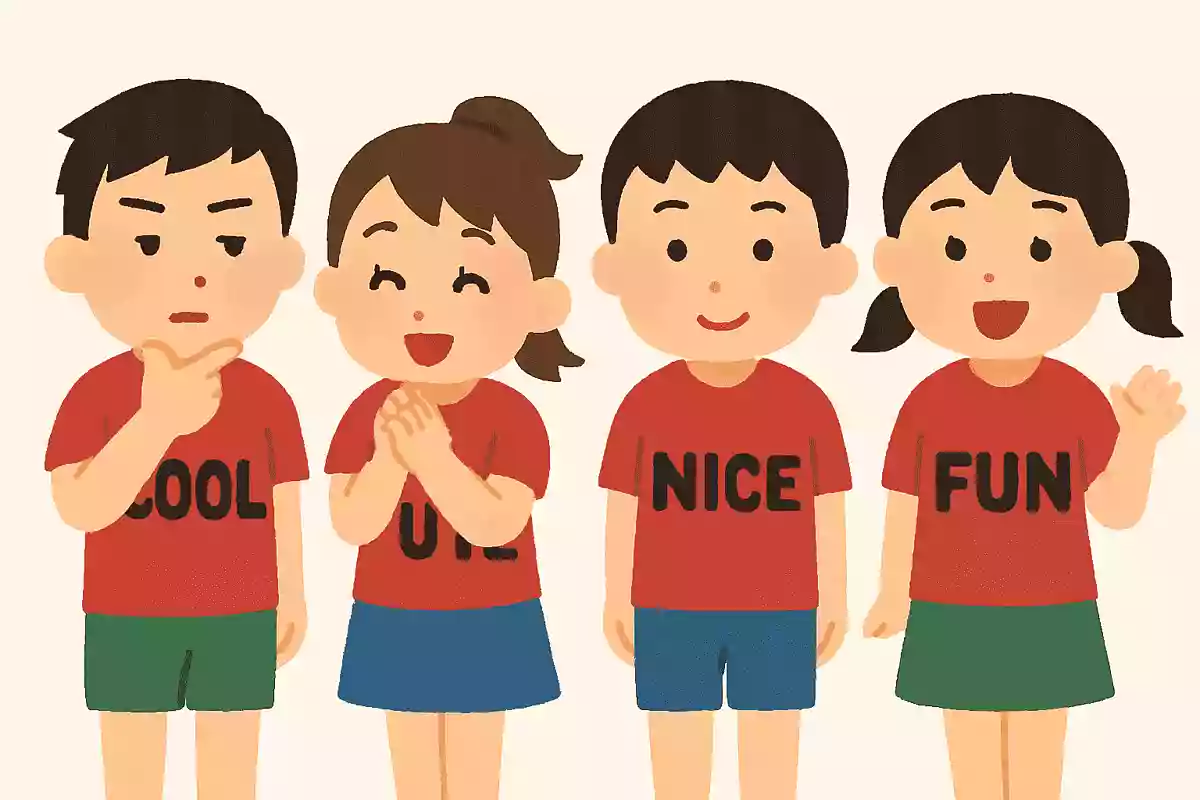
You often see expressions like “XX-kei danshi” or “XX-kei joshi” in online news, right? How about trying those out? Fill in the XX freely to match each person’s personality or preferences.
Words of about two kanji characters fit nicely—for example, “sōshoku-kei danshi” (herbivore-type guy).
If possible, you can also make it longer, like “bunkasai daisuki-kei joshi” (culture-festival-loving girl).
Using words people haven’t heard much will likely make a stronger impact.

Pairs/Groups (11–20)
Next, we’ll introduce nickname ideas that only work when two or more people wear them together! We’ve gathered words that become funny when worn by multiple people—some are set up like a conversation, while others assign similar phrases to each person.
It’s great for matching with friends or wearing as a couple.
For this type of nickname, snappy, back-and-forth phrases—like a comedy duo’s setup and punchline—tend to be even funnier.
They only become a complete piece when you’re together with someone, so they’re perfect for photos, too!
Pair/Group (1–10)
Love it / I know
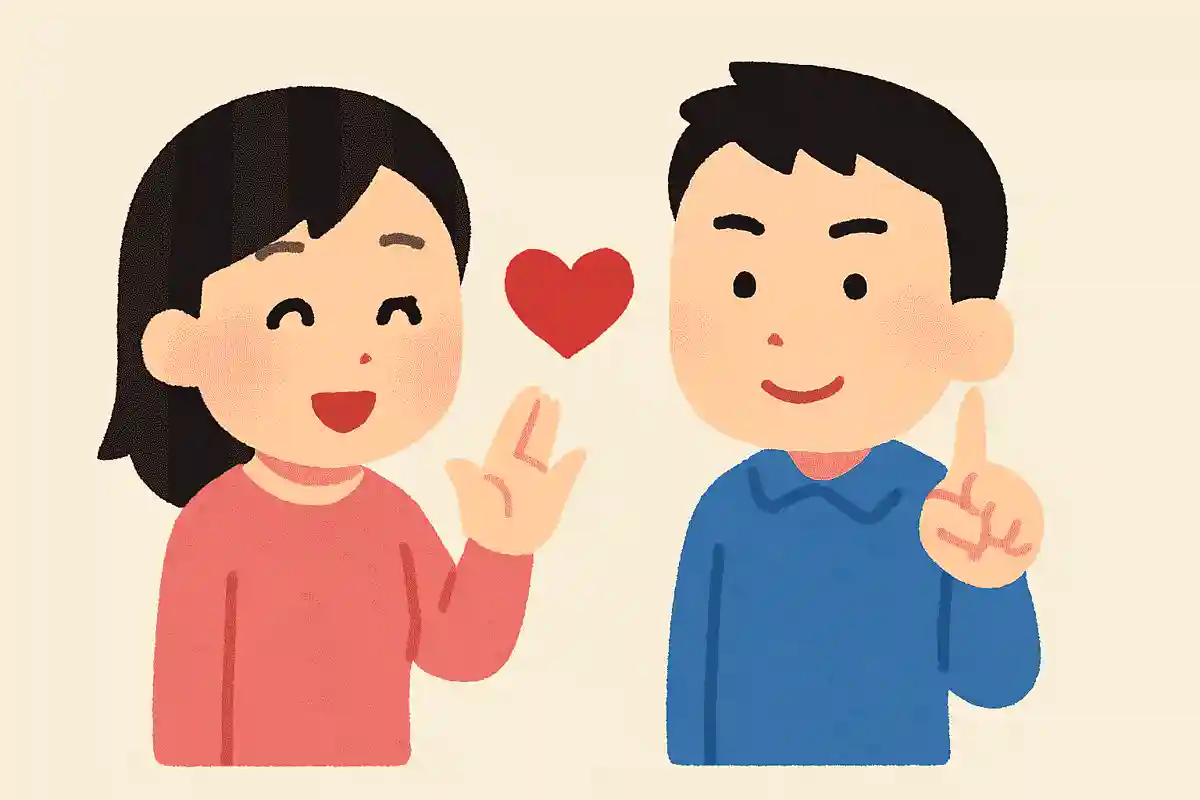
How about using text that feels like everyday casual conversation to show off your relationship? One person throws out a line and the other replies—so the meaning comes across when the two are paired together.
For example, responding to “I love you” with “I know.” Even though the reply might seem cold, it actually invites a laugh.
That kind of cool retort to a straightforward declaration works as a playful gag, while also conveying the relaxed, comfortable dynamic between the two of you.

I swore I’d become happy. I don’t care about the age gap! ♡
How about appealing your cuteness with phrases that evoke love? If the two of your phrases are connected, your feelings for each other will come through in the words, clearly showcasing your relationship.
If you can’t come up with your own phrases, quoting lyrics from your favorite love song could be a good idea.
Wearing a long sentence on your back will also effectively express your worldview and the strength of your feelings.
Using a love phrase that conveys determination will help show your enthusiasm for the event as well.
50% off ◯◯
This phrase uses “50% cut,” which is often used for calories or sugar, to describe members’ personal traits.
For someone short, you could say “Height 50% cut,” and for someone with a quiet voice, “Volume 50% cut,” lightly expressing one’s complexes.
By framing a complex with a snappy phrase, you may start to feel that you’re fine as you are and even grow more positive.
If you adopt labels that others point out, the negative image can become stronger, so it might be important to come up with your own phrases.
my friend’s nickname
In sports, it’s standard to include a name and jersey number, but for events like school sports days or cultural festivals, you might want a more easygoing vibe.
In that case, we recommend a design with a nickname printed above the number.
A nickname written in hiragana gives off a laid-back feel and conveys a relaxed attitude toward the event.
You can use your own nickname, or wear each other’s with someone important to you to highlight your mutual trust.
To make it clear you’re a pair, it would help to add a shared accent besides just the text and number.
Circuit OFF, Circuit ON
Wear phrases that clearly show you’re a pair, and make your relationship stand out.
It’s a good idea to use a shared word and then line up contrasting terms like “ON” and “OFF” to signal that it’s a pair phrase.
Even if “circuit on” and “circuit off” seem puzzling at first glance, they can feel like a private code between the two of you, projecting trust.
With a slightly twisted expression that draws attention, you can embed your mutual trust within it—a simple-looking yet sophisticated call-and-response style phrase.
Total stranger. A white lover.
It’s a witty exchange that lines up two words that wouldn’t normally be related, giving the impression they form a pair.
It’s a clever combination that spotlights the similarity in sound and visual impression between “aka no tanin” (a complete stranger, literally “a red stranger”) and “Shiroi Koibito” (a famous confectionery brand, literally “white lovers”).
If you also force a reason—like saying the auspicious red-and-white imagery expresses enthusiasm for the event—then even words that are actually unrelated can be made to look like they carry deeper meaning.
The phrase feels as if the two are a matched set, evoking the idea of a bond between them.