

[Yojijukugo] Carefully selected phrases recommended as slogans for sports days and athletic festivals!


Yojijukugo, four-character idioms that everyone inevitably learns in Japanese class.
They’re also commonly used in catchphrases for companies, commercials, and sports teams.
Even if you don’t fully grasp their exact meanings, the combination of kanji often conveys a general nuance—that’s part of the fun of yojijukugo.
In this article, we introduce yojijukugo that are perfect as slogans for sports days and athletic festivals.
We’ll also share their readings, meanings, and why they’re suitable as sports day slogans, so please use this as a reference!
- Cool sports festival slogans to boost team morale
- [Slogan] Perfect for sports days and athletic festivals! A curated selection of impactful phrases
- Recommended for junior high school sports days and athletic festivals! A collection of funny slogans
- Get hyped! A collection of Vocaloid songs to energize your sports day and athletic festival
- Recommended Slogans for Junior High School Cultural Festivals | Carefully Selected Four-Character Idioms and Famous Quotes!
- Top Songs to Hype Up Sports Day and Athletic Festivals [2026]
- Recommended for sports festivals! Examples of funny slogans and how to come up with them
- [Friendship Song] Music to hype up sports days and athletic festivals
- [Dance Tracks] Perfect for School Sports Days! A Curated Selection of Fun, Popular Songs to Dance To [2026]
- [Youth Songs] Songs that liven up sports days and athletic festivals. Music that adds color to the event.
- [Sports Day Cheer Songs] A roundup of classic cheer anthems and recommended parody-song picks [2026]
- [2026] Curated J-POP to Energize Sports Days and Athletic Festivals! Also Great as Entrance Music
- [Korean-Style Hair Arrangements] Perfect for Sports Day! Carefully Selected Recommended and Trendy Hairstyles
[Four-character idioms] Carefully selected slogan phrases recommended for sports days and athletic festivals (21–30)
single-minded devotion
Ichi-i Senshin means focusing your mind on just one thing and taking on the challenge.
It’s a four-character idiom that perfectly suits a sports festival, where you run toward a goal and compete in strength.
Often used as a motto with a positive meaning, it emphasizes the importance of throwing yourself wholeheartedly into what’s right in front of you.
Displaying it as a class slogan or on a banner can further strengthen your sense of unity.
Why not deepen your bonds with classmates with this phrase that conveys the power of unwavering determination?

harmonious unity and cooperative effort

At facility events and recreational activities, there are also things done in small groups, aren’t there? They often lead to increased communication, allowing you to talk with people who don’t usually converse much.
And activities where teams compete let everyone gain experience working together.
This phrase expresses that idea of a team uniting and cooperating as one.
It might even make a good slogan for a sports day.
In a cheerful, friendly atmosphere, it’s wonderful to see older adults smiling as they work hard with many others toward a common goal.

[Yojijukugo] Carefully Selected Slogans Recommended for Sports Days and Athletic Festivals (31–40)
May everything go as you wish.
This is a four-character idiom that means wishing for everything to go as one hopes.
Used at sports days or events, it lets everyone share the feeling of “may everything go well,” not just in terms of results or victory and defeat, but also in teamwork and daily effort.
Its appeal is that simply hearing it makes you feel positive, making it perfect as a greeting or an opening ceremony slogan.
When taking on a challenge, calming your mind and proceeding while thinking “banji nyoi” (everything as desired) can ease anxiety and impatience and naturally lead to proactive action.
It’s a phrase to remember when you want to value not only the outcome but also the process.

Where there is a will, there is a way.
This is a four-character idiom that makes you feel positive just by hearing it.
When you learn its meaning, you realize that if you have ambition and work hard, you can achieve your goals no matter how difficult the challenge.
If you call out “Yūshi kyōsei!” at a sports day or team event, it naturally boosts everyone’s spirit with a shared “Alright, let’s do our best!” Its appeal lies not only in emphasizing individual effort, but also in highlighting the importance of joining forces together.
When facing challenges or pursuing goals, remembering this phrase can encourage you—“If I keep going without giving up, it will surely lead to results.” I felt it’s a very reassuring four-character idiom.
Unity of knowledge and action
This four-character idiom teaches the importance of aligning what you know with what you actually do.
Once you understand its meaning, you realize that true strength comes not from merely having knowledge, but from putting that knowledge into action.
If you say during a sports day or team event, “Let’s keep chigyō-gōitsu in mind and move together,” it naturally raises awareness of how crucial it is to apply plans and strategies in practice.
It’s a phrase that reminds us not to stop at thinking but to take action, and I felt it’s an idiom that can encourage everyone when working together.
a sweeping view as far as the eye can see
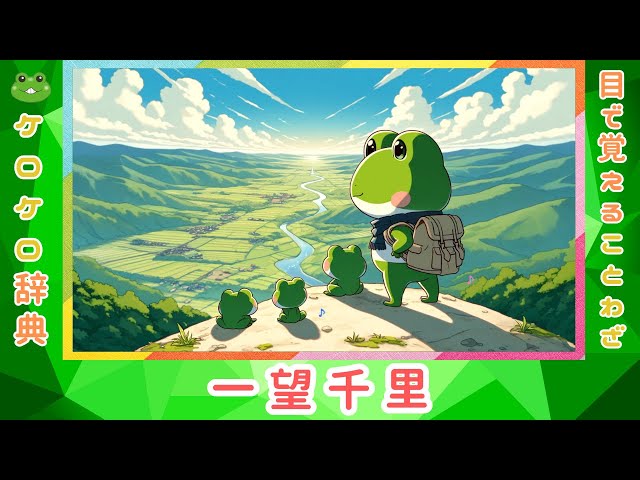
It’s a four-character idiom that expresses a broad field of vision, the ability to see far into the distance, or a big-picture outlook.
Knowing its meaning teaches us the importance of stepping back to see things as a whole and looking ahead.
Using it in contexts like a sports day or team event—saying, “Let’s approach this while keeping the whole in view with a ‘ichibō-senri’ mindset”—can raise awareness about assessing situations while cooperating with teammates.
It’s a phrase that reminds us to keep a wide perspective, and I feel it also serves as encouragement when you want to act calmly and planfully without rushing.
With united hearts and concerted effort
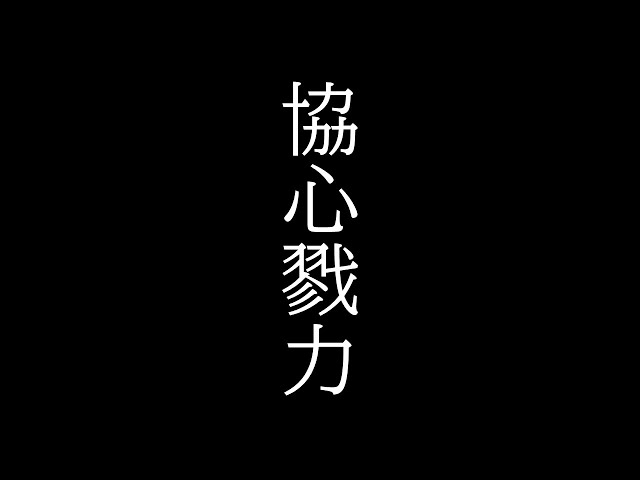
It’s a four-character idiom that expresses uniting hearts with your companions and joining forces.
It shows not only individual strength but also the importance of supporting and cooperating with one another.
Using it at a sports day or team event—like, “Let’s aim for the goal with kyōshin-ryokuryoku (協心戮力)!”—naturally heightens the sense of giving your all together with your teammates.
The phrase carries the message that even things that are hard to do alone can be overcome if you work with one heart, making it a perfect word of encouragement for situations where a team takes on a challenge.