

A roundup of famous jazz standards featured in the hugely popular jazz manga BLUE GIANT

BLUE GIANT is a hugely popular jazz-themed manga that ran in Big Comic from 2013 to 2016.
After the European arc, its third American arc is currently being serialized as of 2023.
Many people first learned about the series thanks to the theatrical anime adaptation released on February 17, 2023, which received rave reviews and sparked such a response that it created repeat viewers.
Praised as a work where you can “hear the sound from the drawings,” BLUE GIANT features powerful artwork and, befitting its jazz theme, includes many classic jazz standards throughout the story.
In this article, we’ll introduce the jazz masterpieces loved by the characters—especially with jazz beginners in mind!
- [Start Here] Jazz Masterpieces: A Must-Listen Album Selection
- A compilation of jazz insert songs and covers from anime
- Introduction! A collection of recommended masterpieces and standard numbers for jazz beginners
- Classic swing jazz tunes. Recommended popular songs.
- [2026] Jazz piano masterpieces: from standards to recent favorites
- Welcome to the world of "Vocalo Jazz" [VOCAJAZZ]
- [Jazz Intro] Classic Jazz Tracks Recommended for First-Time Listeners
- [2026] Discover Today's Jazz! A Roundup of the Latest Spotlight and Popular Tracks
- An Introduction to Jazz for Adults: The Recommended Jazz Manga BLUE GIANT
- The Profound Allure of the Saxophone: Iconic Songs Featuring Saxophone [2026]
- [2026] Introducing recommended jazz medley videos!
- [2026] Jazz BGM: A collection of recommended classics for work and study
- [Autumn Jazz] Classic and Popular Jazz Songs to Enjoy in the Fall
Summary of Jazz Masterpieces Featured in the Popular Jazz Manga “BLUE GIANT” (1–10)
Now’s the TimeCharlie Parker

In the story of BLUE GIANT, the first three jazz CDs that the protagonist Dai Miyamoto borrows from a friend are Miles Davis’s Kind of Blue, Bill Evans’s Waltz for Debby, and Charlie Parker’s Now’s The Time – the genius of Charlie Parker #3.
Speaking of Charlie Parker, he is often called a founder of modern jazz.
Not only was his legendary playing as an alto saxophonist unparalleled, he also created standard numbers that have gone down in jazz history as a composer—truly a figure worthy of being called a legend.
The Now’s The Time featured in this article is an original composition by Charlie and a standard that many musicians have covered.
It also showcases Charlie’s signature ad-lib playing in full force, and since the album consists of recordings from 1952 to 1953 and features a one-horn lineup, you can enjoy passionate performances by a genius in his mature prime.

CountdownJohn Coltrane

In BLUE GIANT—or rather, for the protagonist Dai Miyamoto—John Coltrane’s presence is tremendously important, and for Dai as a saxophonist, Coltrane is one of the players he reveres most.
It’s no exaggeration to say that Coltrane’s music is essential to fully enjoying the work.
The piece introduced here, Countdown, is the tune Dai performs at the school festival.
It’s included on Giant Steps, a landmark masterpiece in jazz history released in 1960.
Though it’s a short track at just 2 minutes and 20 seconds, the sheer power of Coltrane’s tenor saxophone, blazing with unrestrained freedom, is nothing short of overwhelming.
It’s also a popular piece that many jazz artists have covered, so it’s only natural that Dai would choose this song.
On a Slow Boat to ChinaSonny Rollins

The modern jazz milestone “On a Slow Boat to China.” It goes without saying this is a masterpiece by Sonny Rollins.
The real charm of this album lies in its sophisticated, adult atmosphere.
From the unhurried, confident phrasing to the playful arranging, the performance exudes a mature allure.
Although this is an early work by Sonny Rollins, his already established style is truly impressive.
If you’re new to jazz, be sure to check it out.

Summary of Jazz Masterpieces Featured in the Popular Jazz Manga “BLUE GIANT” (11–20)
Moment’s NoticeJohn Coltrane

I got asked about my favorite music genre, got overly excited and started passionately explaining, only to have the other person back away… If you’re a music lover, that’s a pretty relatable experience, right? In BLUE GIANT, when the protagonist Dai Miyamoto is told by a coworker at his gas station job, “Jazz is difficult music, isn’t it?” he pushes back.
But when the coworker responds, “Then sing something famous,” Dai hums John Coltrane’s classic Moment’s Notice.
Coltrane—one of the true giants of jazz and a historic saxophonist—released the masterpiece Blue Train in 1957, and Moment’s Notice is included on that album, composed by Coltrane himself.
It’s a brisk, up-tempo number with very clear, memorable lines—including the main riff—so even jazz beginners can easily appreciate how cool the saxophone sounds.
Dai hums the famous intro phrase, but unfortunately gets dismissed with a “Don’t get it.” By the way, this piece appears in other scenes in the original manga as well, so if you’re interested, definitely check out the source material!
Olive RefractionsJohnny Griffin
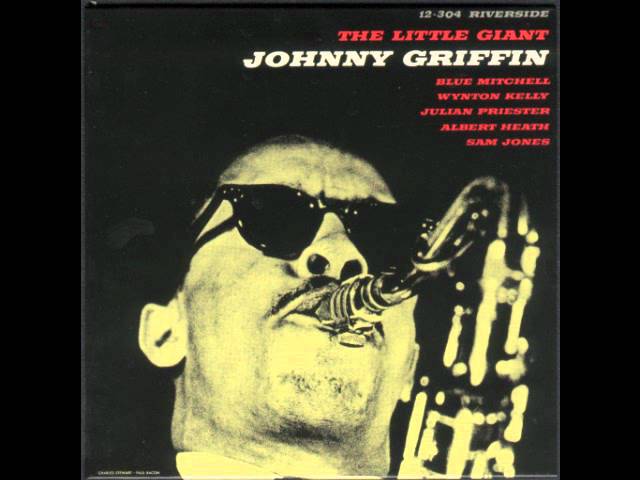
Chicago-born saxophonist Johnny Griffin was a prominent figure in the modern jazz scene, nicknamed the “Little Giant” for his explosive, muscular tenor sound delivered from a compact frame.
The connection to Blue Giant is hard to miss: when the protagonist Dai Miyamoto, still new to the saxophone, is practicing on the banks of the Hirose River, what he’s listening to is Johnny’s classic album The Little Giant.
Released in 1959, it’s a well-known hard-bop masterpiece among jazz fans.
The piece introduced here is the album’s opener, the acclaimed Olive Refractions.
From the intro, the powerful three-horn arrangement is sure to overwhelm you.
The piano trio—featuring Wynton Kelly, among others—also plays a leading role, delivering performances that epitomize jazz.
If you listen while imagining what Dai might have felt hearing this album as he practiced his sax, your attachment to—and understanding of—the work will only deepen.
So WhatMiles Davis

Miles Davis, nicknamed “the Emperor,” was a legendary trumpeter who, unfettered by existing rules, led jazz’s possibilities into another dimension with his free-thinking approach.
His influence is immense not only among jazz aficionados but also across other fields such as rock.
The album he released in 1959, Kind of Blue, is hailed as a crowning masterpiece of modern jazz.
Its ensemble work, which advanced the approach known as “modal jazz,” secured its place in music history.
Commercially, it was an extraordinary success and is unquestionably indispensable when talking about jazz.
Its connection to BLUE GIANT is also highly significant: of the three jazz CDs the protagonist Dai Miyamoto first borrows from a friend, one is this very Kind of Blue.
In a sense, it’s one of the records that marks the beginning of BLUE GIANT, and if you haven’t listened to this album yet, you can share a feeling similar to Dai’s—so by all means, check it out.
Featured here is the famous track that opens the album, “So What.” The brilliance of the performance—delivered by some of the finest players in the jazz world—goes without saying.
Take this opportunity to savor a classic that is essential both to Miles and to the history of jazz!
SpainChick Corea

Chick Corea’s masterpiece “Spain” is incredibly popular in Japan as well.
Even those who aren’t familiar with jazz will likely recognize its melody.
In fact, you can often find videos on YouTube of people performing it on street pianos.
Although the theme section resolves in 12 or 24 bars, the chord progression—completely different from a blues progression—will be striking to first-time listeners.
There are many versions and covers, so be sure to find the one that suits you best.