

[Chorale] Masterpieces of chorales. Recommended popular pieces.

In the world of classical music, chorales are frequently featured in wind ensemble and orchestral performances.
With their solemn resonance and profound spirituality, chorales hold a special place in music history.
Many masterpieces, starting with the works of Bach, continue to captivate musicians around the globe to this day.
In this article, we present a selection of exquisite chorale pieces that will resonate deeply with both performers and listeners.
Whether you are encountering chorales for the first time or already appreciate their allure, you are sure to discover something new.
Enjoy these treasures of music, woven from beautiful melodies and rich harmonies.
- [Hymns] Famous hymns and sacred songs. Recommended hymns and sacred songs.
- [Chorale] Masterpieces of chorales. Recommended popular pieces.
- A cappella masterpieces: Recommended songs where beautiful harmonies shine (Western and Japanese music)
- Japanese gospel: recommended Japanese songs with a gospel-like style
- [Tearjerker] Songs that make your heart tremble with tears & moving tracks with lyrics that touch the soul
- [Celtic Music] Masterpieces of Celtic music. Recommended Irish music
- [Nostalgic Collection] Classic oldies masterpieces. Recommended popular songs
- [Irish Folk Songs] Surprisingly Familiar Masterpieces and Standards of Ethnic Music
- Beautiful, lovely Western music. A roundup of recommended classic songs.
- The Brilliance of Youth: A collection of the Carpenters’ signature and popular songs
- [Classical] Masterpieces of oratorios. Recommended classical music.
- [Wind Ensemble] Recommended Western pop songs for concerts: timeless classics from every era
- [2026] Let's Sing at the Chorus Competition! A Roundup of Recommended Western Songs
[Chorale] Masterpieces of chorales. Recommended popular pieces (11–20)
Oh, the joy of living in the name of GodJohann Hermann Schein
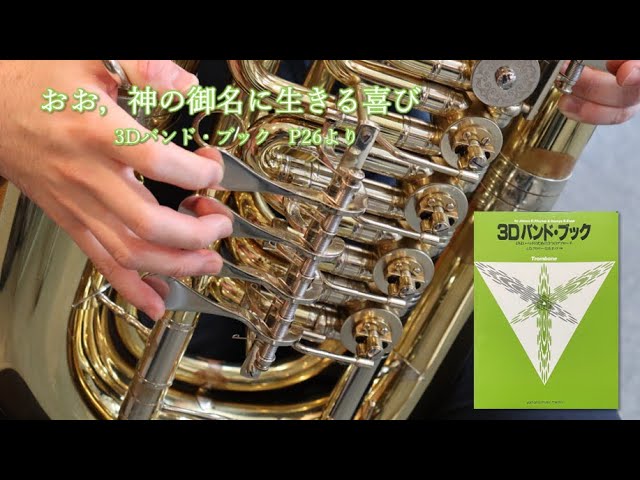
A solemn chorale by the German composer—and poet—Johann Hermann Schein.
Schein served as Kapellmeister at Leipzig’s St.
Thomas Church, a post later held by Bach.
This work is included in the 1627 hymnal he compiled, Cantional oder Gesangbuch Augsburgischer Confession.
The lyrics overflow with praise for God and the joy of living in faith.
His text painting is superb, creating a sense of unity as if the words of prayer themselves have become the melody.
Listening to the majestic harmonies is cleansing, leaving you with a pure and peaceful feeling.
It’s a perfect piece for stepping away from a busy daily life and quietly turning inward.
Christ was bound by the cords of deathJ.S.Bach
Johann Sebastian Bach, the great composer hailed as the father of music.
Among his many masterpieces, his early church cantatas written for Easter are works that convey a profound spirituality.
This particular piece is suffused with a heavy atmosphere, as if bound by the snares of death, yet at the same time it overflows with the radiance of life and the joy of the Resurrection that shatters those bonds.
One of its greatest attractions is how the young Bach renders this dramatic struggle between death and life with masterful penmanship.
Said to have premiered in April 1707, the work can be savored in a beautifully transparent performance on Bach Collegium Japan’s acclaimed recording, Bach Cantatas Vol.
1.
Give it a listen when you want to immerse yourself deeply in a world of majestic music.
Pachelbel / Chorale Canon (Tokyo Solisten, March 14, 1983)Johann Pachelbel

It’s “Chorale ‘O Sacred Head, Now Wounded’ and Canon in D major” by Johann Pachelbel, a German composer and organist of the Baroque period.
You might not be very familiar with this chorale, but the name “Pachelbel’s Canon” probably rings a bell for many.
Pachelbel had a significant influence on the development of the chorale prelude and the fugue, becoming one of the most important figures of the mid-Baroque era.
The opening, with its rich sonority of strings, differs from the canons we typically know, but the canon that flows in the latter half is certainly familiar!
Opera ‘Lohengrin’: Bridal ChorusRichard Wagner

A majestic and beautiful choral piece beloved as a melody of blessing at weddings around the world.
Richard Wagner, the German composer known for his many innovative operas, wrote this work for his opera Lohengrin, which premiered in August 1850.
It carries a heartwarming message of sincerely guiding the couple and blessing their future.
The melody, woven from brilliant and moving harmonies, truly strikes a chord.
After it was used at a British royal wedding in January 1858, the piece spread worldwide as a classic song of celebration.
Sacred yet filled with hope, it makes a perfect background music choice to grace life’s most special new beginnings.
Hymn 298: “Be at Peace, O My Heart”Jean Sibelius

Arranged in 1932 by the composer himself from the main theme of Finnish representative violinist Jean Sibelius’s symphonic poem “Finlandia” for the Presbyterian Church’s official American hymnal, The Hymnal (1933), it quickly became famous.
The symphonic poem “Finlandia” itself was composed in 1899 in Finland, which was suffering under the oppressive rule of Imperial Russia, and it is still widely sung in Finland today as a second national song after the national anthem.
It is a hymn that sings of obedience to God and hopeful longing.
God is our strongholdMartin Luther

This is “A Mighty Fortress Is Our God,” composed by Martin Luther, who was born in Eisleben in the Saxon region of the Holy Roman Empire.
It is a beautiful chorale that also appears in wind band method books.
Defying his parents’ wishes, Luther entered the Order of Saint Augustine and pursued the path of a monk.
The performance features a brass ensemble of trumpet, horn, trombone, and tuba, yet it achieves a rich, choir-like resonance, serving as a model performance for wind players—truly splendid.
[Chorale] Masterpieces of chorales. Recommended popular pieces (21–30)
RomanesqueJames Swearingen

This is Romanesque, composed by James Swearingen, a composer from the state of Ohio in the United States.
He is famous for writing very approachable pieces, and this chorale is likewise accessible, embodying Swearingen’s signature depth, warmth, and gentleness.
Since its release in 1982, it has remained a popular work frequently featured in concerts and is considered an essential original chorale in the wind band world.
Listen to it or perform it just once, and you’ll surely come to love it.