

![[Chorale] Masterpieces of chorales. Recommended popular pieces.](https://i.ytimg.com/vi/U0u0fYIsV0A/sddefault.jpg)

In the world of classical music, chorales are frequently featured in wind ensemble and orchestral performances.
With their solemn resonance and profound spirituality, chorales hold a special place in music history.
Many masterpieces, starting with the works of Bach, continue to captivate musicians around the globe to this day.
In this article, we present a selection of exquisite chorale pieces that will resonate deeply with both performers and listeners.
Whether you are encountering chorales for the first time or already appreciate their allure, you are sure to discover something new.
Enjoy these treasures of music, woven from beautiful melodies and rich harmonies.
- [Hymns] Famous hymns and sacred songs. Recommended hymns and sacred songs.
- [Chorale] Masterpieces of chorales. Recommended popular pieces.
- A cappella masterpieces: Recommended songs where beautiful harmonies shine (Western and Japanese music)
- Japanese gospel: recommended Japanese songs with a gospel-like style
- [Tearjerker] Songs that make your heart tremble with tears & moving tracks with lyrics that touch the soul
- [Celtic Music] Masterpieces of Celtic music. Recommended Irish music
- [Nostalgic Collection] Classic oldies masterpieces. Recommended popular songs
- [Irish Folk Songs] Surprisingly Familiar Masterpieces and Standards of Ethnic Music
- Beautiful, lovely Western music. A roundup of recommended classic songs.
- The Brilliance of Youth: A collection of the Carpenters’ signature and popular songs
- [Classical] Masterpieces of oratorios. Recommended classical music.
- [Wind Ensemble] Recommended Western pop songs for concerts: timeless classics from every era
- [2026] Let's Sing at the Chorus Competition! A Roundup of Recommended Western Songs
[Chorale] Masterpieces of chorales. Recommended popular pieces (1–10)
Jesu, Joy of Man’s DesiringJ.S.Bach
Johann Sebastian Bach’s works are cherished both as healing music and as pieces that color the many moments of life.
This composition conveys an unwavering devotion to the object of one’s faith—and the inner peace it brings—through warm, majestic harmonies.
The lyrics depict a deep sense of gratitude toward a sustaining presence, one that helps us keep hope even in difficult circumstances.
This piece is the closing chorale of the church cantata “Herz und Mund und Tat und Leben,” which Bach composed in 1723.
Its popularity has transcended the classical realm; it’s also well known for the hit 1971 cover by the British band Apollo 100.
Perfect for celebratory occasions like weddings, it also offers a cleansing, moving experience when listened to in quiet moments of self-reflection.
Canterbury ChoraleJan Van der Roost

Canterbury Chorale is a famous wind band piece composed by Belgian composer Jan Van der Roost.
Inspired by Canterbury Cathedral in Kent, in the southeast of England, its melody unfolds deeply and serenely, flowing at an unhurried pace.
As it builds toward the climax, more instruments join in, powerfully evoking the cathedral’s solemn atmosphere.
While most ensembles choose technically demanding free selections with dramatic contrasts for wind band competitions, the Kanto Daiichi High School Wind Ensemble’s performance—earning a gold medal at the national contest with this single chorale—stands out as truly exceptional.
The majestic, organ-like sonority achieved by the wind band is sure to be moving.
Highly recommended as a chorale piece for those involved in wind band music.
Come, let us praise God together.J.S.Bach
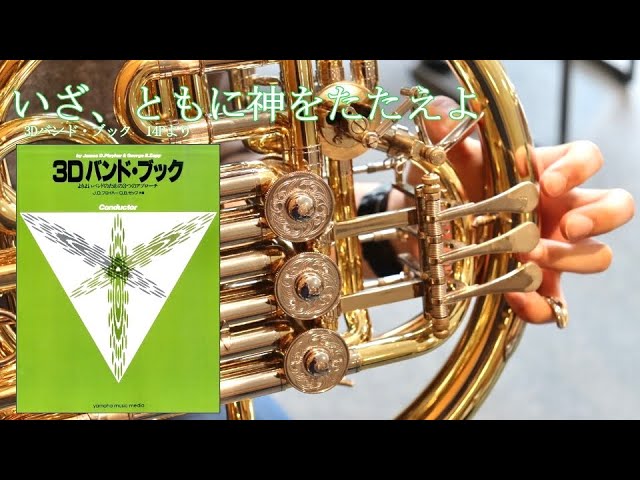
A majestic chorale composed by Bach, the father of music.
Born in Germany in 1685, Bach created works suffused with profound spirituality.
This piece evokes a powerful yet warm vision of communal prayer in praise of God.
Its four-part texture weaves rich harmonies that recall the sound of an organ resounding through a church, filling the heart with purity.
The work has also been included in educational collections for wind band and has been performed by many who are learning ensemble fundamentals.
It’s perfect for moments when you want to immerse yourself in music in a quiet space or enjoy performing while feeling a sense of unity with your companions.
Lend your ear to this musical treasure, where beautiful melodies interlace.
O Thou, God the FatherJ.S.Bach

Johann Sebastian Bach, the father of music.
The Orgelbüchlein, a collection of organ pieces that Bach left around 1713 during his Weimar period, contains many masterpieces.
This work, one of the pieces from that collection, is an arrangement of a chorale based on the Lord’s Prayer.
Its calm yet noble melody, together with the delicately ornamented inner voices, seems to embody the very spirit of deep prayer.
It was originally performed in church services as an introduction to hymns sung by the congregation.
On a night when you wish to quiet your heart, or in the morning when you want to begin the day with a pure mind, imagine the sound resonating in a church and listen, savoring each and every note.
The morning star shinesPhilipp Nicolai

Among the great masterpieces of solemn chorales, this work shines with an especially radiant sense of hope—truly worthy of the title “Queen of Hymns.” Its author, Philipp Nicolai, was both a theologian and a poet.
Around 1597, amid a desperate situation in which as many as thirty graves were dug in a single day due to a plague outbreak, he wrote this piece to bring comfort to the people.
Its majestic melody, like the morning star piercing the darkness, sinks deeply into the heart.
Published in 1599 in the hymnal Frewdenspiegel deß ewigen Lebens, it soon became widely known, and later Johann Sebastian Bach composed cantatas based on this melody.
When the heart is weary or the night is still, its sacred harmonies seem to gently enfold the soul.
Hymn No. 312: “What a Friend We Have in Jesus”Charles Crozat Converse

This is a beloved hymn by Charles Crozat Converse, who also worked as a lawyer.
The original lyrics are said to have been written by someone who suffered the profound sorrow of losing a fiancée twice.
The warm, enveloping melody—overflowing like a prayer to a friend who shares every burden—soothes the heart.
Composed around 1868, the piece’s composer, Converse, was awarded an honorary Doctor of Laws degree in 1895.
It’s a recommended song to listen to when you want to quietly reflect or drift off to sleep with a sense of peace.
Ave verum corpusWolfgang Amadeus Mozart

A work by Wolfgang Amadeus Mozart whose quiet, prayer-like resonance is deeply captivating.
Among such pieces, I would like to introduce a chorale that conveys a celestial beauty.
Composed in June 1791, near the very end of his life, this piece is said to have been written for a friend while Mozart stayed at a spa where his wife was convalescing.
The sole instruction in the score, “sotto voce” (softly), speaks volumes about its introspective character.
Its pure melody and crystalline harmonies—singing of Christ’s sacrifice and salvation—offer a profound emotional impact that belies its mere 46 measures.
Many may recognize its majestic strain from its memorable use in the film “Lorenzo’s Oil.” An imperishable masterpiece, perfect for moments when you wish to calm the heart.