
A City Pop masterpiece! A classic album—highly recommended.

Born in Japan, “city pop” has been rediscovered by overseas music fans with the spread of the internet, sparking a uniquely online-era boom.
Tracks like Mariya Takeuchi’s “Plastic Love” and Miki Matsubara’s “Mayonaka no Door — Stay With Me” have drawn attention, and more recently, The Weeknd released a song sampling Tomoko Aran’s “Midnight Pretenders.” It’s fascinating how city pop—refined music influenced by Western pop—is being embraced abroad in a kind of reverse import.
This article introduces a “classic city pop album” for those who want to start listening to the genre!
- Best City Pop Classics: Recommended Popular Songs [Timeless & Modern]
- City pop perfect for creating a romantic date atmosphere (Adults Only)
- [BGM] Attractive City Pop
- Classic and hit Japanese pop songs from the nostalgic 80s
- A masterpiece of Japanese rock. Recommended albums you should listen to at least once.
- Recommended for the Yutori generation! Tear-jerking masterpieces from the J-pop scene
- Big Hits, Including New Standard Favorites! Best Hits of Popular J-POP Songs
- From City Pop to Ballads!! Mariya Takeuchi’s Easy-to-Sing Songs
- A Classic of Korean City Pop [KOREAN CITY POP]
- A special feature on Mariya Takeuchi’s best songs: a must-hear collection of masterpieces for both longtime fans and first-time listeners.
- Recommended songs by the new city pop band “Roman Kakumei”
- A roundup of debut songs by Japanese female artists from the 1970s
- [90s Music] Shibuya-kei Classics: Recommended Popular Songs
A city pop masterpiece! A classic album—one highly recommended pick (1–10)
You’re My BabySato Hiroshi

Just the sound of waves and the romantic piano in the intro of AWAKENING is enough to knock you out! This is Awakening, the solo album released in 1982 by Hiroshi Sato—one of the most iconic keyboardists in J-pop history, a prolific studio musician who played on countless classic records, and a composer behind many commercial jingles and TV theme songs.
Although Sato was releasing music as a singer-songwriter at the time, his reputation as a keyboardist led to more and more work with other artists.
Determined to break out of that situation, he decided to move to the United States in 1979.
A few years later, he encountered the LinnDrum LM-1 drum machine, which blew his mind.
He created demo tapes using it, returned to Japan, and released this album—an extremely intriguing backstory.
Sato had long been a one-man overdubbing wizard, and here he fully harnesses the drum machine to program his ideal rhythm patterns while also handling vocals, resulting in a work that feels quintessentially City Pop in its polish.
The jazz-inflected keyboard voicings and summer-evoking songs are classic City Pop traits, but a first-time listener might not even realize the drums are programmed.
Another highlight is the sheer mastery of his programming—so impressive that Masato Nakamura, the bassist of Dreams Come True, once called him a “Jedi Master of programming.” By the way, the track Say Goodbye is sampled/quoted in Tonight (I Wish I Was Your Boy) by the UK rock band The 1975.

Night lights on my cheeksYoshida Minako
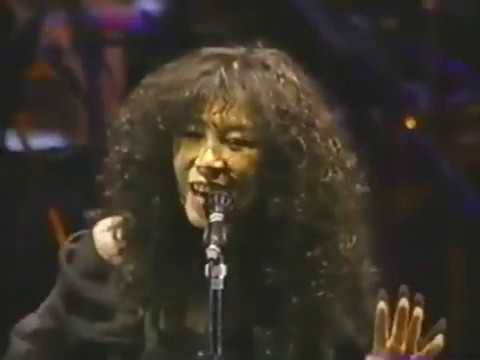
When it comes to the theme of “city pop masterpieces,” one name that is always mentioned is Minako Yoshida—a quintessential female singer-songwriter who has led Japan’s music scene for decades.
The anecdote that she met Haruomi Hosono and Takashi Matsumoto in high school and decided to pursue a path as a singer-songwriter is, in itself, a slice of Japanese music history.
In 1973, produced by Hosono, she released her album Tobira no Fuyu, marking her full-fledged debut.
From there, Yoshida continued to showcase her exceptional talents as both a songwriter and arranger—writing not only her own material but also providing songs to numerous artists and composing music for commercials.
As noted at the outset, many of Yoshida’s works are highly popular as city pop, and here I’d like to introduce LIGHT’N UP, released in 1982.
Often called “the final work of her funk era” within her discography, it distills influences from fusion and soul into a style that brims with the allure of city pop.
Yoshida wrote the lyrics and music for most tracks, and the airtight ensemble performances by top-tier fusion players yield a sound of unimpeachable polish.
With superb vocal prowess, she soulfully and freely delivers melodic lines that set her apart from standard kayōkyoku, making her brilliance as a singer nothing short of breathtaking.
Summer ConnectionOhnuki Taeko

Taeko Onuki, who co-founded the legendary band Sugar Babe—pioneers of city pop—together with Tatsuro Yamashita, has continued to reign as an outstanding singer-songwriter since the band’s breakup.
Many of her albums are highly regarded as classic early city pop, and SUNSHOWER, featured in this article, is one of them.
Released in 1977, SUNSHOWER is Onuki’s second album; with the exception of one track, all songs were written and composed by Onuki, with arrangements by Ryuichi Sakamoto.
It’s a widely acclaimed masterpiece that has also earned strong popularity overseas.
A telling episode underscoring its international appeal occurred on the 2014 TV variety show “Why Did You Come to Japan?”, where an overseas music fan came to Japan specifically to find this record—an incident that became a hot topic among city pop enthusiasts.
Although the album unfortunately did not achieve major commercial success at the time, it featured up-and-coming musicians and fully embraced contemporaneous fusion and crossover sounds.
It was later reappraised by the club generation in the 1990s through the Shibuya-kei movement.
Alongside Onuki’s talent as a singer-songwriter, Professor Sakamoto’s assured pre-YMO production skills, the comfortable groove created by Chris Parker—drummer of the fusion favorite Stuff—and the album’s forward-looking sound are all elements that will likely see its reputation continue to grow.
City Pop masterpieces! Classic albums – one recommended pick (11–20)
To a snobbish nightKokubu Yurie

Night Tempo, a Korean music producer who can be called a central figure in the online reappraisal of city pop, released his first original album, “Ladies In The City,” in 2021, featuring many Japanese female singers.
For city pop fans, spotting the names Mariko Tone and Yurie Kokubu—singers active since the ’80s—surely brought a grin.
The album introduced here, “Relief 72 hours,” is Yurie Kokubu’s 1983 debut and stands as one of the most beloved classics in the city pop canon.
Though it was a hidden gem at the time and went long without a CD release, its 2013 CD issue finally brought it to a younger generation of music fans.
Produced by Tetsuji Hayashi—who created numerous city pop masterpieces and classics, including “Mayonaka no Door ~ Stay With Me”—the album boasts an irresistibly groovy ensemble by seasoned musicians.
If you’re drawn to terms like city pop and light mellow, this is a must-check record.
While the album is packed with strong tracks, the undeniable star is Kokubu herself, whose captivating voice delivers with superb vocal prowess and expressive range.
It’s a record that reaffirms the high caliber of ’80s Japanese music, and not only essential for city pop enthusiasts but also highly recommended for anyone eager to dive deeper into the ’80s J-pop scene.
Message of RougeArai Yumi

Yuming, aka Yumi Matsutoya, made her debut as a composer in 1971 at the young age of 17 and burst onto the scene the following year as a rising singer-songwriter.
Then performing under the name Yumi Arai, she created a wealth of wonderful masterpieces with her urban sensibility and is often regarded as a forerunner of city pop.
In this piece, however, we focus on her third album, Cobalt Hour, released in 1975—the same year as Sugar Babe’s Songs.
It includes enduring J-pop classics beloved across generations, such as Graduation Photo, originally written for Hi-Fi Set, and Rouge no Dengon, widely known as the theme song for the acclaimed animated film Kiki’s Delivery Service.
After her debut and second albums, which showcased a precocious prodigy with rich literary sensibilities and a somewhat introspective, poetic style, this landmark record is highly regarded as the moment when her talents as a future queen of Japanese pop fully blossomed.
Produced comprehensively by Masataka Matsutoya—who would later become her husband—the album features Tin Pan Alley, the band comprising outstanding musicians who made enormous contributions to Japanese popular music history: Masataka Matsutoya, Haruomi Hosono, Shigeru Suzuki, Hiroshi Sato, Tatsuo Hayashi, and others.
They continued their participation from the previous two albums, bringing out Arai’s full appeal as a songwriter.
Lined with superb, urbane, and impeccably sophisticated pop songs that stand apart from the folksy, down-to-earth mood that dominated the 1970s, this work can rightly be called a foundational “city pop” album.
Down TownShugā Beibu

In the 1970s, which could be called the eve of City Pop, are you familiar with the legendary band Sugar Babe, formed in their youth by musicians who would go on to represent Japan, such as Tatsuro Yamashita and Taeko Onuki? Active for only about three years and leaving behind just one album, they did not achieve commercial success.
However, the music they created with a sensibility completely different from conventional Japanese kayōkyoku has been reappraised—helped by the later achievements of its members—and is now recognized as an essential, important band in the history of Japanese music.
Sugar Babe’s sole album, “SONGS,” was released in 1975 as the first title on the Niagara label established by Eiichi Ohtaki of Happy End, with Ohtaki also serving as producer.
This innovative work, created by highly talented musicians in their early twenties, stands as a milestone of J-Pop and is a must-mention classic in the City Pop context.
Although today many music fans praise its high level of completion—on par with the great Western albums of its era—the prevailing view is that it was too ahead of its time to be accepted back then.
From the famous “DOWN TOWN,” covered by numerous artists, to the beautiful choral work, meticulously crafted shimmering arrangements, and evergreen melodies, this album offers new discoveries every time you listen.
It isn’t available on streaming services at the moment, but I highly recommend buying the CD or vinyl to experience it.
Pink ShadowBureddo & Batā

Bread & Butter, a duo formed by the brothers Yukiya Iwasawa and Fuyumi Iwasawa, are known as a brother folk duo, yet they venture beyond folk to develop a sound with diverse musicality, including bossa nova, making them highly popular from a city pop perspective as well.
Hailing from the Shonan area, their music is affectionately known as “Shonan Sound,” alongside major figures like Yuzo Kayama and Southern All Stars, and it carries a distinctive character that can change one’s image of what the folk genre can be.
Their 1974 release Pink Shadow is famed as a city pop classic of the highest order, and the album Barbecue, which contains that masterpiece, is unquestionably an essential record that any music fan interested in city pop should check out.
Their melodies and lyrics deviate from conventional folk forms in a unique way, and the ensemble’s groove—clearly influenced by Western music quite different from mainstream kayōkyoku or folk of the time—is astonishing, especially considering the era.
Above all, the star-studded lineup is remarkable: members from groups like Tin Pan Alley, Sadistic Mika Band, Toi et Moi, and Hi-Fi Set took part.
There’s no doubt this work is practically a slice of Japanese popular music history itself, and it is also noteworthy that Tatsuro Yamashita later covered the aforementioned Pink Shadow, including it on his 1978 live album IT’S A POPPIN’ TIME.