
A City Pop masterpiece! A classic album—highly recommended.

Born in Japan, “city pop” has been rediscovered by overseas music fans with the spread of the internet, sparking a uniquely online-era boom.
Tracks like Mariya Takeuchi’s “Plastic Love” and Miki Matsubara’s “Mayonaka no Door — Stay With Me” have drawn attention, and more recently, The Weeknd released a song sampling Tomoko Aran’s “Midnight Pretenders.” It’s fascinating how city pop—refined music influenced by Western pop—is being embraced abroad in a kind of reverse import.
This article introduces a “classic city pop album” for those who want to start listening to the genre!
- Best City Pop Classics: Recommended Popular Songs [Timeless & Modern]
- City pop perfect for creating a romantic date atmosphere (Adults Only)
- [BGM] Attractive City Pop
- Classic and hit Japanese pop songs from the nostalgic 80s
- A masterpiece of Japanese rock. Recommended albums you should listen to at least once.
- Recommended for the Yutori generation! Tear-jerking masterpieces from the J-pop scene
- Big Hits, Including New Standard Favorites! Best Hits of Popular J-POP Songs
- From City Pop to Ballads!! Mariya Takeuchi’s Easy-to-Sing Songs
- A Classic of Korean City Pop [KOREAN CITY POP]
- A special feature on Mariya Takeuchi’s best songs: a must-hear collection of masterpieces for both longtime fans and first-time listeners.
- Recommended songs by the new city pop band “Roman Kakumei”
- A roundup of debut songs by Japanese female artists from the 1970s
- [90s Music] Shibuya-kei Classics: Recommended Popular Songs
City Pop masterpieces! Classic albums – one recommended pick (11–20)
drizzleitō ginji

When it comes to the beloved national TV show Waratte Iitomo!, the opening theme Ukiki Watching sung by the Iitomo Youth Trio is absolutely indispensable.
The song itself can be called a national classic, but do you know who composed it? The composer, Ginji Ito, is a musician known for joining the legendary band Sugar Babe—famous for producing major artists like Tatsuro Yamashita and Taeko Onuki—as a second-phase member.
He wrote lyrics for several tracks on their sole album SONGS and is also known for his work with the Niagara Triangle alongside Yamashita and Eiichi Ohtaki.
In addition to his career as a solo singer-songwriter, Ito has been active in a wide range of roles as an arranger and producer.
His first solo album, Deadly Drive, released in 1977, is a highly acclaimed masterpiece that was reissued in 2017 as a 40th Anniversary Deluxe Edition.
With close friends like Taeko Onuki and Ryuichi Sakamoto participating, it’s a quintessential city pop gem whose urbane, sophisticated sound perfectly matches Ito’s refined vocals.
The classic Konuka-ame is a song from his period with the band Goma no Hae and was also performed live during the Sugar Babe era.
Needless to say, the album is outstanding, and from the perspective of Japanese music history and city pop history, it is a work of considerable significance.

City DolphinHamada Kingo
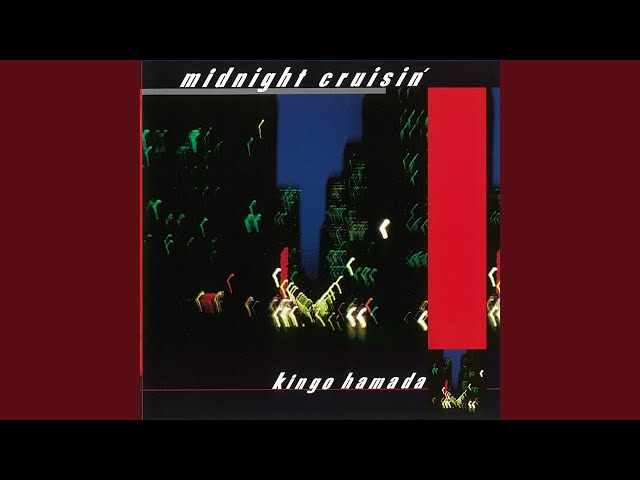
In recent years, it’s become common to hear overseas artists cite works and performers highly regarded as Japanese city pop influences.
Among them is Alfie Templeman, a UK singer-songwriter born in 2003 who’s drawing major attention as a leading figure of the 2020s.
He has openly acknowledged the influence of city pop, and one of the specific artists he’s named is Kingo Hamada, whom this article introduces.
Hamada is not only a singer-songwriter but also a composer and music producer behind many hit songs, film scores, and commercials.
His fourth album, Midnight Cruisin’, released in 1982, is a bona fide city pop classic.
The track Machi no Dolphin was sampled under the English title Crystal Dolphin and became hugely popular as BGM for TikTok videos.
With its cool, stylish, and urban sound grounded in AOR and fusion, it’s bound to captivate any city pop fan.
Alfie himself is said to be particularly fond of Midnight Cruisin’.
One fascinating aspect of city pop is how it can spread unexpectedly to music fans overseas.
LADY PINK PANTHERSuzuki Shigeru

Shigeru Suzuki, who made his mark as the guitarist of Happy End and went on to play in historically important Japanese groups like Caramel Mama and Tin Pan Alley, remains an active musician even in the 2020s.
While his solo debut masterpiece Band Wagon is often cited as the definitive Suzuki solo work, here I’d like to introduce Lagoon, released in 1976 and hailed as a pioneering city pop classic.
Recorded in Hawaii with trusted allies like Haruomi Hosono and Tatsuo Hayashi on board, and lyrics by his Happy End bandmate Takashi Matsumoto, the album captivates with a nostalgic, laid-back sound that evokes bossa nova and Hawaiian AOR.
Suzuki’s playing—showcasing acoustic guitar and ukulele—and his soft vocals, the mellow groove from Japan’s proud rhythm section of Hosono and Hayashi, and the tasteful horn arrangements and Mark Levine’s elegant electric piano all intertwine into a finely crafted ensemble that is a true pleasure to hear.
Suzuki’s genius for songwriting effortlessly transcends the confines of conventional kayōkyoku, and the superb contributions from the participating musicians are nothing short of astonishing.
It’s a wonderful classic that perfectly suits a summer evening’s soundtrack.
Midnight JokeTakako Mamiya

This isn’t unique to city pop, but digging into bands and artists who disappeared without commercial success really deepens your understanding of a genre.
There must be people who want to discover more of those works rather than just the famous ones.
The subject of this article, Takako Mamiya, released her one and only album, Love Trip, in 1982, but it apparently made barely a ripple at the time.
It was later reappraised, though, and the original vinyl pressing from back then became a prized item cherished by dedicated collectors.
In 2012, thirty years after its release, it finally got its first CD issue, delighting many city pop fans.
If you’re about to listen to it for the first time, you might be struck by how extraordinarily well-crafted it is.
On the stylish cover, Mamiya exudes the aura of a sophisticated, cool woman with an adult allure—and the album itself clearly projects that very image.
There’s nothing overbearing about it; centered on Mamiya’s exquisite vocals, which have a natural, even-toned quality, the record was produced by jazz saxophonist Genji Sawai, with seasoned musicians like Kazuo Shiina and Hiroyuki Namba contributing.
It truly feels like a talented female singer being supported by thoroughly professional production.
It’s a shame it wasn’t appreciated in its day, but it’s wonderful that a work likely to be loved by today’s music fans—and tomorrow’s—has been successfully unearthed.
Ruby RingTerao Akira

Among the albums and artists later reappraised by music fans as “city pop,” there are many cases that sold poorly at the time and remained cult favorites.
But Akira Terao’s 1981 single “Ruby no Yubiwa” stands as a timeless classic—a massive hit etched into the history of Japanese pop—and the album that contains it, Reflections, is also widely recognized as a landmark work of city pop.
After all, it topped the album charts for 12 consecutive weeks, which tells you just how big a hit it was.
At the same time, as you’ll hear when you revisit the record, Terao’s low, adult-leaning vocals and the stylish arrangements that evoke the city at night overflow with the scent of what could be called one image of city pop: cool, sophisticated adulthood.
Terao’s singing perfectly embodies his cool persona—he’s also known for many acclaimed roles as an actor—and the superb arranging talents of Akira Inoue, an indispensable figure in the city pop genre, come to fruition in the happiest way, resulting in a work that never fades.
Members of PARACHUTE, the legendary fusion band Inoue belonged to, also gathered here, and the flawless band ensemble delivered by these top-notch musicians is simply outstanding.
Even if your only point of reference is the hit single “Ruby no Yubiwa,” by all means give this album a listen.
Eyes Are DiamondMatsuda Seiko

Many key musicians in city pop also participated in 1980s idol music, and there are numerous classic songs and albums that enjoy city pop–style acclaim.
This time, let’s spotlight a famous example: Seiko Matsuda’s eighth album, Canary, released in 1983.
The record includes the hit single Hitomi wa Diamond—known as the first breakup song written by Yumi Matsutoya (aka Yuming) for Matsuda—as well as fan favorite Aoi Photograph.
The title track marks the first time Matsuda herself composed a song.
Arrangements were handled by the likes of Masao Ōmura, Akira Inoue, and Masataka Matsutōya, with Tetsuji Hayashi—a key figure in city pop—also contributing a song, and a poignant ballad by Takao Kisugi.
Overall, the album exudes a mature atmosphere.
While retaining her adorable idol charm, this work offers a glimpse of a slightly more grown-up Seiko.
Its refined ensemble and cutting-edge arrangements generate a city pop allure, and the album can be seen as an important milestone in Matsuda’s rapid development as an artist.
In conclusion
While city pop’s sophisticated, urban sound was born under a strong influence from overseas music, it’s fascinating that, decades later, it’s now being fervently embraced by music fans abroad. City pop is undoubtedly headed for further reevaluation, and you could say the genre is having its moment right now. I’d be glad if this article conveyed even a little of just how outstanding the works produced by Japan’s music scene have been.