

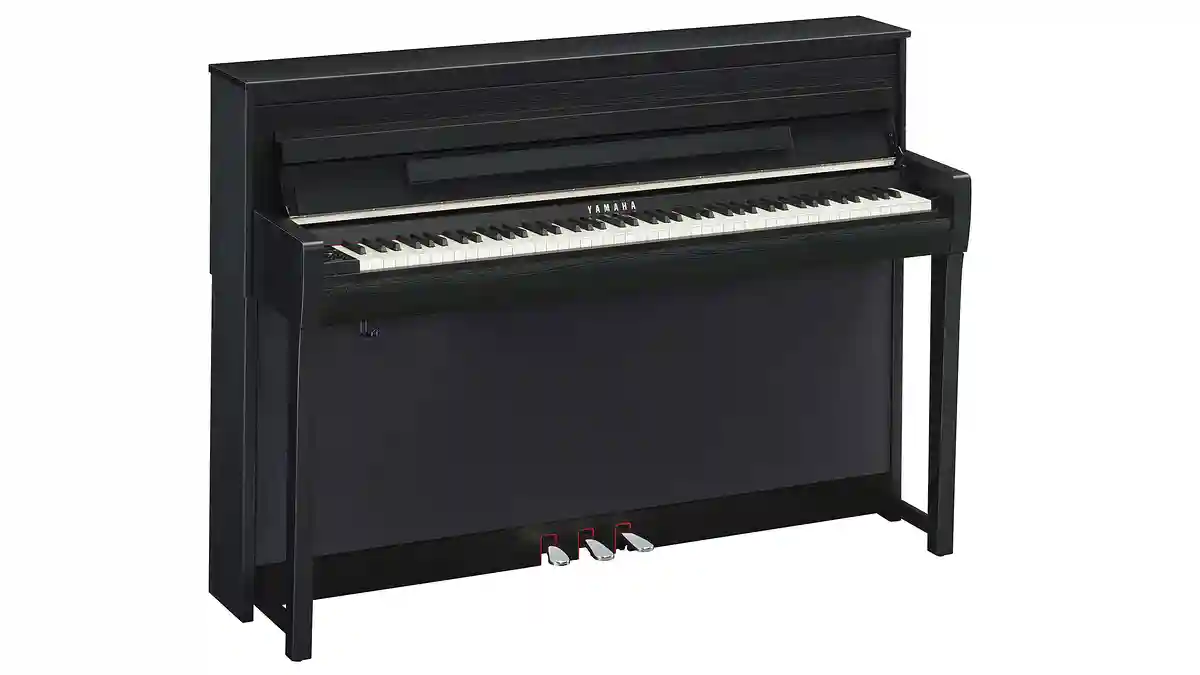
The appeal of Yamaha’s new CLP series digital pianos
New models of Yamaha’s Clavinova CLP series have been released.
The model numbers have moved from the 500 range to the 600 range, such as CLP-685 and CLP-675.
With newly developed keyboards and speakers, along with upgrades to existing features, overall capabilities have improved, bringing them another step closer to an acoustic piano.
New element
GrandTouch keyboard
This keyboard is featured on the CLP-685 and CLP-675.
The incredibly realistic tactile feel is just astonishing—unlike anything before!
When you strike the keys strongly they feel heavy, and when you strike them lightly they offer less resistance and sink in smoothly—the perceived weight at your fingers changes with how hard you play.
As a result, responsiveness has been further improved to accommodate any touch, from delicate to powerful tones.
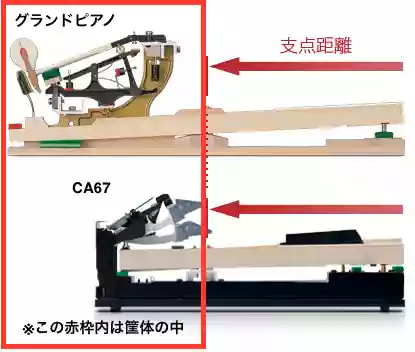 Also, as with Kawai’s CA97, by making the distance from the front edge of the key to the pivot point (※1) the same as that of a grand piano, the keys sink sufficiently even when pressed toward the back (※2), making it easier to perform using this area.
Note 1: The image shows Kawai keys.
*2 Orange indicates the back of the keyboard.
We sometimes press here when playing chords or when we want to perform smoothly while incorporating the black keys.
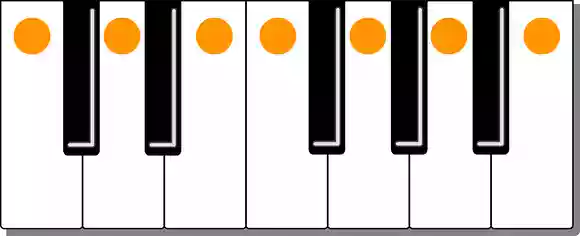
Whether you pluck the near side or the far side, it now delivers a realistic playing feel.
In the 500 series, only the white keys had an ivory-like finish on the key surfaces, but starting with the 600 series, all the black keys also feature an ebony-style finish, improving the feel of the black keys as well.
Improved sound sources and faithful reproduction of the piano’s delicate resonance across all CLP models
By improving the sound source, the previous piano tone has become even more natural.
In the 500 series, the VRM (Virtual Resonance Modeling) function—which reproduces the resonance of various piano parts and had previously been available only on the 585 and 575—is now included on all models.
Every model now comes closer to a rich resonance that sounds like the real thing.
The speakers have also been improved for even better sound quality.
The CLP-575 had a total of four speakers, with two on the left and two on the right, but starting with the CLP-675, the number increased to six so that the bass, midrange, and treble could each be projected through dedicated speakers.
Originally, the CLP-585 had six speakers with an output of 30 watts, but starting with the CLP-685, the output was increased to 50 watts.
It produces a richer, more powerful sound, closer to that of an acoustic piano.
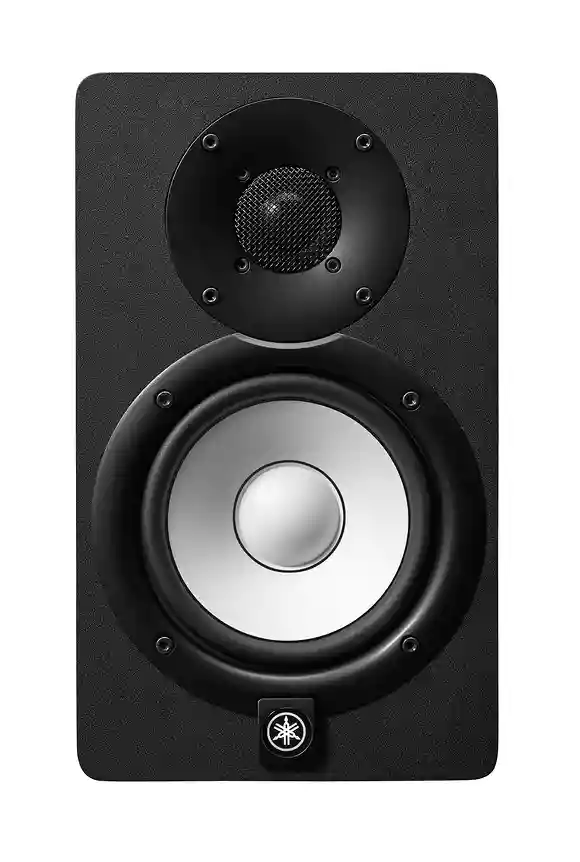
By making the speaker cones (※3) out of spruce wood, the CLP-685 achieves a quicker attack (meaning higher responsiveness from key press to sound production).
Note 3: The white part in the image is called the speaker cone.
Even better sound when wearing headphones
In the previous models, a feature called “Stereophonic Optimizer” was included on the CLP-545 and higher models.
While retaining that feature in the CLP-600 series, a “binaural sampling” function was also added, further improving the naturalness of the piano sound.
Thanks to this feature, even the sound from the headphones seems to be coming from the device itself.
As a result, it feels like the sound spreads into the space rather than right by your ears, enhancing the sense of naturalness even further.
Lastly
Although I didn’t feel a very big difference from the previous model in the CLP-635 and 645, I could perceive an improvement in sound quality.
Even the subtle resonance is reproduced, so the sound indeed has a shimmering brilliance and richness.
However, the fact that the only improvement after several years since the 500 series is the sound quality was a bit below my expectations.
However, I was surprised because the keys on the 675 and 685 were new and had become significantly closer to those of a grand piano.
With the upgraded CLP series after the model change, you’ll be able to enjoy playing the piano!