

Cool masterpieces of enka, the heart of Japan

Enka that lets you feel the spirit of traditional Japan.
There are many songs that spotlight famous places and traditional events in Japan, as well as tracks that convey a stylish, mature atmosphere.
In this article, we’ll introduce some cool enka songs from among the many out there!
Enka might feel unfamiliar to younger listeners, but it’s a cool genre with a soul that’s different from pop or rock.
Since the 2000s, various performances—such as collaborations with young artists on music shows and rock arrangements of classic hits—have been drawing attention.
Listen to the songs we introduce and feel the coolness of Japan’s traditional spirit!
- Women’s Enka: A collection of classic enka songs expressing women’s emotions
- Classic enka songs you’ll want to sing at karaoke: recommended popular tracks
- Great enka masterpieces and hit songs of the 1970s
- A collection of iconic, cool Showa-era kayōkyoku classics sung by male vocalists
- Men’s enka: a collection of classic songs portraying the way men live and their fighting spirit
- Heart-touching, tear-jerking masterpieces from the Showa era
- [2026] Representative Famous Enka Songs: A Compilation of Classic Favorites [Beginner-Friendly]
- [For Beginners] Recommended Enka Masterpieces for Karaoke — Male Singers Edition
- [For Women] A roundup of enka songs that can score high in karaoke
- Popular Enka. Latest Rankings [2026]
- Enka Karaoke Popularity Rankings [2026]
- Great enka masterpieces and hit songs of the 1980s
- Great enka masterpieces and hit songs of the 2000s
Cool Masterpieces of the Japanese Spirit: Enka (1–10)
Wind God and Thunder GodKimura Tetsuji

It’s a work whose unwavering will—“the resolve to set sail toward rough seas”—pierces straight through.
The song is by Tetsuji Kimura and was released in February 2026.
Produced by his older brother, Ryuzo Kimura, this release came in two versions with different B-sides.
Deified motifs, a robust sound, and an overwhelming iron voice leave a strong impression.
It feels as if powerful emotions welling up from the pit of the stomach are carried by that forceful sound.
If you’re someone taking on challenges in everyday life, it’s sure to move you.
Tsugaru Strait – Winter SceneIshikawa Sayuri
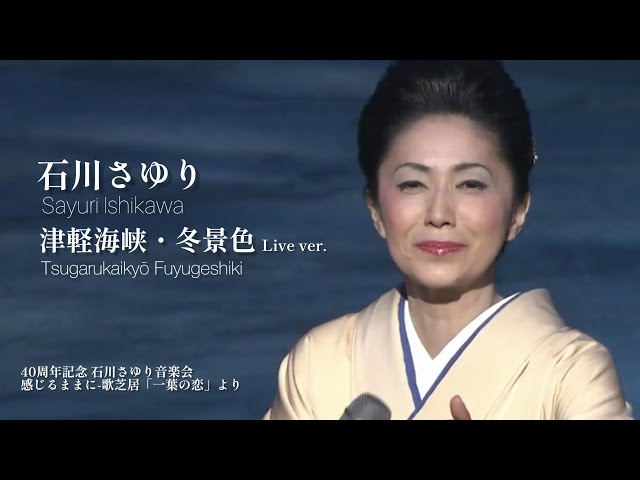
The well-known classic that represents enka, “Tsugaru Strait – Winter Scenery.” It’s also the song with which Sayuri Ishikawa transitioned from an idol singer to a full-fledged enka artist.
It’s an epic ballad about people who boarded a night train departing from Ueno Station, crossed the Tsugaru Strait in Aomori Prefecture, and made their way to Hokkaido.
In 2016, Sayuri Ishikawa appeared as a coffee shop master in the Suntory BOSS commercial “Hokkaido Shinkansen,” which featured Tommy Lee Jones, and her a cappella performance of the song became a hot topic.
It’s a masterpiece that stirs feelings of homesickness, so give it a listen while thinking of your hometown!

Dream PlayUmezawa Fumio

This is a signature song of Tomio Umezawa, the third-generation leader of the popular theater troupe Umezawa Gekidan, who is also active as an actor and TV personality.
Many people probably associate it strongly with the entrance music he uses on variety shows or remember it as a commercial jingle.
Overflowing with sensuality as it depicts the push and pull of a man and woman’s romance, it also weaves in words that evoke the stage.
That’s why the song feels especially profound—because it comes from Tomio Umezawa, a stage actor as well as a screen actor.

Cool Masterpieces of the Japanese Spirit: Enka (11–20)
wintering swallowMori Masako

A true masterpiece of late Showa-era enka that’s also a karaoke favorite.
The onomatopoeia that appears in the lyrics makes you want to sing along every time.
Composed by the multi-talented Hiroshi Madoka, the signature song of Masako Mori is “Ettō Tsubame” (Wintering Swallow).
By the way, Madoka-san, whom you often see on Kansai TV shows, is such a delight that he can get more laughs than typical comedians.
The lyrics, which liken the frail swallow enduring the winter to a love that never runs dry, are exquisite.
Mori’s vocal delivery—placing each word with care—brings the song to even greater heights.
It’s said that at her concerts she always performs her three big hits: “Sensei,” “Kanashimi Honsen Nihonkai,” and this one.
A timeless enka number you’ll want to keep listening to forever.
Harbor Pier DrizzleIshikawa Sayuri

When it comes to enka, you can’t forget the formal pre-song introduction speech.
Delivered in a smooth 5-7 rhythm, it introduces the piece and ends precisely the moment the singing begins—true craftsmanship.
Announcers like Kazuo Tokumitsu and Kimimaro Ayanokoji are so captivating you can’t help but listen.
“Sipping sake to the sound of a foghorn…” That kind of intro fits this song, ‘Hatoba Shigure,’ perfectly.
Its breezy lyrics portray an ill-fated woman drifting from port to port in the Seto Inland Sea—classic enka through and through.
The way the 5-7 cadence settles the heart—at this point, is the 5-7 rhythm embedded in the Japanese DNA? Sayuri Ishikawa’s sultry allure also makes this a superb track!
Nyōnin KōyaTagawa Toshi-mi

‘Nyonin Kōya,’ whose lyrics by author Hiroyuki Itsuki have drawn attention, is a striking song featuring Toshi Tagawa singing while strumming an electric guitar in an outfit that mixes kimono and dress styles.
‘Nyonin Kōya’ is said to be the nickname of Murō-ji Temple, where women were free to worship, in contrast to Kongōbu-ji on Mount Kōya, which historically prohibited women.
This masterpiece depicts a woman who, after a broken romance, arrives at Murō-ji, and Tagawa powerfully conveys the resolve of a determined woman through her expressive, emotionally rich performance.
The phrase from ‘Tōryanse’ adds a spicy touch that heightens the song’s impact!
Winter RivieraMori Shinichi

Everyone has tried imitating it at least once: “Ofukuro-san yo… Ofukuro-san.” No introduction needed—Shinichi Mori’s big hit, this is Winter Riviera.
With lyrics by Takashi Matsumoto and music by Eiichi Ohtaki, you might even wonder: is it folk? J-pop? It’s one of those songs that defies easy categorization! The lyrics portray a man’s lingering feelings for the woman he parted with, expressing his melancholy without turning somber.
The wintry scenery pairs beautifully with Mori’s husky vocals.
By the way, “Riviera” means “coast” in Italian.