

Unforgettable Classics: Theme and Insert Songs from Doraemon Through the Ages


Introducing the theme songs of Doraemon, Japan’s beloved national TV anime.
Doraemon is the longest-running program among TV Asahi’s anime, and many adults today likely grew up watching it.
With his cute, round silhouette and his constant willingness to help Nobita, Doraemon is a true fan favorite.
As for the question, “What’s the Doraemon theme song?” the answer may differ by generation—but chances are, the songs you’re thinking of are mostly included here.
This time, we’re also covering the theme songs from the films.
Be sure to listen while reminiscing about your childhood.
- [Doraemon] A comprehensive introduction to piano sheet music for all the historical theme songs!
- [Crayon Shin-chan Songs] Introducing the theme songs and insert songs from the TV anime and movies throughout the years!
- Recommended anime theme songs for children: timeless anime song classics you should listen to at least once.
- Anime songs popular among elementary school students. Theme songs and insert songs from trending anime.
- Complete List of Ending Themes from “Okaasan to Issho” (All-Time)
- Anpanman Songs: List of Theme Songs, Insert Songs, and Character Songs
- [Anime] A roundup of opening and insert songs from Yo-kai Watch!
- [Nostalgic] Classic and Popular Anime Songs Recommended for People in Their 30s
- Recommended for elementary school kids! Uplifting songs. Popular songs among children.
- Theme songs from “Tensai TV-kun”: A roundup of popular tracks
- Listen More! A Collection of Hidden Gems in Anime Songs
- Moving and iconic anime songs, popular tracks
- Anime songs recommended for people in their 60s: from nostalgic classics to the latest hits
All-Time Greats: Unforgettable Theme and Insert Songs from Doraemon (Years 71–80)
I am mysteriousŌsugi Kumiko

This song, whose bittersweet yet warm melody resonates in the heart as if painting the sunset before your eyes, is the ending theme of the 1986 film Doraemon: Nobita and the Steel Troops.
For many listeners, it surely brings back memories of the film’s moving climax.
The lyrics by Tetsuya Takeda portray the protagonist’s emotional growth and delicate, shifting feelings, beautifully expressed through Kumiko Osugi’s clear, translucent voice.
This classic was released in February 1986, ahead of the film’s premiere, and has since become a staple featured on albums such as The Complete Collection of Songs from the Doraemon Movies.
It’s the perfect track for savoring the lingering resonance of the story while reminiscing about childhood.
So everyoneIwabuchi Makoto

A heartwarming song that teaches the importance of joining forces with your friends.
This track was used as the ending theme for the 1982 film Doraemon: Nobita and the Haunts of Evil.
The vocalist, Makoto Iwabuchi, also handled the theme songs for the previous year’s “Kokoro o Yurashite” and the following year’s “Umi wa Bokura to,” making him one of the singers who helped define Doraemon films of that era.
Even if your own courage is small, you can become strong when you’re together with everyone—this message resonates with the film’s story of friendship and is truly moving.
It’s a song that, when you feel a bit uneasy, brings your friends’ faces to mind and gives you courage!
Sway the heartIwabuchi Makoto

It’s the insert song that colored the moving farewell scene in the film Doraemon: Nobita’s Spaceblazer.
Makoto Iwabuchi’s soft, mellow vocals perfectly match the bittersweet mood of the story and really resonate, don’t they? The song seems to carry a message of quietly looking into your heart and setting out to find what you’ve lost and hold dear.
It reminds us of the importance of invisible treasures like friendship and warm memories.
Released as a single in March 1981, it also comes with a heartwarming anecdote that the composition was created by a parent-child duo.
It’s a masterpiece that gently helps you regain the pure feelings you’d almost forgotten as an adult.
Give it a listen when you want to reminisce about your childhood or think of someone special.
The sea is with us.Iwabuchi Makoto

Makoto Iwabuchi’s expansive, gentle singing voice seems to wrap around the heart like a calm sea itself.
This song was used as the ending theme for the film Doraemon: Nobita and the Castle of the Undersea Devil, released in March 1983.
Its lyrics, which stay close to Nobita and his friends after their adventure and portray the sea as a nurturing, motherly presence, leave listeners with a warm feeling.
The rhythmic sound of the words, reminiscent of ocean waves, is also striking.
This work is the third consecutive Doraemon movie theme sung by Iwabuchi, and the single was released in April of the same year following the film’s premiere.
Give it a listen when you want to linger in the afterglow of the epic story.
Something good will surely happen.Shimazaki Wakako
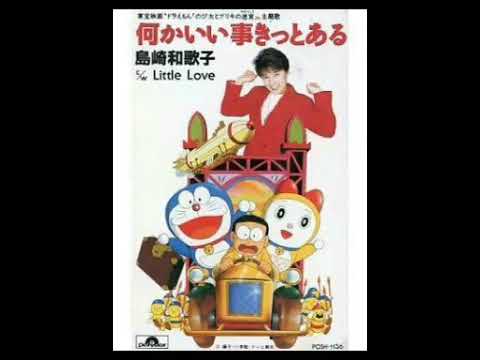
This is a song that reminds us that shimmering hope is hidden in the small happenings of everyday life.
Released in March 1993 as Wakako Shimazaki’s eighth single—she’s also well known as a TV personality—the track became widely remembered as the ending theme for the film “Doraemon: Nobita and the Tin Labyrinth.” With lyrics written by Tetsuya Takeda, it weaves a poetic world that draws out a sense of anticipation for the future from studying and the casual scenes of daily life.
The gentle melody combined with Shimazaki’s warm vocals feels like a soft “It’s going to be okay.” Many people were surely encouraged by how the song dovetails with the film’s moving finale.
When you stumble over something, it will surely lift your spirits and help you face forward.
Reach to the heavensTakeda Tetsuya

This is Takeda Tetsuya’s ninth single, released in March 1990, which was chosen as the theme song for the film Doraemon: Nobita and the Animal Planet.
The lyrics were written by Takeda Tetsuya himself, with music composed by Horiuchi Takao.
The song carries a message that gently affirms our true selves, embracing human frailties—such as hesitation and tears—as part of being human.
Its warm gaze softly envelops the listener’s heart and offers a quiet courage.
When you stumble and feel a bit worn out, listening to it can bring a sense of comfort that loosens a tightly wound heart.
Where the clouds goTakeda Tetsuya

It’s a song with lyrics written by Tetsuya Takeda himself, one that gently stays close to the listener’s heart.
It was chosen as the theme song for the film Doraemon: Nobita and the Kingdom of Clouds, released in March 1992.
The story, which features the series’ first-ever development in which Doraemon breaks down, is movingly colored by this piece.
The lyrical guitar melody resonates deeply, conveying a warm message that feels like it’s comforting someone who’s been hurt.
The worldview of the lyrics—quietly layering one’s thoughts onto the clouds drifting across the sky—truly shows Takeda’s touch.
When you’re feeling down, listening to it while looking up at the sky can feel like a gentle push on your back.
You can also hear it on albums such as Doraemon Movie Theme Song Collection: Kumo ga Yuku no wa.