

![[For Beginners] Recommended Ghibli Masterpieces You’ll Want to Play on the Piano](https://i.ytimg.com/vi_webp/LkU9_DJyJX4/maxresdefault.webp)


Studio Ghibli has produced numerous animated films that represent Japan.
Alongside their moving stories, many unforgettable songs have been born.
Not only the theme and insert songs, but also the background music that plays throughout the films is memorable, and many people may find themselves recalling the music together with iconic scenes—and perhaps wanting to try playing it on the piano at least once.
Many pieces from Studio Ghibli’s works are perfectly suited to the piano.
In this article, we introduce Ghibli pieces recommended for piano beginners.
Start your piano journey with your favorite song!
- Even beginners can play them easily on the piano! A curated selection of popular and latest J-POP songs.
- [Disney] Playable even if you’ve just learned Do-Re-Mi! A selection of iconic songs from beloved Disney animations
- Disney Classics on Piano: A Curated Selection of Easy Pieces, Perfect for Recitals
- [For Elementary School Students] Brilliant, Showy Masterpieces That Sound Impressive at Piano Recitals
- [Kiki’s Delivery Service] Carefully Selected Piano Sheet Music — From the Main Theme to Hidden Gems —
- Recommended for piano beginners! 10 sheet music picks that adults can enjoy too
- [Disney] Introducing Moving Masterpieces with Sheet Music – Beginner, Intermediate, and Advanced
- [Anisong] Easy for Piano Beginners! Recommended Practice Pieces
- [For Piano Recitals] Simple yet Cool Classical Pieces
- [Beginner] Recommended Piano Pieces to Play at a Recital
- [For Beginners] I Want to Play These on Piano! Recommended Anime Songs Compilation
- [For Kids] Play Piano with One Finger! Recommended Songs Collection
- Piano Masterpieces: Surprisingly Easy Despite Sounding Difficult!? A Curated Selection Perfect for Recitals
[For Beginners] Recommended Ghibli Masterpieces to Play on Piano (1–10)
Carrying YouInoue Azumi / Hisaishi Joe


This is the theme song from the film Castle in the Sky, which enjoys great popularity among adult beginners who are taking on the piano, thanks to its bittersweet, romantic atmosphere.
The melody line is exceptionally beautiful, so even a simple accompaniment is enough to convey the moving world of the original.
Since the left hand doesn’t cover a very wide range, it’s easy to focus on the flow of the right hand, making it recommended for beginners.
Start by mastering an arrangement where both hands play single notes, then gradually challenge yourself with scores that add richness—such as chordal accompaniments—to build a fuller sound.

Always With MeKimura Yumi

The warm singing voice and nostalgic melody of the theme song from Studio Ghibli’s feature-length animated film Spirited Away gently soothe the heart.
Many of you may remember Yumi Kimura performing it while lightly strumming chords on a lyre.
With a simple chord progression over which a calm, flowing melody moves horizontally, it requires minimal hand position changes and is easy to play on the piano.
Please give it a try.
On a sunny dayHisaishi Joe
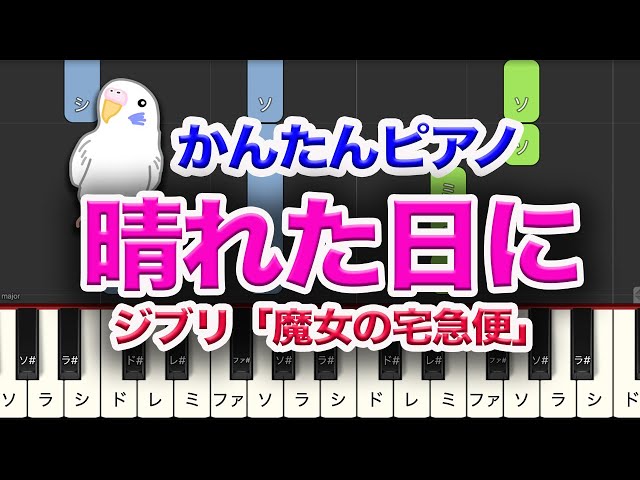
This buoyant waltz colors the scene in Kiki’s Delivery Service where the protagonist sets off with hope in her heart.
The melody, brimming with exotic flair from the accordion and mandolin, seems to capture the anticipation of entering a new world.
Although it was reportedly composed at a rapid pace to coincide with the film’s July 1989 release, the piece’s expansive, joy-filled lines betray none of that rush and are truly captivating.
Its steady, easy-to-grasp triple meter makes it a great recommendation for piano learners.
Start by playing the beautiful right-hand melody as if singing it, then add the simple accompaniment; you’ll find it leads smoothly to playing with both hands.
Name of LifeHisaishi Joe

Composed by Joe Hisaishi, this piece is a gem created for the film Spirited Away.
The beautiful melody woven by piano and strings resonates deeply with listeners.
Its delicate lines skillfully portray anxiety and hope, a sense of loss and rediscovery, perfectly expressing the film’s worldview.
For the left hand, it’s fine to start with single notes; once you get the hang of it, try capturing the harmonies with chords.
With its relaxed tempo, this is a recommended piece for beginners who want to play something wistful and gentle.
Merry-Go-Round of LifeHisaishi Joe

It’s the theme song from the film Howl’s Moving Castle, featuring a simple yet mysterious melody that evokes nostalgia and poignancy.
Because both the rhythm and melodic movement are straightforward, it’s a piece that beginners can master by playing it at a relaxed pace.
Since there are many repeated phrases and just stringing the notes together can make the performance feel monotonous, once your fingering becomes reasonably smooth, try building volume toward the chorus or adding slight tempo variations to bring the piece to life.
The Path of the WindInoue Azumi / Hisaishi Joe

This work, which poetically depicts the relationship between nature and humans, is a piece composed by Joe Hisaishi.
It was included in the soundtrack for the 1988 film My Neighbor Totoro, and with its serene, transparent melody, it expresses the beauty of nature like a breeze passing through.
Centered on piano and orchestra, the quiet tone evokes elements of classical and minimal music.
With a relaxed tempo and no complex rhythms, it’s perfect for beginners on the piano! Try playing it while imagining a forest.
DepartureHisaishi Joe


This is an iconic piece from the film Kiki’s Delivery Service that brings to mind the scene where the heroine sets off for a new town.
The bright, refreshing melody played by the orchestra perfectly captures that thrilling feeling of taking a first step with hope—and just a touch of anxiety—in your heart.
Beloved since the film’s release in July 1989, this piece lifts your spirits just by listening.
Its friendly tune makes it a great recommendation for those taking on the piano as well! With a simple left-hand accompaniment arrangement to practice, it’s easier to grasp the buoyant rhythms in the right hand.
Try playing these hope-filled tones that herald the beginning of the story.