

A roundup of recommended Japanese songs for karaoke that will excite men in their 80s

When you have a chance to do karaoke with someone much older, it can be hard to know what songs to sing, right?
In this article, I’ll introduce lively songs that are especially likely to please men in their 80s.
I hope this will be helpful for staff planning karaoke as a recreation activity at care facilities, as well as for those who want to enjoy karaoke with grandparents at family gatherings.
I’ve selected a wide range of songs—from hits around the 1950s to enka from the 1980s—so you’re sure to find something they’ll enjoy.
Use this article as a guide, and have fun doing karaoke together!
- [Karaoke] Recommended Songs for Men in Their 80s: A Collection of Showa-Era Classics You’ll Want to Belt Out
- Great songs recommended for people in their 80s: a collection of tracks with lyrics that touch the heart
- Songs I want men in their 70s to sing: a roundup of tracks I'd like to hear at karaoke
- Easy-to-sing songs recommended for men in their 90s: A roundup of tracks to sing at karaoke
- [For Seniors] Let’s Have Fun Together! Introducing Uplifting, Energizing Songs
- [For Seniors] Songs Everyone Can Sing Together! A Roundup of Recommended Crowd-Pleasers
- Songs that get women in their 80s excited: A roundup of tracks also great for karaoke
- Songs that get men in their 90s excited: A roundup of classic karaoke recommendations
- Easy-to-sing songs recommended for men in their 80s: Showa-era classics to perform at karaoke
- Recommended winter songs for people in their 90s: A collection of Showa-era winter tracks
- Tear-jerking songs for men in their 80s: a collection of timeless masterpieces that touch the heartstrings
- Easy-to-sing songs recommended for men in their 70s: A collection of classic hits you’ll want to sing at karaoke
- Songs to Enjoy with Women in Their 90s: A Collection of Karaoke Crowd-Pleasers
Japanese songs that excite men in their 80s: Recommended karaoke tracks (1–10)
12th graderFunaki Kazuo

Kazuo Funaki’s “High School Seniors” is a classic youth song that tenderly captures the feelings of students on the verge of graduation.
As parting draws near, it vividly portrays the protagonist taking a step toward the future while holding fast to the bonds of friendship.
Released in June 1963 as his debut single and used as the theme song for a film of the same name, the track became a massive hit, selling over one million copies within just a year.
Alongside the image of Funaki in his school uniform, it has become an enduring masterpiece cherished across generations.
It’s a perfect song for reminiscing about a nostalgic page of youth or for singing together while chatting with friends.
Blue MountainsFujiyama Ichirō

Blue Mountain Range is a song in which Ichiro Fujiyama’s rich low voice and Mitsue Nara’s beautiful vocals vividly evoke the spirit of youthful travel against the majestic scenery of the highlands.
With lyrics by Yaso Saijo and music by Ryoichi Hattori, it richly expresses a poetic world brimming with literary flair and lyricism through delicate musicality.
Released in 1949 as the theme song for a film, it earned high acclaim on numerous music programs.
If you all join your voices and sing it while basking in nostalgia, a page from the youth of the Showa era will surely come to life.
Sūdara-bushiUeki Hitoshi
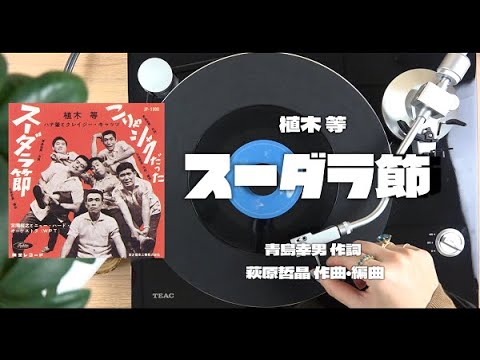
“Sūdara-bushi” is a classic released by Hitoshi Ueki in 1961 that humorously and self-deprecatingly sings about mishaps and gripes.
Its distinctive chorus is addictive—once you hear it, you can’t forget it—and it leaves a deep impression on listeners.
With witty, humor-filled lyrics, it has the feel of the original comic song, and it’s guaranteed to get everyone fired up when you sing it together.
This song has a mysterious charm that has kept it loved across generations—why not gather everyone and sing it in unison?
Japanese pop songs that will excite men in their 80s: Recommended karaoke tracks (11–20)
North TavernHosokawa Takashi

Takashi Hosokawa’s “Kita Sakaba” is a memorable song featuring a lively melody and lyrics that portray a man and woman meeting in a tavern in Japan’s northern region.
It evokes the image of two people seeking warmth on a cold night.
Released in March 1982, it became a major hit, reaching No.
5 on the Oricon year-end chart.
Created by the duo of Rei Nakanishi and Taiji Nakamura, it marked a turning point in Hosokawa’s career.
With its up-tempo style and popularity across generations, it’s sure to be a crowd-pleasing choice.
You are more beautiful than a rose.Fuse Akira

When you reunite with a woman after a long time and she’s become stunningly beautiful, your heart can’t help but race.
Sung powerfully by Akira Fuse, this song is a classic that dramatizes that surprise and budding romance.
Released as a single in January 1979, it sold an impressive 310,000 copies.
Many older listeners may remember it as a Kanebo Cosmetics commercial song, together with footage featuring Olivia Hussey.
Composed by Godiego’s Mickey Yoshino, its bright, pop sound lifts your spirits.
The soaring long notes in the chorus are exhilarating to hear, and if you sing it at karaoke, you’re sure to feel like the star of the show!
Be my bride.Kayama Yūzō

Yuzo Kayama’s “Oyome ni Oide” is a classic kayōkyoku song released in 1966.
Its lyrics, infused with the passionate feelings of a man of the sea and a vow of marriage, leave a strong impression.
The pure and powerful message of wanting to marry one’s beloved inevitably moves listeners’ hearts.
Kayama’s warm singing voice further enriches the song’s world.
Cherished by many over the years, this piece teaches the importance of bonds with the one you love.
It’s a true hit that transcends generations—one that older listeners can hum along to as they bask in fond memories.
festivalKitajima Saburō

Saburo Kitajima’s “Matsuri” is a breathtaking masterpiece that sings of the charm and dynamism of Japan’s traditional festivals.
It vividly depicts scenes from harvest festivals and fishing festivals that give thanks for nature’s blessings, conveying the passionate spirit of the participants.
Since its release in November 1984, it has been loved for many years, performed as many as six times on NHK’s Kōhaku Uta Gassen.
The imagery woven throughout the lyrics lets you feel the pulse and unity of the celebrations.
It’s a song that older listeners can hum while reminiscing about their youth—truly a classic cherished across generations.