

[For Seniors] Eye-refreshing exercises. Recommended for blurry vision, eye strain, and presbyopia

Have you been feeling like text looks blurry lately or that your eyes get tired easily? In times like these, try adding simple eye exercises you can do in short moments throughout the day.
You don’t need any special equipment—these exercises can be done casually while seated.
When your vision suddenly feels clear, your spirits will brighten too.
The activities are easy to follow at your own pace, even for older adults.
Enjoy a refreshing time together with those around you while deepening communication.
- [Seated] Fun Health Exercises for Older Adults and Seniors
- [For Seniors] Rehabilitation exercises targeting each body part: Introducing easy routines you can incorporate without strain
- Summary of exercises for seniors: introducing preventative care movements by body part.
- Recommended simple exercises for recreational activities for the elderly
- [For Seniors] A Collection of Simple Exercise Programs Suitable for Beginners
- [For Seniors] Stretching Exercises: Easy and Safe to Do
- [For Seniors] Exercises, Yoga, and Stretching to Balance the Autonomic Nervous System: Try Easy Self-CareNEW!
- [Today's Recommendation] Gentle Health Exercises for Seniors
- [For Seniors] Improve Your Body Concerns! A Summary of Exercises for Urinary Leakage
- For Seniors: Fun and Lively Exercise Recreation
- Grip strength training for seniors: Introducing gentle exercises, stretches, and strength workouts you can stick with
- [For Seniors] Simple Rhythm Exercises: Recommended Songs and Routines
- [For Seniors] Refresh Your Mood! Lively, Get-Moving Games
[For Seniors] Eye-refreshing exercises. Recommended for blurry vision, eye strain, and presbyopia (1–10)
Eye exercises to relieve eye strainNEW!

When you spend extended periods without moving your eyes much, the surrounding muscles tend to stiffen, leaving a lingering heaviness and fatigue.
The key to this exercise is to gently loosen the muscles and promote circulation by slowly moving only your eyes without moving your head.
The acupressure around the eyes is also performed lightly, as if drawing a picture, making the stimulation gentle and reducing any sense of strain.
Movements like opening and closing the eyelids and shifting your gaze up, down, left, and right are simple and easy to remember, so they’re easy to incorporate even for short periods.
They’re also easy to do casually when you’re tired, making it simple to keep up with regularly.
By doing them frequently in your daily routine, you can expect to reduce eye heaviness and discomfort and enjoy a refreshed feeling.

Presbyopia Self-CareNEW!

Changes like difficulty seeing up close or trouble focusing can sometimes be related not only to the eyes themselves but also to reduced blood flow around the eyes.
This self-care routine gently stimulates the brow area to promote circulation and aims to ease heaviness and blurriness.
Even a light touch with your fingertips feels sufficiently soothing, making it easy to keep up with.
The movements are simple and easy to remember, and doing them one side at a time helps balance both sides.
Incorporating this after using your smartphone or watching TV can help prevent lingering eye fatigue.
It’s easy to do whenever you start to feel a little concerned, so give it a try.
Thumb-chasing eye health exerciseNEW!
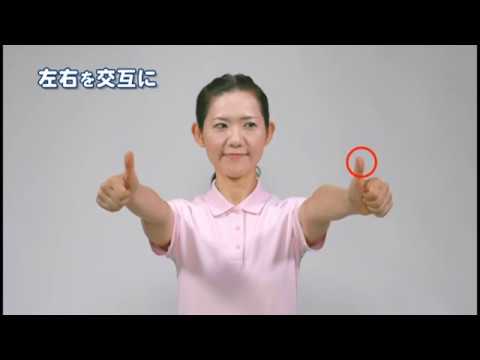
This exercise uses your thumbs to guide your gaze, gently moving the eye muscles and easing stiffness.
You can do it while seated, making it easy to start even if you’re not confident in your physical strength.
By directing your eyes left and right, up and down, and diagonally, you engage movements you don’t usually use, which can help reduce blurry vision and eye fatigue.
In addition, shifting focus between far and near objects encourages conscious use of your focusing mechanism, which may help ease the burden of presbyopia.
It takes only a short time and requires no equipment, so it’s an easy eye-care routine you can incorporate into daily life during TV breaks or spare moments.
[For Seniors] Eye-refreshing exercises: Recommended for blurry vision, eye strain, and presbyopia (11–20)
Acupressure training for eye strainNEW!

Eye fatigue is not only related to the eyes themselves but is also closely connected to tension around the face, neck, and shoulders.
Therefore, by stimulating acupressure points, you can improve overall circulation, not just locally, and help reduce heaviness and sluggishness.
Points around the eyes—such as Yuyao, Chengqi, and Sibai—are involved in focusing and redness, and gentle stimulation can be refreshing.
In addition, points at the temples and the back of the head—such as Taiyang and Fengchi—are related to head heaviness and shoulder stiffness caused by eye strain, helping to clear a wide area.
Furthermore, stimulating Zhongfu beneath the collarbone can deepen breathing and ease overall body tension.
The key is to avoid pressing too hard and to aim for a sensation that is pleasantly achy rather than painful.
A 10-minute massage to relieve eye strainNEW!

Eye strain isn’t limited to the eyes—it’s connected to tension across a wide area, including around the eyebrows, temples, the back of the head, and the neck.
By gradually relaxing these points in sequence, you can refresh not just your eyes but your whole head.
Caring for the inner corners of the eyes, around the eyebrows, and under the eyes in order loosens stiffness around the eyes, while the forehead and temples help reset mental fatigue.
Extending the routine to the back of the head, around the ears, and into neck stretches promotes healthy blood flow and can also help reduce headaches.
Because you can balance care for the whole area in just 10 minutes, it’s easy to incorporate into daily life and is a recommended massage habit that helps prevent fatigue from building up.
Training that can improve eyesightNEW!

The ciliary muscles, which adjust the focus of the eyes, tend to stiffen due to daily eye strain and tension, sometimes leading to blurred vision and fatigue.
This training aims to relax tension around the eyes while engaging the autonomic nervous system, using gentle touch and subtle postural changes rather than strong stimulation.
Hand movements that seem to envelop the eye area help ease tightness in the orbicularis oculi.
In addition, supporting one eye and the back of the head at the same time, or lightly pulling the ears while moving the body, can promote circulation from the neck to the head and contribute to overall relaxation.
Because it can be done quickly while seated, it’s easy to maintain as a habit that helps prevent eye fatigue from building up.
Eyesight recovery training: focus adjustment, for eye fatigueNEW!

Even short, consistent sessions of moving your eyes are important for vision training.
This method involves continuously following a Landolt ring—the C-shaped mark used in vision tests—to stimulate the eyes’ tracking ability and focus adjustment.
Doing it one eye at a time makes it easier to notice differences between left and right and helps you become more aware of how you use your eyes.
It’s easy to start with a light mindset and can be done like a game, which makes it easier to keep up.
At just three minutes a day, it places little burden on you and is easy to make a habit.
Incorporating it after heavy eye use can help reset your often-stiff gaze movements, making it a training that leaves your eyes feeling refreshed.