

Summary of exercises for seniors: introducing preventative care movements by body part.

To stay healthy in both body and mind for as long as possible, preventive care is essential.
Whole-body training is effective for preventive care.
In this article, we introduce exercises for older adults, organized by body part.
Since there are exercises that work the entire body from the neck to the toes, we recommend doing different body parts on different days.
Be careful not to try doing everything at once, as it may tire you out.
Use this article to help maintain the health of older adults.
Summary of exercises for older adults: introducing preventive care workouts by body part (1–10)
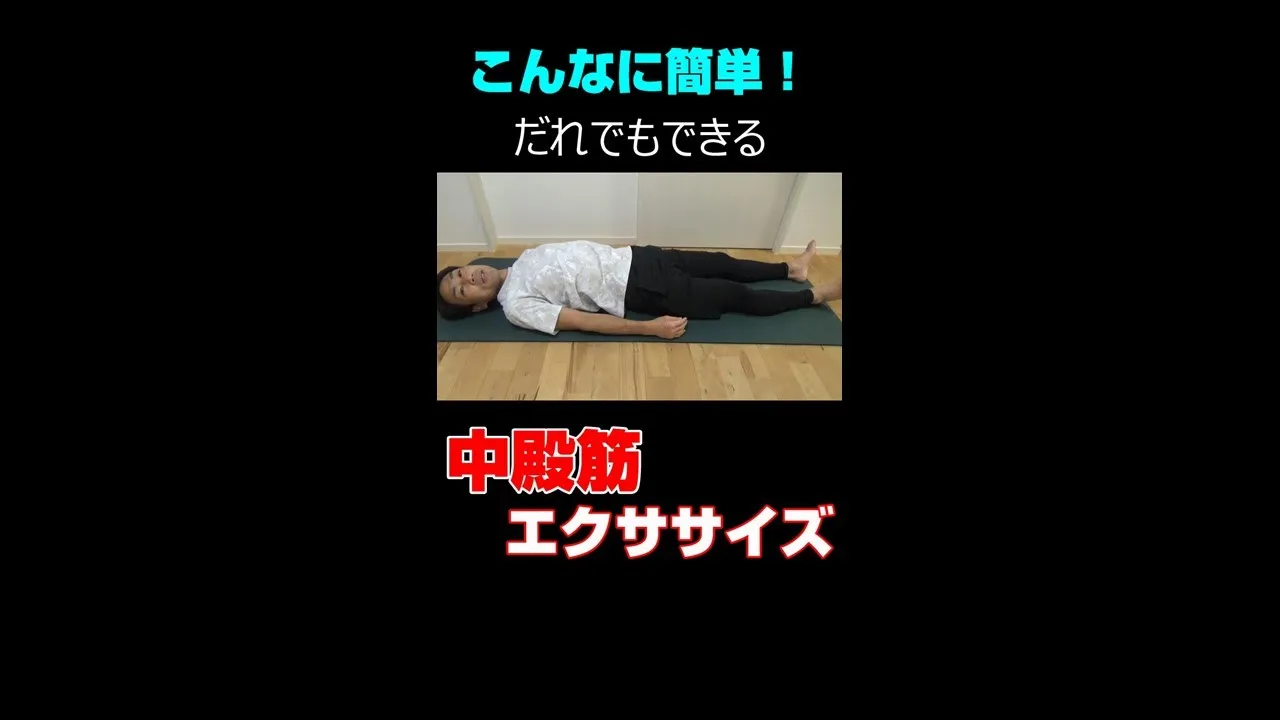
Gluteus medius exercises while lying down and standingNEW!

This is a gluteus medius training routine that you can start from relaxed positions, such as lying on your back on the floor or leaning against a wall.
When lying on your back, use a movement that folds one leg back; when standing, bend the leg backward and then press it against the wall to engage the muscles.
In both positions, there is knee flexion involved, so it’s important to keep the movement within a range that doesn’t cause pain.
Maintain good balance and stay aware of where you’re engaging the muscles as you proceed.

A stretch to lengthen the gluteus medius while lying downNEW!

Let me show you a stretch that helps align the hips.
First, lie on your back with your knees bent.
Next, place your right ankle on your left knee.
Once you’re set, gently rock your lower body side to side, alternating which leg is crossed.
The gluteus medius is the muscle on the outer side of your buttocks, so focus on feeling a good stretch there.
If you raise your arms while doing this movement, you’ll also stretch your obliques, which can help ease shoulder and lower back tension.
It’s a two-birds-with-one-stone stretch!

Seated gluteus medius stretchNEW!

While sitting in a chair, place your right ankle on top of your left knee.
Clasp your hands and scoop up your right knee from underneath, then gently pull it toward the opposite side of your chest within a comfortable range.
Next, twist your torso so you’re looking to the right.
Don’t forget to do the other side as well.
To avoid losing your balance, sit deep in the chair as you perform this.
This stretch is very simple and can be done in a short time.
Be sure to incorporate it into your daily routine to aim for a healthy body.
5-minute iliopsoas stretchNEW!

A psoas stretch you can do while sitting, lying down, or even watching TV, letting you relax for five minutes.
When you splay your legs, take your time and keep them parallel to the floor.
Keep your gaze facing forward or look down at the floor—whichever helps you feel the muscle stretch—and focus on moving carefully.
Steady your breathing, slowly inhaling and exhaling.
You may find it even more effective if you do it after getting out of the bath.

7-Day Iliopsoas StretchNEW!

One factor that makes it harder to engage your legs and hips, causes your posture to collapse, and leaves an older-looking impression is tightness in the iliopsoas.
The “7-Day Iliopsoas Stretch” features movements that specifically target this muscle group, which tends to get stiff.
By taking a big split stance and adding a torso twist, you can feel a deep stretch in your lower abdomen, allowing you to loosen the muscle without strain.
With around 10 reps, it’s easy to try, and focusing on the lower abdomen helps you feel the effects.
As you keep it up, it becomes easier to keep the pelvis upright, making it simple to envision improvements in posture and walking comfort.
Give it a try.

Iliopsoas training using a wallNEW!

Here’s a hip flexor workout you can do at home as soon as you think of it.
Use a wall and perform it standing.
First, place both hands on the wall and take a step back.
Step your right foot forward, place your right hand on your hip, and press your left hand into the wall to keep your shoulders from collapsing and to align your posture.
In this position, lift your right leg and externally rotate it just before it reaches the top.
Doing 20 reps on each side is effective, but if standing the whole time is tough, try a number that feels manageable.
Let’s strengthen hip flexors that have weakened from too much sitting.
Hip joint yoga you can do lying down: iliopsoas stretchNEW!

Here’s a hip joint yoga routine that can help improve urinary leakage and reduce a bloated lower belly.
While lying down, gently loosen the stiff muscles around the hips.
There are several stretching movements, but start by bending your right leg and drawing the knee toward your body while keeping your left leg extended straight.
Then move your right leg in a circular motion from the hip joint.
Other options include bringing the soles of your feet together and gently rocking your knees, or placing a towel between your raised knees and lifting your hips.
Each is simple yet effective, so give them a try if you like.