

![[For Seniors] Hand and finger play roundup: Finger exercises that lead to brain training](https://i.ytimg.com/vi/daRrkOTUmq0/sddefault.jpg)
[For Seniors] Hand and finger play roundup: Finger exercises that lead to brain training

For older adults, moving their hands and fingers is very important because it helps stimulate brain activity.
That’s why many senior care facilities incorporate hand and finger play as a way to help prevent dementia.
Among these activities, brain-training style hand and finger games may seem difficult at first, but they allow participants to talk and think together—saying things like “I did it!” or “How do you do this part?”—so they can enjoy the activity while engaging in communication.
There are exercises that involve different movements with the left and right hands, or moving the fingers while singing.
Please choose and adapt activities according to each older adult’s physical and mental condition.
[For Seniors] Collection of Hand and Finger Games: Finger Exercises That Lead to Brain Training (1–10)
Good Exercises
I’d like to introduce the “Good Exercise,” a routine that makes you want to imitate it as soon as you see it.
With one hand, make an OK sign facing downward, and with the other hand, make a thumbs-up sign.
Then place the thumbs-up on top of the OK sign, and repeat this motion.
When you switch the thumbs-up from one hand to the other smoothly, it feels surprisingly satisfying.
Try aiming for a pace of about once per second.
Of course, it’s fine to go faster or slow down as you like.

Finger Joint Strengthening StretchesNEW!

When it comes to finger conditions that commonly affect older adults, Heberden’s nodes come to mind.
It’s a disorder where bumps form on the first joint of the fingers.
It is said to be caused by genetic factors and overuse, and because it causes pain in the fingers, it can interfere with daily life.
What we’ll introduce here are stretches that strengthen the finger joints.
They can also help prevent Heberden’s nodes, so if you feel stiffness or strain in your fingers, please give them a try.
First, massage the arm where the fingers are connected.
Then stretch by opening and closing the fingers side to side, and by moving each finger one by one.

Easy Handgrip Improvement ExercisesNEW!

If you want to gently improve hand movements and grip strength, try this stretch: lightly hold the back of your hand with the other hand and slowly extend your fingers.
Then, with your fingers held, repeat opening and closing them about five times.
This helps the string-like tendons that run through the fingers glide smoothly and increases joint flexibility.
As a result, making a fist and spreading your fingers becomes easier, and your gripping power naturally improves.
The movement of the carpal bones also improves, promoting blood flow so your hands may feel warmer.
By continuing this routine, you can balance overall hand movement and strength and steadily build grip strength, so give it a try.

Goo-Paa Exercise

The “Goo-Paa” exercise stimulates the brain by repeating simple hand movements.
Some parts don’t require complex motions, so it’s recommended for seniors who want to move their bodies gently.
As you raise your arms into position, make fists (goo), then open your hands (paa) as you extend your arms—repeat this sequence.
You can switch the order of goo and paa, or make just one hand a different shape.
You can also try variations like stretching your arms upward or marching in place.
Give this relaxed, go-at-your-own-pace hand exercise a try.

Simple finger exercises
This is a brain-training exercise where you count numbers using your fingers held out in front of your body, gradually adding more elements to how you move them.
When you focus on your hands in front of you, it’s easy to slip into a relaxed posture, so it’s important to be mindful about sitting up straight with your back extended.
Start by making the same shape with both hands; once you get used to that, move on to making different shapes, gradually increasing the complexity of how you switch between them.
If you add not only hand shapes but also forward/back and side-to-side movements of the arms, it will further enhance the brain-training effect and help you stay aware of your arm muscles as well.

Finger-focused trainingNEW!
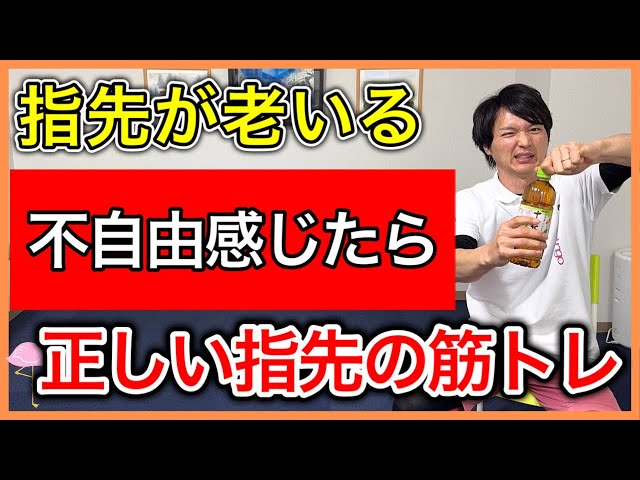
First, open and close your hands into a fist and an open hand (rock and paper) 10 times.
Next, alternate which hand makes a fist and which hand is open, switching left and right in turn.
Once you get used to it, add scissors and try it as well.
Next, press your palms together firmly.
At this time, focus the pressure more on the pads of your fingers than on the wrist side.
Next, repeat rock, scissors, and paper in order, making the same shape with both hands at the same time.
Next, to train your little fingers, from a fist position, extend only your little finger, or touch just your thumb and little finger together.
There are also other movements, such as opening and closing your fingers, and from a fist position opening and closing only your thumb, so be sure to give them a try!

Alternating Number Counting Exercise

Hand games that involve different movements with the left and right hands are said to be effective for preventing dementia.
So I’d like to introduce the “Alternating Number Counting Exercise.” In this exercise, you raise the fingers on your left and right hands according to the count.
For example, at 1 you raise one finger on your left hand, and at 2 you raise two fingers on your right hand.
Once you get used to it, you can add variations, such as clapping in between counts.
That will make the movements noticeably more complex.
Another option is to alternate crossing your hands as you go.