

![[For Seniors] Enjoy Easily! Hand Play 'Shimoshika Meyo' (If If, Tortoise)](https://i.ytimg.com/vi_webp/slxImjv8Xsk/maxresdefault.webp)
[For Seniors] Enjoy Easily! Hand Play 'Shimoshika Meyo' (If If, Tortoise)
Many older adults have probably sung the children’s song “The Hare and the Tortoise” at least once, don’t you think?
Some seniors may even have memories of singing it when they were little, or of singing it to their own children or grandchildren.
So this time, we’d like to introduce the hand game “Moshi Moshi Kame-san,” which was inspired by “The Hare and the Tortoise”!
Some facilities may already be using it during recreational activities or as part of their daily exercise routines.
It’s a familiar exercise for many seniors, and the “Moshi Moshi Kame-san” hand game comes in many variations.
There are some cleverly devised versions too, so please give them a try!
[For Seniors] Enjoy Easily! Hand Game “Shimo Shimo Kameyo” (1–10)
Move your arms and legs while you sing!

This is an exercise where you sing clearly while alternately clapping your hands and extending your arms forward.
Doing the two movements at the same time is the key point for activating the brain, so encourage people to pay attention to both.
It’s also recommended to gradually increase the song’s tempo to help them get used to moving their bodies quickly.
Once they’re comfortable alternating their arm movements, add new arm motions or incorporate leg movements to increase the cognitive challenge.

Hand-and-foot open-close exercises of the rabbit and the turtle

“Usagi to Kame” (The Hare and the Tortoise) is a children’s song based on the Aesop fable of the same name, and it’s also included among the Ministry of Education’s songs.
An exercise set to this song is recommended for older adults because it naturally incorporates walking motions.
It’s simple: while marching in place, pull your right hand back in a fist and extend your left hand forward open, then switch sides and repeat.
Once you get used to it, try changing your hand shapes in the order of fist, scissors, and open palm (rock–paper–scissors sequence).
It quickly becomes a brain-engaging exercise! It stimulates the brain, so give it a try.

Finger exercises
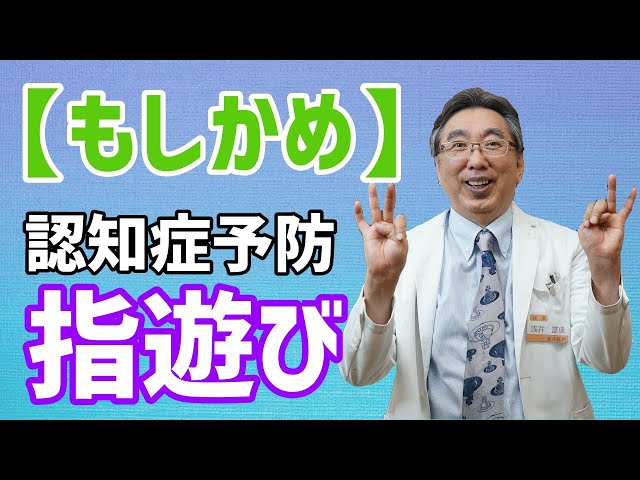
“Moshimo Shikameyo,” created with the fairy tale “The Tortoise and the Hare” as its motif, repeats the same melody many times, making it perfect for brain training that uses hand play for older adults.
First, open and close your fingers to the rhythm of the song.
Once you get used to it, shift the rhythm and move your hands in the same way.
Having your right and left hands perform different finger movements helps with brain training.
Finally, check how well you did by counting the number of fingers left extended.
Try this hand game set to a fun song everyone knows.

Teacup Rhythm Game

It’s an activity where you imagine your clenched hand as a teacup and alternately mimic the motions of a plate and a lid with your other open hand.
Do it with your arms extended forward so the shoulders and arms move actively.
While alternating the plate and lid motions to the rhythm, switch which hand is clenched and which is open to add a brain-training effect.
It’s recommended to gradually increase the difficulty by adding various tweaks, such as adjusting the song’s tempo or increasing the frequency of the hand-switch timing.
Hand exercises that also help prevent falls

Extend one arm forward with the hand open, and place the other hand on your chest and make a fist.
While singing, switch this shape from one side to the other.
If you do this exercise standing, a key point is that it also draws your attention to posture.
It’s important to keep singing as you go; handling two tasks at once helps activate the brain.
If you switch the arm position and hand shape to the opposite in the middle, your attention instantly shifts to your hand shape, which also trains your decision-making.
By staying mindful of your posture and moving your body firmly, you can expect not only brain-training benefits but also muscle-strengthening effects such as fall prevention.
Touch to the music

This exercise has participants alternate between clapping and touching parts of their body in time with a song.
By giving the instruction for which body part to touch right before each move, you effectively activate the brain as it plans the next action.
If you direct them to touch areas farther from the clapping position, it can also help them focus more on full-body movement.
You can gradually increase the tempo of the music to encourage quicker physical responses, and by making the combinations more complex—such as using one hand versus both hands—you can further enhance the brain-training effect.
A simple finger game where you move only two fingers

It’s a simple exercise where you move just two fingers on both hands in time with the music.
The key is to move different fingers—like the right thumb and left little finger—which you don’t usually do in daily life, enhancing the brain-training effect.
First, get used to alternating movements of the thumb and little finger, then start syncing them to the music.
It’s recommended to gradually increase the tempo.
Once you’re comfortable with the thumb and little finger, try more complex combinations with the other fingers—it could be fun.