

[For Seniors] Enjoy Easily! Hand Play 'Shimoshika Meyo' (If If, Tortoise)

Many older adults have probably sung the children’s song “The Hare and the Tortoise” at least once, don’t you think?
Some seniors may even have memories of singing it when they were little, or of singing it to their own children or grandchildren.
So this time, we’d like to introduce the hand game “Moshi Moshi Kame-san,” which was inspired by “The Hare and the Tortoise”!
Some facilities may already be using it during recreational activities or as part of their daily exercise routines.
It’s a familiar exercise for many seniors, and the “Moshi Moshi Kame-san” hand game comes in many variations.
There are some cleverly devised versions too, so please give them a try!
- [For Seniors] Popular Hand-Play Songs: Fun Brain-Training Ideas
- [For Seniors] Hand and finger play roundup: Finger exercises that lead to brain training
- Hand games that liven things up for seniors—also great brain training
- [For Seniors] Recommended Rhythm Play and Exercises
- [For Seniors] Guaranteed to Liven Things Up! A Collection of Brain Training Activities That Will Spark Laughter
- [For Seniors] Extremely Effective Brain Training! A Fun Collection of Hand Games
- For seniors: Fun shiritori—enjoyable and easy to play
- [Brain Training for Seniors] Recommended Hand-Play Recreation for Dementia Prevention
- Energetic and Lively! Sing-and-Exercise Program for Seniors
- [For Seniors] Easy and fun seated activities you can do in your room
- [For Seniors] Liven Things Up With Different Left-Right Movements! Game and Exercise Ideas
- [For Seniors] Today’s Recommended Activity: Fun and Engaging
- [For Seniors] Fun and Engaging Brain-Training Recreation
[For Seniors] Enjoy Easily! Hand Game “Shimo Shimo Kameyo” (1–10)
Easy! Gymnastics to the rhythm
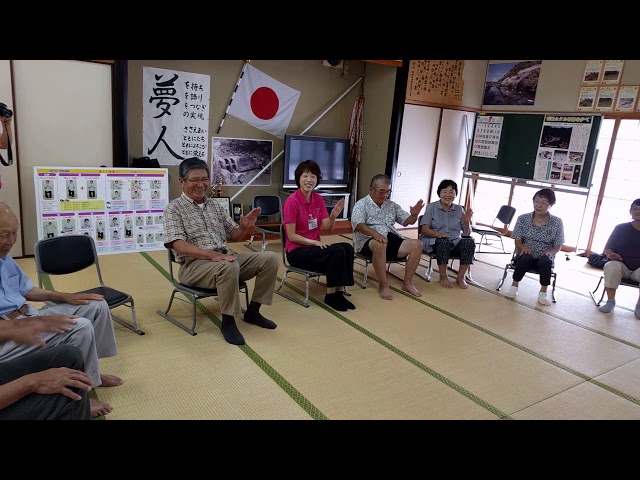
This is an exercise performed while sitting in a chair, moving your hands to the rhythm.
Each hand does a different motion, and switching them partway through boosts the brain-training effect.
Because one motion is an up-and-down patting of the knees and the other is a forward-and-back rubbing of the knees, the switch is especially challenging and really engages the mind.
If you increase the tempo of the music, the switching becomes harder, so encourage participants to try it once they’ve gotten used to the basic pace.
Adding new left–right movements can raise the difficulty even further and make it even more fun.

Tap on the shoulder! A hand game that works even with a large group

It’s a simple activity where everyone sits in a large circle and gently taps the shoulder of the person next to them in time with the music.
Encourage participants to switch between the right and left sides quickly on cue.
If they rush the switch, their taps can become too strong, so it’s best to start with an easy-to-follow rhythm and gradually increase the tempo.
Because the movement is simple, have them focus on the song as well and direct their attention to performing both actions at the same time.
Once you judge that they’re getting used to it, you can make the switch timing more varied to raise the difficulty.
Arms and legs torn apart, Hello there, little turtle

This is a movement song exercise where you move your arms and legs big and separately to the tune of “Moshimo Shikameyo.” You can do it while sitting in a chair, and it looks easy at first glance, but unless you really use both your head and body, it’s surprisingly tricky! Step your feet to the speed of the music, while your hands repeat clapping with your arms stretched forward, clapping with your arms spread to the sides, and clapping with your arms thrust up overhead.
If you don’t keep the order—front, side, up—in mind, you’ll lose track of which direction your hands should go midway.
At first, guide everyone with the call, “Front, side, up!” and once you get used to it, try singing along and have fun!

[For Seniors] Enjoy Easily! Hand Game “Shimo-shika Miyo (11–20)”
Simple but quite challenging? Finger-counting exercise
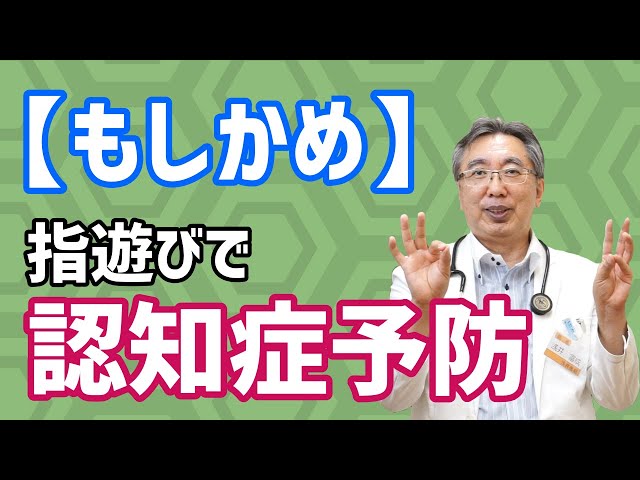
This exercise involves a simple movement of touching the thumb to each finger in sequence, performed to the rhythm of a song.
By varying which finger you start with and making the combinations of left and right hands more complex, you can enhance its brain-training effects.
It may be easiest to first let participants get used to the movements with each hand separately, then progress to combining both hands.
By performing the challenging task of moving different fingers with each hand in time with the rhythm, this exercise effectively activates the brain.
Easy exercises for fingers and hands

It’s a simple yet challenging exercise where you switch hand shapes to the rhythm of a song.
By practicing various patterns, you can train not only your brain but also fine finger movements.
To boost the brain-training effect, try moving each hand into different shapes or increasing the variety of arm and hand movement patterns.
As the finger movements become more complex, it’s harder to stay focused on the singing, but be mindful of that and work on strengthening the movements of your mouth and throat as well.
Sing and finger exercises

It’s a simple yet fairly challenging exercise in which you sing clearly while moving different fingers on each hand.
The idea is that by singing while moving your hands, you can expect brain-training effects from doing multiple tasks at once.
One hand forms a shape with the thumb extended, and the other with the pinky extended, and you switch them alternately as you sing.
A key point is to grip firmly so the other fingers don’t move unintentionally.
It’s also recommended to gradually increase the difficulty by, for example, speeding up the tempo of the song or adding new movements.
Rhythmic exercises that move the hands and the whole body
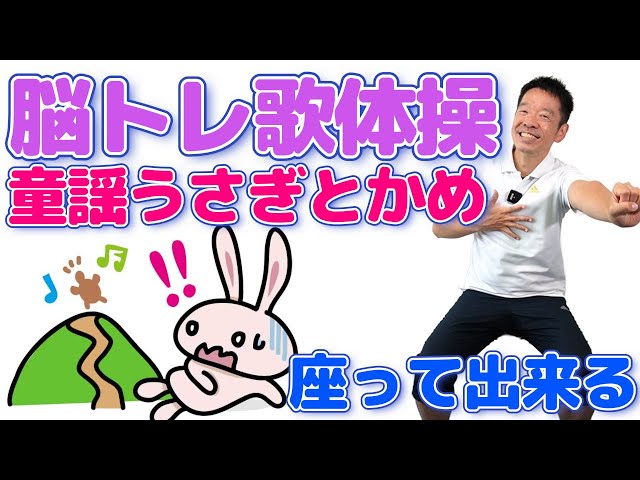
Open one hand and stretch it forward, while making a fist with the other hand and placing it on your chest.
In time with the rhythm of the song, switch the hand positions and repeat—it’s a simple exercise.
Once you get used to the basic movement, switch to the opposite action: make a fist with the outstretched hand and open the hand on your chest.
By giving cues during the song to trigger these switches, the brain is activated as it anticipates the next move.
If you add new movements to increase the difficulty, you can expect even greater brain-training effects.