

Summary of exercises for seniors: introducing preventative care movements by body part.
To stay healthy in both body and mind for as long as possible, preventive care is essential.
Whole-body training is effective for preventive care.
In this article, we introduce exercises for older adults, organized by body part.
Since there are exercises that work the entire body from the neck to the toes, we recommend doing different body parts on different days.
Be careful not to try doing everything at once, as it may tire you out.
Use this article to help maintain the health of older adults.
- [For Seniors] Easy and Fun Core Training
- [For Seniors] Fun Exercises You Can Do While Seated
- [For Seniors] Recommended Easy Strength Training
- For seniors: Enjoyable exercises done while seated, accessible for wheelchair users.
- For Seniors: Fun and Lively Exercise Recreation
- Energetic and Lively! Sing-and-Exercise Program for Seniors
- [Seated] Fun Health Exercises for Older Adults and Seniors
- [Recommended for seniors] Rejuvenating Rock-Paper-Scissors Exercise
- Let's extend our healthy lifespan! Care exercises to stay active and energetic forever
- [Today's Recommendation] Gentle Health Exercises for Seniors
- [For Seniors] Hand and finger play roundup: Finger exercises that lead to brain training
- [For Seniors] Recreational activities and games that let you have fun while strengthening your legs
- [For Seniors] Have Fun and Relieve Stress! Introducing Dances Everyone Can Enjoy Together
Summary of Exercises for Older Adults: Introducing Fall-Prevention and Care-Prevention Exercises by Body Part (31–40)
Glute training for standing up smoothly from the floorNEW!
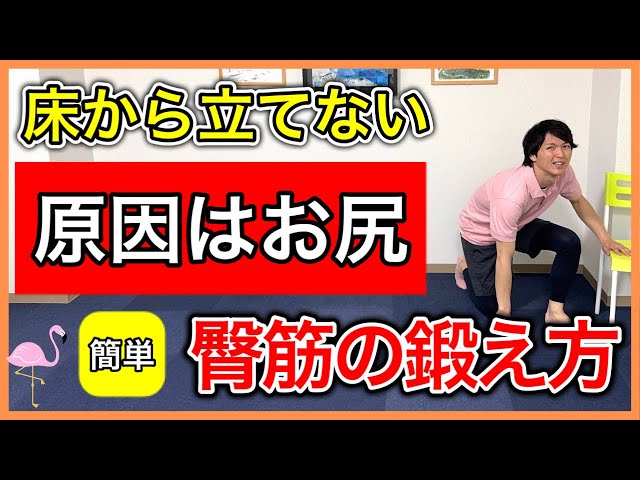
The gluteal muscles are the muscles that make up your buttocks.
By strengthening them, you’ll be able to stand up smoothly from the floor.
First, step one foot forward and the other back, and bend your knees slightly.
Place your hands on your knees for support, and repeatedly hinge your upper body forward and then return upright.
Next, in the same stance, move your hips up and down to do knee bends.
As you do this, focus on shifting your weight onto the front leg.
If you feel unsteady, it’s a good idea to hold onto a chair or a wall for support.

Seated Rhythm ExercisesNEW!

Let’s do rhythm exercises to classic Showa-era hits.
First, sit in a chair and make sure there’s nothing dangerous around you.
When the music starts, move your whole body by spreading and stretching your arms wide and marching in place.
There’s also a finger-counting exercise, so you’ll get to use even the tips of your fingers.
If you find plain exercise boring, doing it while listening to your favorite songs might make it fun.
While seated indoors, loosen up and strengthen your body to the rhythm.
Seated Stick ExercisesNEW!

This is a stick exercise designed by an occupational therapist.
It’s done while seated in a chair.
Hold both ends of the stick, extend your arms forward, and swing your arms left and right.
Raise your arms overhead and move your body side to side.
There are many other movements too—some build strength, others stretch your lower back and spine—there’s a variety.
It can help relieve shoulder stiffness, activate the brain, and improve explosiveness, among other benefits, so please give it a try if you like.
If you can’t do everything, it’s fine to proceed within your own limits.
Finger exercisesNEW!

Here’s a gentle “finger exercise” routine to help ease finger pain and stiffness and improve hand strength.
First, keep your elbows tucked to your sides with your palms facing up, and slowly rotate your forearms inward.
Be careful not to let your elbows flare out, as that puts extra strain on your shoulders.
Next, spread your hands from the inside outward, then, with your palms open, bend and straighten only your fingertips to thoroughly loosen the finger muscles and joints.
This helps train the small hand muscles you don’t usually notice and supports your grip strength and fingertip control.
You’ll also feel more stability when using chopsticks or a pen.
Try adding this to your routine to make everyday life more comfortable.

Finger Joint Strengthening StretchesNEW!

When it comes to finger conditions that commonly affect older adults, Heberden’s nodes come to mind.
It’s a disorder where bumps form on the first joint of the fingers.
It is said to be caused by genetic factors and overuse, and because it causes pain in the fingers, it can interfere with daily life.
What we’ll introduce here are stretches that strengthen the finger joints.
They can also help prevent Heberden’s nodes, so if you feel stiffness or strain in your fingers, please give them a try.
First, massage the arm where the fingers are connected.
Then stretch by opening and closing the fingers side to side, and by moving each finger one by one.
Summary of exercises for seniors: Introducing preventative care exercises by body area (41–50)
Finger-focused trainingNEW!
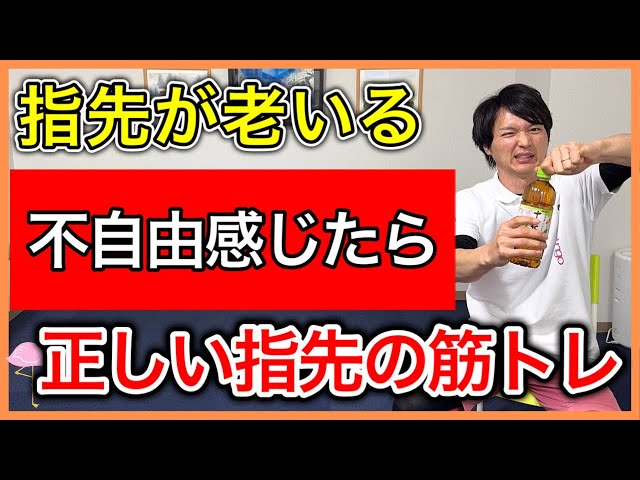
First, open and close your hands into a fist and an open hand (rock and paper) 10 times.
Next, alternate which hand makes a fist and which hand is open, switching left and right in turn.
Once you get used to it, add scissors and try it as well.
Next, press your palms together firmly.
At this time, focus the pressure more on the pads of your fingers than on the wrist side.
Next, repeat rock, scissors, and paper in order, making the same shape with both hands at the same time.
Next, to train your little fingers, from a fist position, extend only your little finger, or touch just your thumb and little finger together.
There are also other movements, such as opening and closing your fingers, and from a fist position opening and closing only your thumb, so be sure to give them a try!

Strength training important for standing up from a chairNEW!

Let’s build your body so you can stand up more easily with four strength exercises and stretches that target the iliopsoas, quadriceps, gluteus maximus, and erector spinae.
You’ll do both the exercises and stretches while seated in a chair.
The first move is lifting your knee, the second is extending the lower leg forward, the third is pulling the leg that was extended back in, and the fourth is drawing your outstretched arms in and then reaching them down toward the floor.
For the stretches, gently rub your legs and open your legs to loosen the muscles around the hip joints.