

Summary of exercises for seniors: introducing preventative care movements by body part.

To stay healthy in both body and mind for as long as possible, preventive care is essential.
Whole-body training is effective for preventive care.
In this article, we introduce exercises for older adults, organized by body part.
Since there are exercises that work the entire body from the neck to the toes, we recommend doing different body parts on different days.
Be careful not to try doing everything at once, as it may tire you out.
Use this article to help maintain the health of older adults.
- [For Seniors] Easy and Fun Core Training
- [For Seniors] Fun Exercises You Can Do While Seated
- [For Seniors] Recommended Easy Strength Training
- For seniors: Enjoyable exercises done while seated, accessible for wheelchair users.
- For Seniors: Fun and Lively Exercise Recreation
- Energetic and Lively! Sing-and-Exercise Program for Seniors
- [Seated] Fun Health Exercises for Older Adults and Seniors
- [Recommended for seniors] Rejuvenating Rock-Paper-Scissors Exercise
- Let's extend our healthy lifespan! Care exercises to stay active and energetic forever
- [Today's Recommendation] Gentle Health Exercises for Seniors
- [For Seniors] Hand and finger play roundup: Finger exercises that lead to brain training
- [For Seniors] Recreational activities and games that let you have fun while strengthening your legs
- [For Seniors] Have Fun and Relieve Stress! Introducing Dances Everyone Can Enjoy Together
Summary of exercises for older adults: region-specific movements for preventing the need for long-term care (21–30)
Oral exercises / Swallowing exercisesNEW!

Older adults tend to cough or choke more often as they age.
To help prevent this, let’s move the muscles around the face.
Start by tilting your head forward and backward to stretch the muscles, and massage under the chin with your fingers.
This will relieve muscle tension and help your body relax.
Next, strengthen the muscles around the mouth with tongue movements and vocal exercises.
Doing these before meals is effective, so please remember them and incorporate them into your daily routine.
When practicing vocal exercises in crowded places, it’s recommended to wear a mask.

Swallowing muscle trainingNEW!

Some people may choke while eating or wake up at night coughing on saliva.
How about trying swallowing muscle training? This training focuses on the larynx, which serves as a lid for the trachea, to strengthen the muscles used for swallowing.
Lie on your back, bend your ankles to 90 degrees, and slightly lift your head.
Keep looking at your toes and hold that position for 60 seconds.
There’s also a method for abdominal exercises using a towel, so give it a try if you like.
Summary of Exercises for Older Adults: Introducing Fall-Prevention and Care-Prevention Exercises by Body Part (31–40)
Swallowing Exercises: Cheek Training EditionNEW!
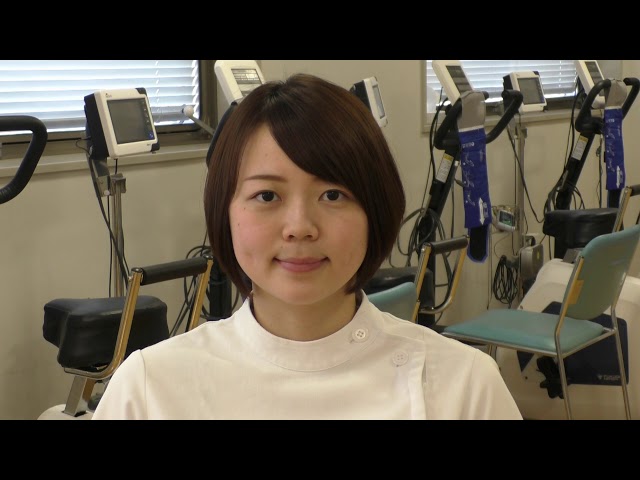
If you have trouble swallowing food, try strengthening your cheeks! First, pucker your cheeks tightly as if sticking the insides of your cheeks to your teeth.
Next, with your mouth closed, pull the corners of your mouth to the sides as if making a smile.
It might help to picture a smiley-face mouth! Finally, puff out your cheeks as if filling your mouth with air and blow them up like “poo.” Try each for about five seconds.
It’s a quick exercise you can do right away, so why not try adding it before meals?

Pelvic floor exercises while lying down (1): supine position, towelNEW!

This is an exercise you can do lying on your back.
First, lie on your back with your knees bent and place a rolled towel between your knees.
In this position your body is stable, you’re less likely to tense unnecessary muscles, and it’s easier to feel your pelvic floor.
As you slowly exhale, tighten your lower abdomen and the area around the anus, gently lift your hips, and notice the light tilting of your pelvis.
As you inhale, slowly release the tension, then lift and lower in the same way, holding each phase for about 5 seconds, repeating around 10 times.
If you feel any low back pain, don’t push yourself—do it only within a comfortable range.

Pelvic floor exercises while lying down (2): Side-lying positionNEW!

This is a training method that makes it easier to stabilize your body and sense your muscles.
First, lie on your side and bend your knees toward your abdomen to create a relaxed position.
While applying gentle resistance with your hand, try consciously tightening your anus and lower abdomen with a firm “squeeze” as you slowly exhale.
The pelvic floor muscles form the base of the pelvis, supporting the internal organs and playing an important role in urination and defecation.
Repeating these intentional contractions can be expected to enhance their function.
As you inhale, relax the effort, and repeat the same movement about 10 times on each side; your inner thighs and deep abdominal muscles will work together, helping to stabilize your core.
Urinary leakage prevention: pelvic floor exercises you can do while sittingNEW!

The pelvic floor muscles are a hammock-like group of muscles that support the internal organs, including the bladder.
They play an important role in controlling urination, so let’s train them properly to prevent leakage.
In this pelvic floor exercise, while sitting in a chair, you’ll alternately lift your left and right buttocks to move your pelvis, and open/close and raise/lower your knees.
All of these are simple movements, but do them at your own pace without overexertion.
You might not notice much effect from a single session, but continuing every day should bring results.
Sit-to-stand training using parallel barsNEW!

This is a standing-up exercise using parallel bars for rehabilitation.
Hold the bars firmly with both hands and stand up on the count of three.
Then try to maintain a standing position for about 10 seconds.
If you can hold it, slowly sit back down.
Since you won’t always have support when standing up, practice repeatedly standing and sitting like this.
Doing so will strengthen your legs and lower back and help you learn a way of standing up that doesn’t put unnecessary strain on your body.
Parallel bars can also be purchased from online shops.