

For Seniors: How to Strengthen Your Inner Muscles. Fall Prevention

Inner muscles are the deep muscles of the body that play an important role in supporting posture and maintaining balance.
Strengthening these muscles is especially effective for preventing falls in older adults.
By making simple exercises that you can continue without strain a habit, your core will become more stable and your walking will become smoother.
Here, we’ve gathered safe ways for older adults to strengthen their inner muscles.
Incorporate them into your daily routine and aim for a body that moves with energy.
Start building a body that’s less prone to falling with easy exercises you can begin today.
[For Seniors] How to Strengthen Your Deep Core Muscles: Fall Prevention (1–10)
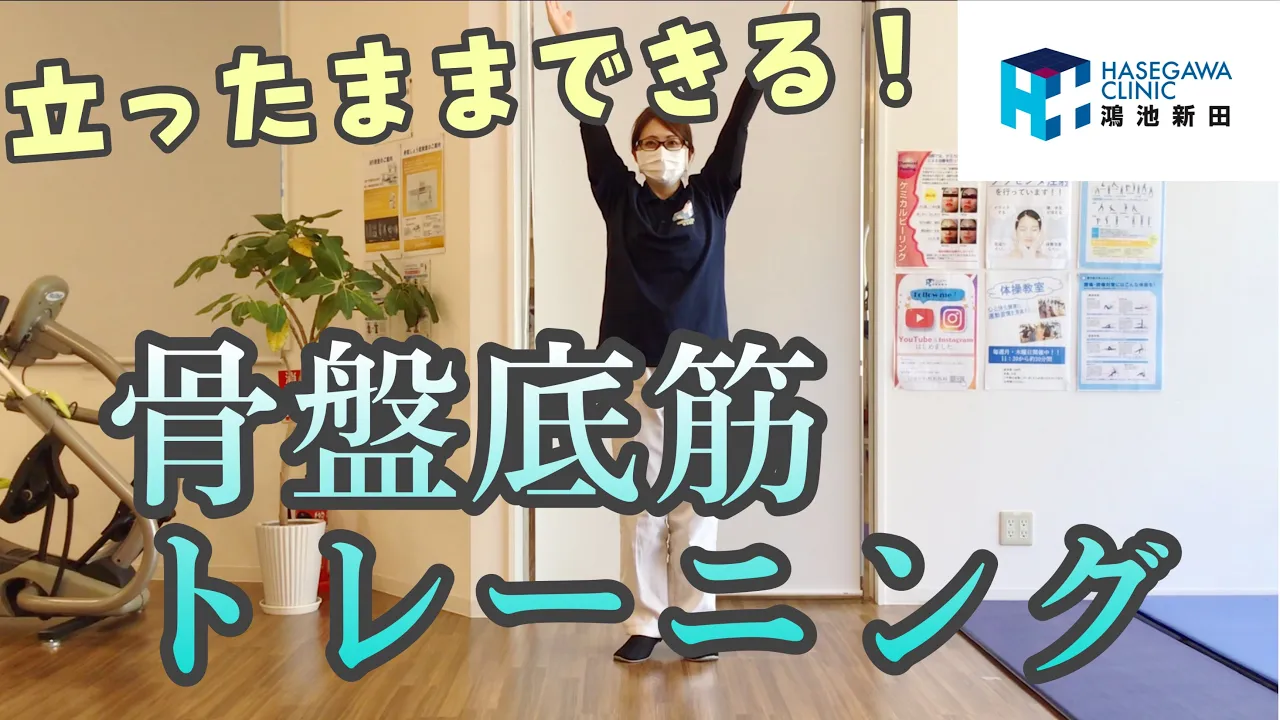
You can do it standing! Pelvic floor muscle trainingNEW!

This is a standing pelvic floor exercise.
First, bring your heels together and open your toes about the width of a fist.
Then slightly open your knees, engage your thighs and bring your knees together, and raise your arms overhead while shifting your weight onto your toes.
When shifting your weight to your toes, imagine pushing your hip joints forward.
As you move your hips forward, be careful not to let your belly protrude.
Focusing on the tops of your thighs/hip creases can help.
Move slowly to avoid falling.

Core training

The core is a part of the body that’s hard to train unless you consciously focus on it, and its decline can lead to a loss of overall muscle strength.
This routine is designed to train the core with awareness, while also working the transverse abdominis and the pelvic floor muscles.
From a hands-and-knees position, extend your right arm and left leg—or your left arm and right leg—and hold that posture to strengthen your core.
It may be difficult to maintain the position at first, but the key is to focus on forming the correct posture even for a short time, then gradually get used to it and extend the duration.

Core exercises on a mat

As we age, our motor skills and muscle strength decline, increasing the risk of falls.
When older adults fall and fracture a bone, recovery often takes a long time and can sometimes lead to being bedridden.
Did you know that core training is effective for stabilizing walking? These exercises can be done while lying down or on all fours, making them suitable even for seniors who find it difficult to stand for long periods.
Moderate exercise also offers welcome benefits such as stress relief and improved sleep quality.
Try incorporating these exercises to help prevent falls!

Core-strengthening exercises performed while seated

With these core-strengthening exercises, let’s work on preventing falls and improving posture! Sit on a chair with your feet spread wide.
Cross your arms in front of your chest and lean forward while rounding your back.
Keeping your head up, slowly raise your upper body back up.
If this movement is difficult, lean forward with both hands placed on your knees.
This video introduces two seated core-strengthening exercises.
Seated exercises are easy to incorporate even for older adults.
Doing them together as a group activity can also boost motivation.
Please adjust to your individual condition and perform within a comfortable, safe range.
Seated Balance Exercises

Some older adults may feel that training their balance is too challenging.
For those people, we recommend this seated balance exercise.
Because it’s done while sitting, it’s reassuring even for those who aren’t good at exercise.
Although it’s a seated workout, the key is to pay attention to your posture and how you sit.
Tilt your pelvis upright and stretch your back firmly as you perform the movements.
In addition to improving balance, it also promotes blood circulation, providing a refreshing effect for both body and mind.
Be mindful of your mental well-being as you incorporate it, too.

Strengthening the inner muscles

The inner muscles located deep inside the body.
These inner muscles play an important role in supporting bodily functions, such as maintaining posture and stabilizing joints.
As a result, they can help prevent falls and increase basal metabolism.
By training your inner muscles, you can maintain proper posture for years to come.
It might sound like a difficult exercise, but simply getting on all fours is said to help train the inner muscles.
Depending on an older person’s condition, try gradually lifting the right and left hand and foot in turn.
Even just this can strengthen them effectively.

Slow training standing trunk

Incorporate slow core training to help prevent dementia, being bedridden, and falls.
From a standing position, perform a bow.
Keep your hips still and be careful not to round your back.
The key is to move slowly rather than vigorously, placing a light load on your core.
To prevent unsteadiness, do this in front of a chair back or a wall.
Strengthening your core helps prevent wobbling and reduces the risk of falls.
In addition, moderate exercise activates the brain and is effective for dementia prevention.
Prepare your surroundings properly and give it a try.