

[For Seniors] Uplifting four-character idioms: Introducing beautiful, heart-touching words

Four-character idioms that express a positive mindset—such as “ten-teki sen-seki” (dripping water wears through stone) and “ungai sōten” (blue skies beyond the clouds)—have a mysterious power to lift our spirits.
This time, we’ll introduce four-character idioms that let us feel hope for the future and the joy of living, together with seniors who have a wealth of life experience.
Learning together can also become a wonderful time to share life’s wisdom and experiences.
These are all upbeat idioms you can use in everyday life, so try weaving them into your daily conversations.
By learning the meaning contained in each phrase, you may find hints for leading a more fulfilling everyday life.
- Four-Character Idioms for Seniors as New Year’s Resolutions: A Collection of Uplifting, Heartfelt Words
- Four-character idioms expressing the spirit of perseverance for seniors: encouraging words that give you a gentle push forward
- Four-character idioms for seniors that express goals, effort, and aspirations: words that stir the heart
- For Seniors: A Collection of Four-Character Idioms with Cool Meanings and Stylish Look—Great as Personal Mottos Too
- [For Seniors] Beautiful four-character idioms: Introducing words whose appearance and meanings are elegant, expressed with rich nuance
- [For Seniors] Four-character idioms that wish for happiness: auspicious, lovely words to gift to someone special
- Four-Character Idiom Slogans That Resonate with Seniors: A Collection of Beloved Quotes for Facilities and Communities
- For Seniors: Four-Character Idioms that Embody Resilience—Inspiring Words of Perseverance
- [For Seniors] Interesting Four-Character Idioms: Introducing four-character idioms whose appearance, words, or meanings are uniquely entertaining
- [For Seniors] Beautifully Resonant and Memorable! Popular and Stylish Four-Character Idioms
- [For Seniors] Recommended for Kakizome! Introducing Popular Four-Character Idioms and Their Meanings
- [For Seniors] Uplifting Words That Comfort the Heart
- Inspiring quotes for seniors: words to cherish like a protective amulet
[For Seniors] Inspiring Four-Character Idioms: Introducing Beautiful, Heart-Touching Words (21–30)
bright future; promising prospects
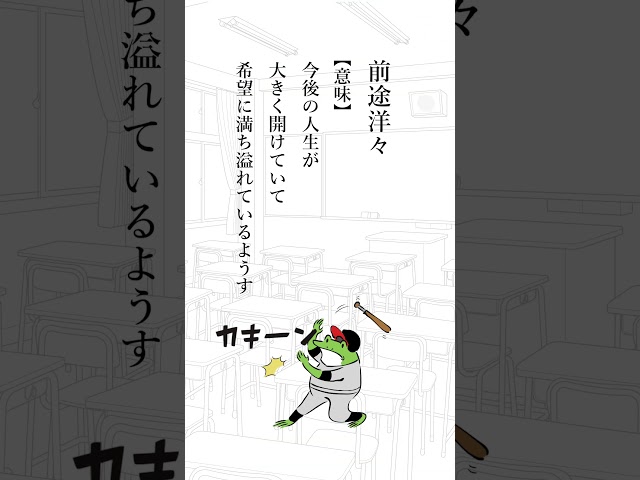
When it comes to four-character idioms that remind us of the importance of living positively, there is one that means “from here on, life will be filled with great hope and a bright future will spread out before you.” Yōyō evokes an image as vast and abundant as the open ocean, suggesting a future that stretches boundlessly ahead.
Even for older adults, it is in the latter half of life that new challenges and joys can be found.
Growing older does not close off possibilities; rather, it allows one to draw on a wealth of experience to live even more fulfilling days.
This idiom stirs the courage to keep hope alive and move toward the future, making it a fitting phrase for welcoming the New Year with a positive mindset.

Scattered blossoms, fallen leaves

The flowers that bloom in full glory in spring will eventually be scattered by the wind, and their leaves will wither and fall from the branches.
Life is like those flowers—ever fleeting and constantly changing.
The four-character idiom “hika rakuyō” (flying blossoms, falling leaves) expresses this impermanence of the world.
Everything we take for granted is transient; nothing lasts forever.
Because things are always changing, it seems to teach us to cherish each moment as it comes.
In this world of flying blossoms and falling leaves, we don’t know what tomorrow will bring.
All the more reason to treasure each day and live joyfully.

Carry out one’s original intention to the end
@az0202za #StickToYourOriginalIntentions #Shoshikantetsu #FourCharacterIdiom #Learning
♬ Original Song – 0202civo – az0202za
Everyone experiences their initial aspirations and enthusiasm fading over time due to the passage of time, changing circumstances, or simple familiarity.
The four-character idiom “shoshi-kantetsu” (初志貫徹) expresses the importance of not giving in to such weakness, but instead holding fast to your original resolve and goals to the very end and seeing them through.
Obstacles and hardships are a part of life.
Even then, we want to keep looking forward and see things through without giving up.
It’s a cool phrase that conveys strong will and an unwavering core, so it makes a great motto when you’re setting off toward a new goal.
march forward bravely
@az0202za #GoForwardBravely #YūōMaishin #FourCharacterIdiom #ABitTimid
♬ Original Song – 0202civo – az0202za
Among elderly people, there are likely those who have overcome a variety of hardships.
Some may have experienced events—such as war—that are almost unimaginable today.
You may hear such stories in conversations with older adults.
This phrase, which carries the meaning of moving forward steadily with courage, is well suited to seniors who have worked hard toward their goals.
It is also a message of encouragement for anyone who perseveres day by day without giving up in order to achieve their objectives.

majestic and imposing
It is a word that expresses a dignified demeanor and a solemn air.
It’s easy to understand if you picture an athlete who has won a gold medal marching proudly while you watch TV.
The word is also used for buildings, such as when describing the presence of a magnificently constructed structure.
It might be interesting to look for examples in everyday life—especially among older adults—of things that are impressive and full of dignity.
Asking people to think of such examples and answer could also serve as brain training.
Since it is also the Japanese title of a march, why not listen to one sometime?
Cherry Blossoms in Full Splendor

When it comes to Japanese flowers, many people might think of cherry blossoms and picture rows of sakura trees blooming profusely along the riverside.
“Ranman” describes a scene where flowers are in full, luxuriant bloom, or something brilliantly radiant.
The four-character idiom “ōkaranman” (桜花爛漫) describes cherry blossoms in magnificent full bloom and conveys an atmosphere that is dazzlingly bright and splendid.
This idiom, which depicts Japan’s beautiful spring scenery, conjures up the lovely view with words alone.
With just four characters evoking such a beautiful scene, “ōkaranman” is also popular as a stylish four-character idiom.
Fall down seven times, get up eight.
This four-character idiom expresses an attitude of not being discouraged by repeated failures, but standing up and trying again.
It’s perfect as a class goal for elementary school students to foster a mindset of taking on challenges without fearing failure.
Even when studies, sports, or performances don’t go well, standing up and saying “Let’s try again” leads to growth.
It will also create an environment where friends and classmates watch over one another’s failures with warmth and encourage each other.
By accumulating small successes, children build confidence and perseverance.
It’s a phrase that teaches the courage to keep challenging oneself and a positive outlook.