

[For Seniors] Uplifting four-character idioms: Introducing beautiful, heart-touching words

Four-character idioms that express a positive mindset—such as “ten-teki sen-seki” (dripping water wears through stone) and “ungai sōten” (blue skies beyond the clouds)—have a mysterious power to lift our spirits.
This time, we’ll introduce four-character idioms that let us feel hope for the future and the joy of living, together with seniors who have a wealth of life experience.
Learning together can also become a wonderful time to share life’s wisdom and experiences.
These are all upbeat idioms you can use in everyday life, so try weaving them into your daily conversations.
By learning the meaning contained in each phrase, you may find hints for leading a more fulfilling everyday life.
- Four-Character Idioms for Seniors as New Year’s Resolutions: A Collection of Uplifting, Heartfelt Words
- Four-character idioms expressing the spirit of perseverance for seniors: encouraging words that give you a gentle push forward
- Four-character idioms for seniors that express goals, effort, and aspirations: words that stir the heart
- For Seniors: A Collection of Four-Character Idioms with Cool Meanings and Stylish Look—Great as Personal Mottos Too
- [For Seniors] Beautiful four-character idioms: Introducing words whose appearance and meanings are elegant, expressed with rich nuance
- [For Seniors] Four-character idioms that wish for happiness: auspicious, lovely words to gift to someone special
- Four-Character Idiom Slogans That Resonate with Seniors: A Collection of Beloved Quotes for Facilities and Communities
- For Seniors: Four-Character Idioms that Embody Resilience—Inspiring Words of Perseverance
- [For Seniors] Interesting Four-Character Idioms: Introducing four-character idioms whose appearance, words, or meanings are uniquely entertaining
- [For Seniors] Beautifully Resonant and Memorable! Popular and Stylish Four-Character Idioms
- [For Seniors] Recommended for Kakizome! Introducing Popular Four-Character Idioms and Their Meanings
- [For Seniors] Uplifting Words That Comfort the Heart
- Inspiring quotes for seniors: words to cherish like a protective amulet
[For Seniors] Inspiring Four-Character Idioms: Introducing Beautiful, Heart-Touching Words (21–30)
Blue sky beyond the clouds
It carries the meaning that beyond the thick clouds stretches a clear blue sky.
Even when you’re shrouded in hardship and pain and can’t see ahead, these words teach us that there is always light beyond.
On the path of challenge, failure and stagnation may continue, and you may feel your spirit breaking, but just as clouds eventually drift away, adversity, too, will come to an end.
What matters is the determination to keep moving forward without giving up until that moment arrives.
When you feel crushed by the wall before you, these words give you the courage to look ahead.
It can be called a powerful yet gentle four-character idiom that encourages those in the midst of difficulty.

One good deed a day

This four-character idiom means “do one good deed every day,” and it’s an easy goal for elementary school students to use as a guide for their actions.
There’s no need to accomplish anything big—helping a friend, picking up litter, or greeting others cheerfully all count as admirable good deeds.
By building small actions day by day, students can feel their own growth, and the overall atmosphere of the class will brighten as well.
Good deeds leave a warm impression because they are done without expecting anything in return.
The accumulation of such actions nurtures trust and helps create a classroom filled with kindness.
It’s a practical phrase that encourages a positive approach to each day.

[For Seniors] Four-character idioms that inspire a positive mindset: Introducing beautiful, heartwarming words (31–40)
Actions speak louder than words.

It’s a phrase that expresses the attitude of accomplishing things through one’s actions rather than words.
When taking on a big goal, declaring your resolve matters, but nothing changes without action.
This saying teaches that steady daily effort, not flashy proclamations, is what produces results.
By working quietly according to your convictions—unaffected by others’ expectations or judgments—you ultimately earn trust and achieve outcomes.
As a four-character idiom that embodies moving forward silently and steadily while demonstrating true strength and determination, it’s a guideline worth keeping in mind for everyday life.
coexistence and mutual prosperity

It is a four-character idiom that expresses growing together while helping each other.
By setting it as a class goal for elementary school students, they can learn the importance of everyone joining forces instead of just one person working hard.
Those who are good at studying can teach their friends, and those who are good at sports can support practice together, creating a bright and positive atmosphere for the whole class.
Helping those in need and sharing joy become opportunities to deepen trust and friendship.
By having a spirit of cooperation, an environment is created where everyone in the class can feel comfortable, and school life becomes more enjoyable.
It is a warm phrase that conveys a strong determination to build the future together with classmates.
Stay true to your original intention.
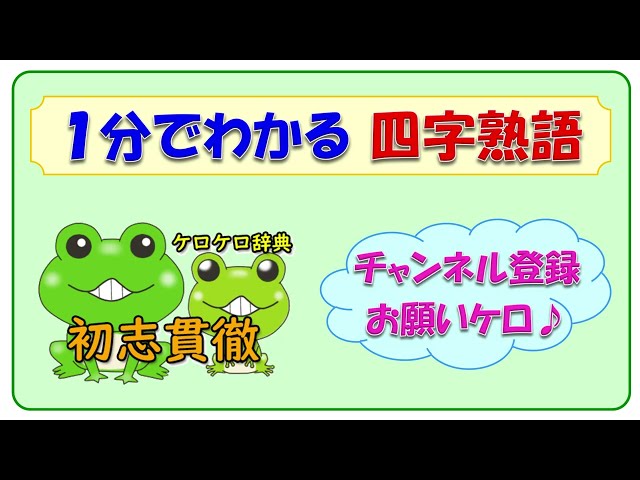
This is a four-character idiom that means carrying through the intentions and goals you first set until the very end.
For elementary school students, it provides an opportunity to learn the importance of continuing to work hard without giving up halfway.
Experiences of seeing things through—such as independent research projects or practice for sports day—bring a sense of accomplishment and build confidence.
If the whole class adopts this phrase as a shared goal, an attitude of encouraging one another and working hard will spread among friends.
Even when they face difficulties, reminding each other to “remember how we felt at the start” will make the entire class more resilient.
It’s a positive phrase that helps develop the strength to achieve dreams and goals.
Harmony and united cooperation
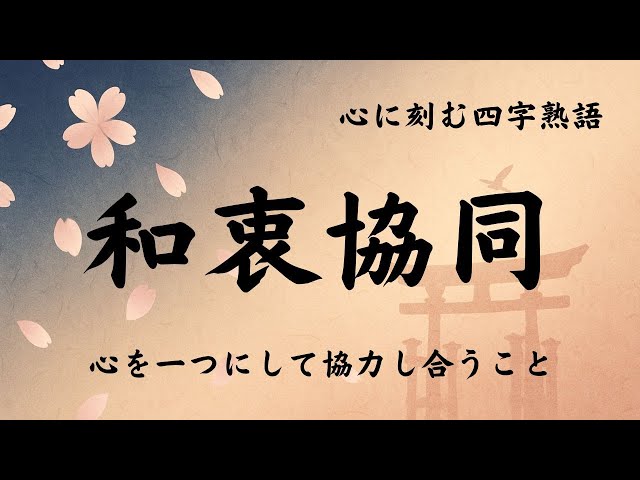
This four-character idiom expresses joining hearts as one, cooperating, and tackling things together.
Setting it as a class goal makes it easier for students to be mindful of kindness and a cooperative attitude toward their friends.
When everyone faces the same direction and acts together during group activities or choir practice, better results follow.
It isn’t enough for just one person to work hard; when everyone contributes their strength, a sense of unity grows throughout the class.
The experience of respecting and helping one another becomes an important ability that remains useful even as students move up a grade.
It’s a warm expression that helps students feel the joy of cooperation.
joy, anger, sorrow, and pleasure

This four-character idiom expresses the wide range of human emotions and teaches that joy, anger, sorrow, and fun are all important movements of the heart.
Incorporating it as a class goal can provide an opportunity to learn how to express feelings honestly while being considerate of others.
Sharing joy deepens friendship, calmly conveying anger reduces misunderstandings, understanding sorrow nurtures kindness, and sharing fun strengthens a sense of unity.
Facing emotions during the elementary school years enriches relationships with others and fosters the ability to value one’s own feelings.
It is a phrase that resonates in the heart, showing that expressing oneself honestly is the first step toward building trust.