

[For Seniors] Popular Summer Songs: Selections That Liven Up Karaoke


In many senior care facilities, there are opportunities to sing during recreation time or exercise sessions.
Staff members may sometimes struggle to choose songs that suit older adults.
In such cases, songs with seasonal themes are highly recommended.
Singing songs that match the season can help older adults feel the passage of the four seasons.
If the songs are ones they sang in childhood, some may look back on the past with fond memories.
This time, we’ve gathered many songs with a summer theme.
Please enjoy a fun time with summer songs.
- [For Seniors] Recommended Summer Songs for August [2026]
- [For Seniors in Their 80s] Recommended Summer Songs: From Enka and School Songs to Folk Songs
- [For Seniors] Speaking of July, it’s this song! A selection of tunes to enjoy the hot summer
- [For Seniors] Songs Everyone Can Sing Together! A Roundup of Recommended Crowd-Pleasers
- Ranking of popular songs for senior citizens
- Recommended summer songs for people in their 90s: A collection of Showa-era summer tunes [2026]
- [For Seniors] Recommended Songs for June: A Collection of Easy-to-Use Kayōkyoku and Children’s Songs for Recreation and BGM
- [Sing for your health!] Popular songs among seniors. Also recommended for recreational activities.
- Recommended Summer Songs for People in Their 70s: A Collection of Nostalgic Summer Tunes [2026]
- [For Seniors] Spring Songs You'll Want to Hum: Feel the Season with Nostalgic Classics
- [For Seniors] Let’s Have Fun Together! Introducing Uplifting, Energizing Songs
- [For Seniors] Crowd-Pleasers! A Collection of Classic Karaoke Songs
- [For Seniors] A heartwarming round song. Let’s layer our voices with this nostalgic classic.
[For Seniors] Popular Summer Songs: Karaoke Crowd-Pleasers (1–10)
Ginza Kan-kan GirlTakamine Hideko

Brimming with the hope and vitality of Japan’s postwar reconstruction period, it became beloved as the theme song for the film of the same name released in 1949.
The song accompanies a story in which a young woman aspiring to be a painter—played by Hideko Takamine—sings her way through bars in Ginza to earn her tuition.
Ryoichi Hattori’s light, swinging jazz melds with Takao Saeki’s cheerful lyrics, resulting in a major hit that sold 500,000 copies at the time.
It strikingly captures the strength of women who lived positively even amid the postwar turmoil, along with the lively melody that resonated through the streets of Ginza.
When sung as a recreation by older adults, it is likely to evoke memories of the postwar recovery and their youthful days, encouraging everyone to hum along together.
The Mountain Hut’s LightŌmi Toshirō
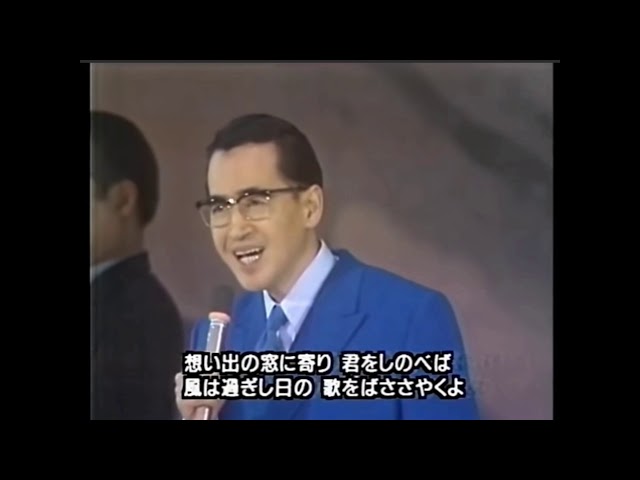
Composed and written by Masao Yoneyama in 1947, shortly after the war, this classic song is a heartwarming piece that depicts the gentle glow spilling from a mountain hut.
Toshirō Ōmi’s tender, enveloping vocals delicately convey the beauty of nature and the warmth of people.
Broadcast as an NHK Radio Kayō program, the song deeply resonated with many listeners seeking hope and comfort amid the postwar turmoil.
Its calm, lyrical melody transcends the boundaries of popular kayōkyoku, carrying elements of folk music as well.
It’s a song we’d love to see sung by those who cherish mountain landscapes and nature, or who hold fond memories of their hometown.
coconutSakushi: Shimazaki Tōson / Sakkyoku: Ōnaka Toraji

This is one of Japan’s representative art songs: a poem written in 1898 by the renowned poet Shimazaki Tōson, set to a beautiful melody by Toraji Ōnaka.
Centered on the theme of a coconut that drifted ashore from a distant southern island, the piece delicately portrays feelings for one’s hometown and the journey of life.
Completed as a song in 1936, it has been passed down through performances by many singers, including Ichirō Fujiyama and Hibari Misora.
Its gentle, lyrical melody is widely beloved in schools and choral activities.
With lyrics rich in imagery that evoke a summery seaside and a moving, beautiful melody, it is recommended as a song that can awaken fond memories among older listeners.
[For Seniors] Popular Summer Songs: Karaoke Crowd-Pleasers (11–20)
Shiretoko Ryojo (Shiretoko Travel Sentiment)Katō Tokiko

As a classic song celebrating Hokkaido’s magnificent landscapes, it has long been cherished by many.
Released by Tokiko Kato in 1970, the piece delicately depicts the natural beauty of the Shiretoko Peninsula and the feelings of the people who live there.
The lyrics also weave in the Ainu word “pirika,” conveying respect for the region’s culture.
In 1971, it topped the Oricon charts for seven consecutive weeks and was performed at that year’s Kōhaku Uta Gassen.
When sung during recreational activities or karaoke time at facilities, it is sure to offer a heartwarming moment filled with nostalgic memories.
Look up at the stars in the nightSakamoto Kyu

Beloved as a song for gazing up at the night sky, this piece resonates as a warm cheer for those facing hardships.
With lyrics by Rokusuke Ei and music by Taku Izumi, it has long been cherished in the enveloping voice of Kyu Sakamoto.
Released as a single in May 1963, it was originally written as the theme song for a musical.
It is also a celebrated masterpiece that won the Japan Record Award for Composition.
Though born as a message of encouragement for young people studying at night school, it is a song that transcends generations to bring hope and courage.
It’s perfect for everyone to sing together during recreation time at the facility.
The Longed-For Hawaii RouteHaruo Oka

It’s a song that can be called a representative of postwar popular music, released in 1948.
Hawaii—where many Japanese had emigrated since before the war and which remained the “dream Hawaii” that ordinary people couldn’t visit for some time after the war—along with Haruo Oka’s distinctive singing voice, leaves a strong impression.
I think the song reflects the spirit of Japan in that era, bright and determined to look forward.
Around 1965, there was even a quiz show with the familiar catchphrase, “Answer 10 questions correctly and win a dream trip to Hawaii,” showing that Hawaii has always been a place people long for, then as now.
Where does the morning begin?Okamoto Atsurō
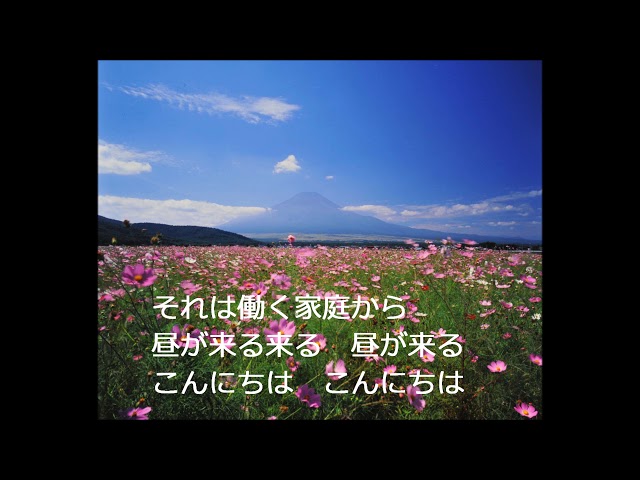
This song, which sings of the start of a refreshing morning, is a masterpiece that wonderfully captures the atmosphere of hope during the postwar reconstruction era.
Atsuro Okamoto’s warm vocals gently embrace both the anticipation for a new day and the beauty of nature.
Composed by Yoshinao Nakada with lyrics by Hiroshi Yokoi in the early 1950s, the piece was also beloved as the opening theme of the NHK radio program “Uta no Ehon” (Song Picture Book).
Its bright, light melody is perfect for recreational activities at facilities and for morning exercises.
It’s sure to invite everyone to hum along while reminiscing about days gone by.