

![[For Seniors] Spring Songs You'll Want to Hum: Feel the Season with Nostalgic Classics](https://i.ytimg.com/vi_webp/zL_SJQA6YJg/maxresdefault.webp)
[For Seniors] Spring Songs You'll Want to Hum: Feel the Season with Nostalgic Classics


When you feel the spring breeze, there are songs that naturally make you want to hum along, aren’t there? If you’re enjoying music with older adults, why not choose songs that are perfect for this season? We’ve gathered classic tunes ideal for spring: traditional songs that evoke fields of rapeseed blossoms and avenues of cherry trees, nostalgic choral pieces sung at graduation ceremonies, and popular songs that bring back memories of youthful days.
As you surrender to the gentle melodies and reminisce together, it will surely become a heartwarming moment.
These songs are also easy to incorporate into recreational activities, so please use them as a reference.
Nursery Rhymes, Songs (1–10)
Flowers of the trifoliate orangeSakushi: Kitahara Hakushū / Sakkyoku: Yamada Kōsaku

It is a famous song that sings of the Japanese spirit, themed on a plant with white flowers and sharp thorns that bears golden fruit in autumn.
Based on a slightly bittersweet childhood experience of Kosaku Yamada, Hakushu Kitahara wove beautiful words.
The gently flowing melody sinks into the heart, carrying a tenderness that brings tears to your eyes.
Composed in 1925, it is a work with history, released the same year in collections such as the children’s songs anthology “The Children’s Village.” Its title has been used for dramas and films depicting the life of Hakushu Kitahara, and in 2007 it was selected among the “100 Selected Japanese Songs.” It’s perfect for humming softly under the gentle sunlight of spring.
Why not spend a heartwarming moment sharing nostalgic memories together?
Song of the Language of FlowersSakushi: Saijō Yaso / Sakkyoku: Ikeda Fujio
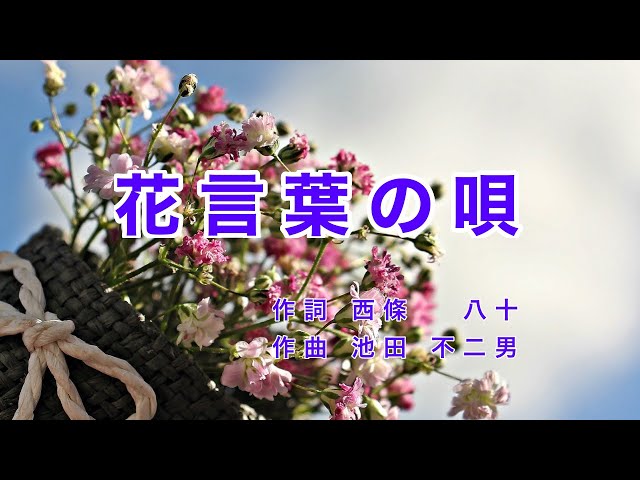
Hanakotoba no Uta, with its elegant waltz rhythm that evokes a modern Showa-era atmosphere, leaves a strong impression.
Its romantic theme of entrusting feelings to flowers and the call-and-response between a man and a woman make it a beautiful duet.
It was produced as the theme song for Shinko Kinema’s 1936 film First Love Diary.
With lyrics by Yaso Saijo and music by Fujio Ikeda, the piece became a major hit despite being composed on short notice during filming, and a line from the lyrics even became a popular catchphrase.
The voices of Akira Matsudaira and Nobuko Fushimi still sound fresh today.
The gentle triple-time melody is perfect for swaying leisurely in the spring sunlight.
Why not hum along with older listeners while reminiscing about nostalgic films?
When the violets bloomSakushi: Fritz Rotter Shirai Tetsuzou / Sakkyoku: Franz Doelle

This is a signature standard number of the Takarazuka Revue, with a graceful waltz rhythm that feels like it heralds the arrival of spring.
Originally a German popular song with lyrics by Fritz Rotter and music by Franz Doelle, it received Japanese lyrics from director Tetsuzō Shirai as the theme song for the revue “Parisette,” staged in August 1930.
Its romantic lyrics evoke the flutter of love and the memory of a dear face that resurfaces when delicate purple flowers bloom.
Sung and cherished over many years, this piece is familiar to many older people who remember seeing it performed.
It’s perfect for a springtime recreation, inviting everyone to hum along while reminiscing about their youth.
Spring StreamSakushi: Takano Tatsuyuki / Sakkyoku: Okano Teiichi

It’s a traditional song with a gentle melody that makes you want to hum along as spring arrives.
The lyrics, which depict violets and Chinese milk vetch blooming by the riverbank and creatures in the water, are said to be modeled on the Kobunegawa River in Yoyogi, where Tatsuyuki Takano lived at the time.
Published in December 1912 in “Songs for Elementary School, Fourth Grade,” the piece features a tender tune by Teiichi Okano and has long been cherished on programs such as NHK’s “Minna no Doyō.” Its simple, repeated melody is perfect for a round, and when seniors raise their voices together, it naturally creates a lovely sense of unity.
Why not enjoy layering your voices as you imagine the tranquil scenes of spring?
Height comparisonSakushi: Umino Atsushi / Sakkyoku: Nakayama Shinpei

As Children’s Day approaches, many people may find themselves recalling the marks on the pillar.
This children’s song, written by Atsushi Unno with his younger brother in mind—seventeen years his junior—depicts a warm scene where the older brother measures his little brother’s height.
It is said that the lyrics also capture the loneliness of not having met the previous year, preserved as a two-year record.
With music composed by Shinpei Nakayama, it was published as a collection of sheet music in May 1923.
The song has continued to be sung for many years and was selected in 2007 as one of the “100 Best Japanese Songs.” As you feel the May breeze, why not look back on nostalgic memories with your siblings and family? Enjoy this seasonal song with a bright, uplifting spirit, as if gazing up at the majestic Mount Fuji.
strollInoue Azumi

When you feel the warm spring sunshine, it makes you want to go outside and get moving, doesn’t it? The perfect choice for times like that is this piece, known as the opening theme song of Studio Ghibli’s film My Neighbor Totoro.
Although it’s a song from the film released in 1988, it had actually already been included on the image album My Neighbor Totoro: Image Song Collection, which came out in November 1987, before the movie’s release.
Azumi Inoue’s clear vocals and Joe Hisaishi’s march-like rhythm alone are enough to put a spring in your step.
The lyrics feature familiar scenes like hills and tunnels one after another, brimming with an exciting sense of setting off on an adventure.
How about enjoying it during rehab or exercise time, imagining everyone swinging their arms energetically as they walk together?
Spring somewhere

Dokokade Haru ga (“Somewhere, Spring”) is a lovely song that gently celebrates the arrival of spring.
Composed by Shin Kusakawa, it beautifully depicts springtime scenes such as cherry blossoms and little birds.
Humming it together with older adults can warm the heart.
It’s also recommended for day-service programs and care facilities.
Singing while looking at the lyrics makes it easier to picture the scenes of spring.
It might also be nice to listen while gazing out the window.
It’s a song that lets you feel nature and the changing seasons, offering a rich and heartwarming moment.