

![[For Seniors] Popular Karaoke Songs That Everyone Can Enjoy Together](https://i.ytimg.com/vi/0ULMrSYH78g/sddefault.jpg)
[For Seniors] Popular Karaoke Songs That Everyone Can Enjoy Together

Some elderly care facilities may incorporate karaoke as a recreational activity, don’t you think?
For older adults who enjoy singing, karaoke can be one of the highlights.
So this time, we’ll introduce “Recommended Karaoke Songs for Seniors”!
Singing can help relieve stress, and pronouncing lyrics with your mouth open also serves as a form of oral exercise.
What’s more, it allows people to reminisce about the era when the songs were popular.
Recalling the past provides a healthy level of stimulation for the brain and can help keep it active, which may aid in dementia prevention.
Enjoy a fun time with these recommended karaoke songs for seniors!
[For Seniors] Popular Karaoke Songs That Get Everyone Excited (1–10)
Blue MountainsFujiyama Ichirō
Released in 1949 as a duet by Ichirō Fujiyama and Mitsue Nara, this celebrated song symbolizes Japan’s postwar recovery and hope.
The lyrics, written by Yaso Saijō, overlay the dreams and aspirations of young people onto images of beautiful mountains, while the music was composed by Ryōichi Hattori.
Accompanied by fresh, vibrant vocals, it conveys expectations for a new era, like flowers blooming after a harsh winter.
It was also used as the theme song for a film released the same year based on a work by Yōjirō Ishizaka, and in 1989 it was ranked No.
1 on NHK’s “200 Songs of the Shōwa Era that Remain in Our Hearts.” This piece is a song that, while evoking fond memories, allows older listeners to reminisce together about the topics of that time.
The Apple SongNamiki Michiko

This is “Ringo no Uta” (The Apple Song), which played on the radio shortly after the war and lifted the spirits of the Japanese people as a form of entertainment in the aftermath of defeat—a song that gives you energy.
The high-tone voice coming through with radio static is especially striking.
With a bouncy rhythm that makes your heart skip, it’s an adorably charming song that cherishes red apples.
It’s featured in school textbooks and is a representative, historically significant masterpiece of Japan.

Look up at the stars in the nightSakamoto Kyu

This song, emblematic of the Showa era, is loved widely across generations.
It has supported the hearts of countless Japanese people and gently yet powerfully pushed many—young and old, men and women alike—forward.
It’s a masterpiece that represents the Showa era, and indeed Japan itself.
Why does his voice resonate so deeply in our hearts? Please try singing it together and savor the emotion.
I’m falling in love with you againSakamoto Fuyumi

The song released by Fuyumi Sakamoto in October 2009 is a work that sings of love’s depth that transcends time.
Its lyrics, woven from past memories and present feelings, are striking in how they capture the subtleties of life.
Skillfully using natural imagery such as morning dew, flowers, and rainbows, it expresses the shifting shades of romantic emotion.
The song reached No.
3 on the Oricon Weekly Chart and also ranked No.
1 for the year in karaoke rankings.
It’s a recommended piece for older listeners as well—why not hum along and recall the love of your youth? It can also be a good chance to reflect on life through the lyrics.
With its heartwarming vocals and profound words, it is sure to be a song that resonates with you.
Always keep your dreamsHashi Yukio, Yoshinaga Sayuri

Released in 1962, the song “Itsudemo Yume wo” is a duet by Yukio Hashi and Sayuri Yoshinaga.
It has a rather unusual history as a duet song that was adapted into a film because it became a huge hit at the time.
Many younger people have likely heard it in TV dramas or as a commercial jingle.
It’s a charming, upbeat song that feels like thinking of that special someone who’s always in your heart.
It’s especially fun when performed as a male-female duet.

I look up as I walkSakamoto Kyu
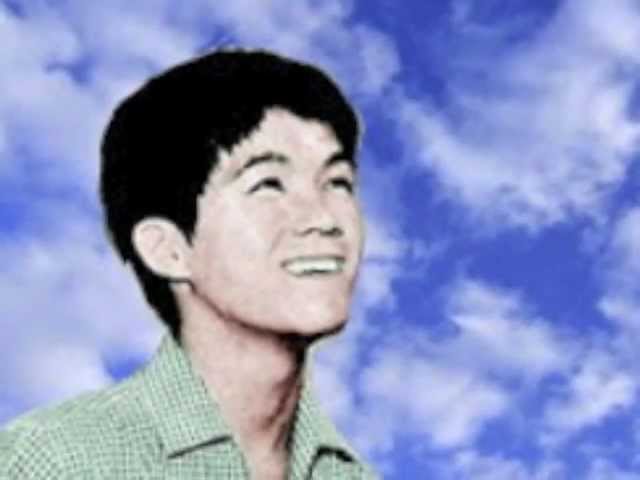
Known overseas as “SUKIYAKI,” the song “Ue o Muite Arukō” is one of Kyu Sakamoto’s signature pieces; he tragically lost his life in the JAL plane crash.
It was originally composed by Hachidai Nakamura for his own 1961 recital.
The lyrics were written by Rokusuke Ei.
In 1963, it reached No.
1 on the Billboard singles chart, making it not only the first by a Japanese artist but the only weekly No.
1 by a singer from the broader Asian region.

Tokyo RhapsodyFujiyama Ichirō

A classic song representing 1936 (Showa 11) was born in a work set in Ginza, Kanda, Asakusa, and Shinjuku, portrayed in a pure and light foxtrot style.
Ichiro Fujiyama’s beautiful voice elegantly sings of urban scenes and a love story.
This piece, which vividly brings to mind the bustling districts of Tokyo at the time, became a massive hit, selling 350,000 copies.
It was Fujiyama’s first release after moving to Teichiku, and a film of the same title was later produced, cementing its status as a beloved song that symbolizes the Showa era.
It’s a perfect track for a calm moment or when reminiscing about the past.
Enjoy a heartwarming time discussing what Tokyo was like back then together with older listeners.